
Livraison le jour même ou le lendemain

Qualité garantie

Débloquez vos offres de bienvenue: Livraison GRATUITE | Jusqu'à -80 % | 30 jours d'essai gratuits à JoyPlus
Téléchargez l'application
Long hair that stays damp, curls that fall flat, stubborn frizz, or arms that ache after just a few minutes? Choosing an ionic hair dryer isn’t simply about picking the biggest number on the box. For everyday use, you also need to consider the settings, accessories, weight, motor type and electrical compatibility.
Marketing promises don’t always tell the whole truth and can steer you towards an ill-suited appliance. Here are the criteria to examine before comparing a professional hair dryer, a model with a diffuser, or a device designed to reduce static electricity.
A high wattage doesn’t necessarily mean faster drying. Power must go hand in hand with a well-controlled airflow, a suitable motor and sufficiently precise settings. A powerful hair dryer can quickly become unpleasant if it overheats or if its airflow is difficult to control.
For thick or long hair, a power rating between 1,600 and 2,400 W can be suitable, depending on the design of the appliance. For fine hair, the ability to reduce heat and speed is often more useful than the maximum power displayed.
Ionic technology is often presented as a solution to reduce static electricity and make styling easier. It can give a feeling of smoother hair, but the result also depends on the temperature, the distance from the hair, the ambient humidity and how the appliance is used.
An anti-frizz hair dryer should therefore offer several temperature levels, a cool shot button and, for curly or wavy hair, a genuinely suitable diffuser. Ions don’t replace these elements.
The concentrator directs the air precisely for smoothing hair or working on a section. The diffuser spreads the airflow and helps dry waves or curls without disrupting them. A brush can simplify blow-drying, but it doesn’t serve the same purpose.
Before ordering a hair dryer with accessories, check the exact list of what’s included: some boxes only contain a precision nozzle, while others include a diffuser and several magnetic attachments.
A DC motor is often found in lightweight domestic appliances. An AC motor, when clearly stated in the specifications, is traditionally associated with more robust salon models. That said, the motor type alone isn’t enough to judge a hair dryer’s lifespan.
Also consider:
The mention hair dryer with AC motor should appear in the specifications. It can’t simply be inferred from the word “professional” used in the title.
An appliance with temperature control allows you to adapt the heat to fine, thick, coloured, wavy or curly hair. Three temperature levels are a practical baseline; four offer more precise adjustment.
The cool shot button is used to finish styling and temporarily set the shape. It doesn’t make the appliance harmless, though: keep a reasonable distance from the scalp and avoid holding hot air on the same spot for too long.
For a hair dryer for curly hair, choose a diffuser that is deep enough, with prongs that can support the sections without tangling them. An integrated diffuser can also prevent a removable attachment from coming loose mid-use.
A lightweight hair dryer is especially welcome when drying takes a while. Compare the actual weight of the hair dryer alone: a box packed with accessories can also take up more space in a drawer or suitcase.
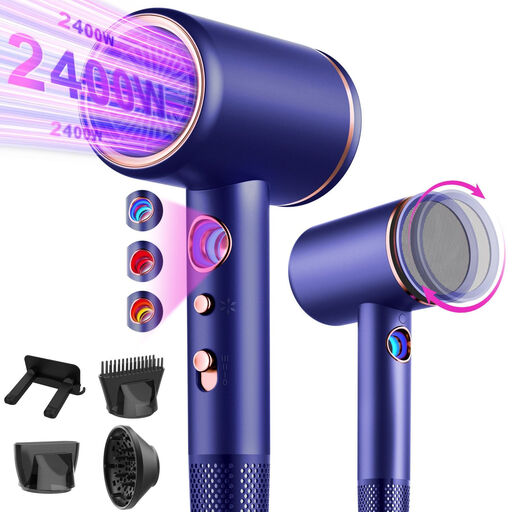
Why this choice suits this profile: The product title states a power of 2,400 W, three temperatures, a diffuser and three accessories. It can be a versatile first choice for drying and styling your hair at home.
The listing focuses on the settings and different nozzles, rather than just the power. Still, check the accessory details and voltage before ordering.
Advertised power of 2,400 W, three temperatures, diffuser and three accessories according to the product title.
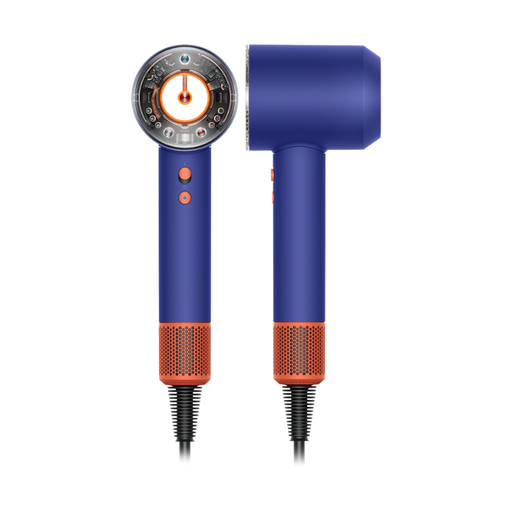
Why this choice suits this profile: This model offers four temperatures, three speeds, five advertised accessories and a weight of 680 g without accessories. It targets users who want a complete package and particularly precise settings.
The listing clearly distinguishes the heat levels and accessories. However, note the model shown with a British plug: check its compatibility with your electrical setup.
Advertised motor of 1,600 W, heat control across four levels, three speeds, diffuser and four other accessories.
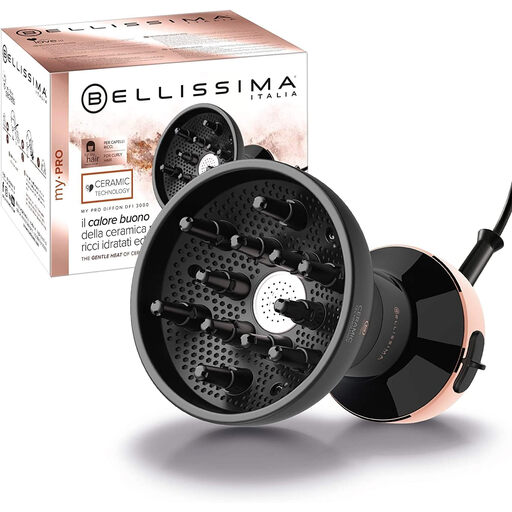
Why this choice suits this profile: Its integrated diffuser is specially designed for drying curly hair. Its twelve long prongs, two temperatures and two speeds allow you to work on your hair in sections.
The diffuser doesn’t rely on a removable attachment and its grille is designed to minimise snagging. The heat still needs to be monitored.
Power of 700 W, advertised weight of 510 g, 2.2 m cable and cool shot function.
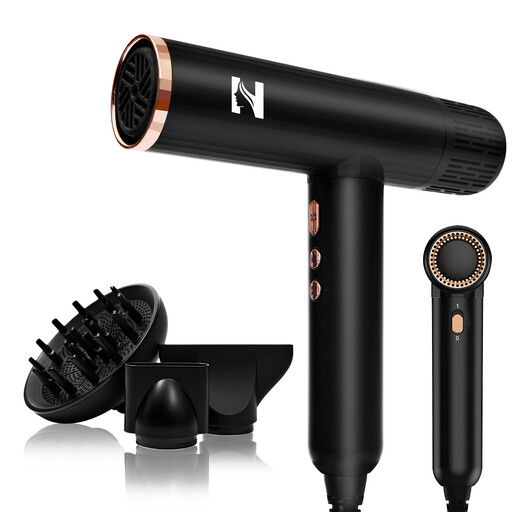
Why this choice suits this profile: Its advertised brushless motor, three speeds, four temperature settings and three nozzles are designed for long, thick or curly hair, as well as regular drying sessions.
The independent settings prevent you from having to use maximum heat all the time. The filter and air intakes must be kept clear to reduce the risk of overheating.
1,900 W, advertised weight of 570 g, diffuser, two concentrators and 2 m cable.
We’ve compiled a comprehensive, real-time updated selection of products that meet these demanding criteria, while complying with European safety regulations.
To keep your ionic hair dryer performing at its best:
Never use a hair dryer near a bath, basin or shower. Also check the condition of the plug and cable, as well as the voltage compatibility with your electrical installation.
Yes, provided you combine the ionic function with a diffuser and a moderate speed. Too powerful an airflow can separate the sections and make frizz worse. Dry your hair in small sections, avoiding constant handling.
The lifespan depends on how often it’s used, how well the filter is maintained, and the quality of the cable and motor. No universal figure can be guaranteed. An appliance used several times a week should be dusted regularly and replaced as soon as you notice an unusual smell, overheating or a damaged cable.
Consumption mainly depends on the power in watts and the duration of use. A 2,200 W appliance used for ten minutes consumes more than a 1,600 W model used for the same length of time. To estimate the cost, multiply the power in kilowatts by the usage time, then by the rate charged by your electricity supplier.