
Livraison le jour même ou le lendemain

Qualité garantie

Débloquez vos offres de bienvenue: Livraison GRATUITE | Jusqu'à -80 % | 30 jours d'essai gratuits à JoyPlus
Téléchargez l'application
Navigating the world of intimate hygiene can quickly become overwhelming. Between promises of infinite absorbency, vague eco-friendly labels, and a jungle of sizes and styles, it's easy to get lost and end up with an unsuitable product. This guide is here to help you see things more clearly, decode labels, and sidestep the most common pitfalls to find THE protection that's right for you: comfortable, safe, and truly suitable.
By Joybuy, your product expertPublished August 28, 2026
Before choosing a protection product, it's essential to know the pitfalls that often lead to discomfort and unnecessary expense.
To make the right choice, focus on a few technical points that make all the difference.
The intimate area has particularly sensitive and reactive skin. Checking the composition is therefore not an option.
Labels like the European Ecolabel or testing certifications (e.g., Dermatest) are reliable indicators for judging a product's quality and safety.
Needs vary enormously from one person to another, and even throughout the cycle or the day.
Here is our selection of products that check all the boxes for quality and transparency, for different needs.
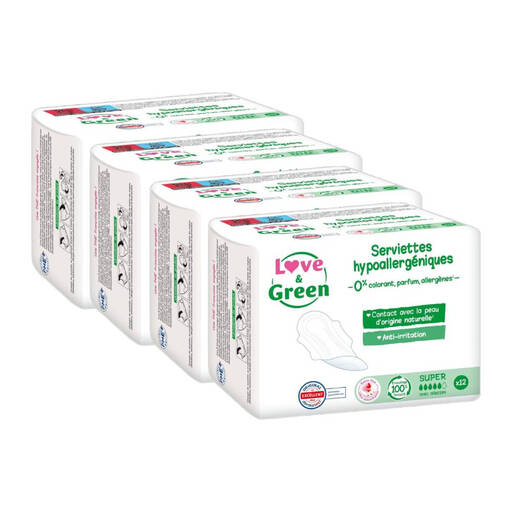
Why we recommend it: Perfect for those who want an organic sanitary pad without any compromises. Its composition is designed to minimise allergy risks, all with impeccable eco-credentials.
It doesn't just make empty promises; it relies on solid certifications (Ecolabel, FSC, TCF, Vegan) and an ultra-clean composition, free from fragrance and lotion.
Natural-origin topsheet, hypoallergenic and tested under dermatological and gynaecological control.
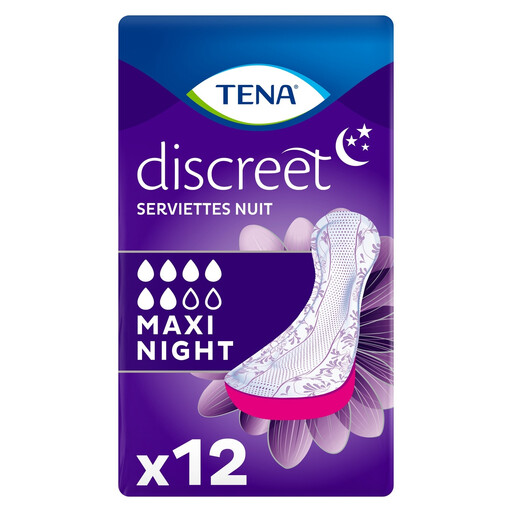
Why we recommend it: Specifically designed for overnight women's bladder protection, it's the perfect solution to sleep soundly, even when lying down.
Beyond a simple promise of absorbency, its design (longer and wider at the back) and its triple protection (against leaks, odours, and moisture) provide a concrete solution for overnight security.
Anatomical shape designed for nighttime, odour neutralisation with micro-beads, and keeps you dry for up to 12 hours.
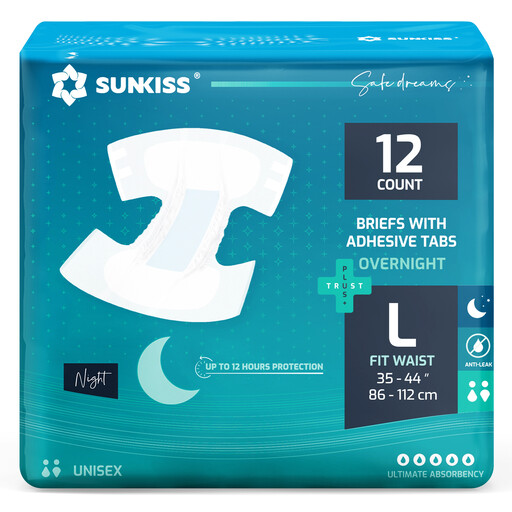
Why we recommend it: A comprehensive solution for individuals (or their caregivers) dealing with moderate to heavy incontinence at night. These overnight adult diapers are designed to combine maximum security with long-lasting comfort.
It goes beyond a simple promise of reliability with advanced technical features: a dual-core system, leak guards, and refastenable tabs for a perfect fit, even during restless sleep.
Wetness indicator to know when to change the product, soft and fragrance-free materials to protect the skin.
We have selected a full range of products that meet our strict selection criteria and current safety standards.
Although they look similar, their absorption technology is completely different. A women's bladder protection pad is designed to very quickly absorb a thin liquid (urine), turn it into a gel to keep the skin dry, and neutralise odours. A sanitary pad, on the other hand, is optimised for a thicker, slower flow, like menstrual blood. Using the wrong product means risking an unpleasant feeling of dampness and leaks.
To judge if a sanitary product is truly eco-friendly, don't just rely on slogans. Look for concrete proof on the packaging:
As a general rule, for pads and tampons, it is recommended to change them every 4 to 6 hours to ensure good hygiene and prevent bacterial growth. Of course, it all depends on your flow. With a heavy-flow pad, more frequent changes will likely be necessary. As for incontinence products like overnight adult diapers, many include a wetness indicator (a line that changes colour) that simply indicates when a change is needed.