
Livraison le jour même ou le lendemain

Qualité garantie

Débloquez vos offres de bienvenue: Livraison GRATUITE | Jusqu'à -80 % | 30 jours d'essai gratuits à JoyPlus
Téléchargez l'application
Choosing interior lighting? It seems simple enough. Yet, it's one of those purchases where disappointment can quickly set in. Harsh light, an installation that turns into a nightmare, or a fixture that's ill-suited for the room... and your design project becomes a source of frustration. Because it's not just about seeing clearly; it's about sculpting an atmosphere, optimising visual comfort, and enhancing your interior.
Before you pull out your credit card, let's review the classic mistakes to avoid at all costs.
To see things more clearly and find that perfect fixture, understanding a few technical concepts is essential. It's your best insurance against disappointment.
Expressed in Kelvins (K), colour temperature defines the hue of white light. It is THE key factor in shaping a room's atmosphere.
The CRI measures how accurately a light source renders the colours of objects compared to sunlight. A low CRI (below 80) will make your interior look dull and washed out. For areas where colour perception is crucial (dressing rooms, worktops, bathrooms for applying makeup), insist on a CRI of over 90. A high-quality LED strip with a good CRI can, for example, beautifully highlight the contents of a bookshelf or wardrobe.
This criterion is non-negotiable, especially in rooms with water. The IP rating consists of two digits: the first for protection against solid objects (dust), the second against liquids (water).
Forget endless lists. We've matched specific solutions to user profiles, keeping in mind the criteria and pitfalls we've just discussed.
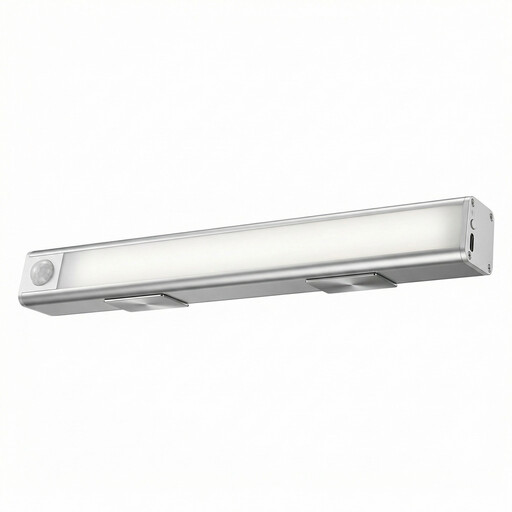
Why we chose it: The perfect solution for functional lighting in areas without a power socket: cupboards, wardrobes, hallways, or under kitchen cabinets. This type of rechargeable light offers absolute flexibility.
It demolishes the complex installation pitfall. Magnetic mounting, battery-powered: no drilling, no wiring. Just place it, and it works.
Its motion-activated lighting turns on as you approach, maximising convenience and energy savings. The choice of multiple colour temperatures allows you to adjust the ambience as desired.
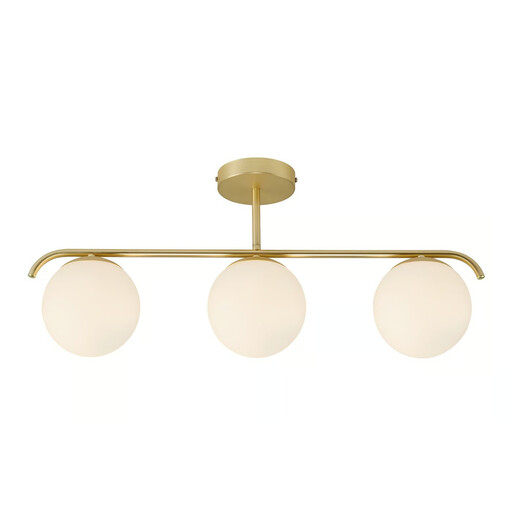
Why we chose it: For those who want a statement piece without the constraints of a pendant light. This ceiling fixture provides general illumination while adding a touch of sophistication with its brass and opal glass finishes.
It sidesteps the harsh light trap. The matte white opal glass diffuses light with exceptional softness, creating an enveloping, glare-free atmosphere.
The mouth-blown, artisan-crafted glass makes each model a unique piece. Compatible with dimmable E14 bulbs, it gives you full control over the light intensity.
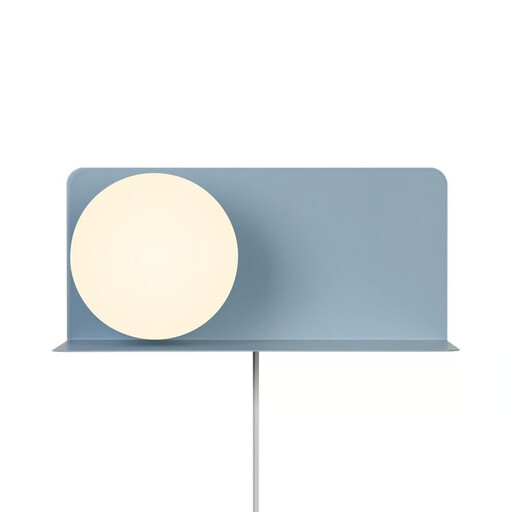
Why we chose it: The clever 2-in-1 solution that serves as both a child's night light and a bedside lamp. It combines soft light with a small shelf, perfect for holding a book, a cuddly toy, or a glass of water.
Supplied with its cable and switch, installation is child's play: just mount it and plug it in. Its opal glass dome ensures a diffuse light, perfect for being gentle on little ones' eyes.
Its dual function (lamp and shelf) makes it as clever as it is decorative. It optimises space and adds a reassuring touch to the bedroom.
Discover our full selection of light fixtures that meet our quality criteria and local safety standards.
An LED's lifespan is typically rated in hours, ranging from 15,000 to 50,000 hours. In practical terms, with an average use of 3 hours per day, a 15,000-hour model can light your home for over 13 years. Be aware that this longevity also depends on the quality of the components, effective heat dissipation, and how often it's switched on and off.
Here, safety is non-negotiable. You must choose a fixture with an Ingress Protection (IP) rating suitable for its installation zone. For "zone 2" (more than 60 cm from the shower or bath), an IP44 rating is the absolute minimum to protect against water splashes. Further away (zone 3), an IP21 might suffice, but IP44 provides complete peace of mind. You should check for this on every product page.
Absolutely. The rechargeable light fixture is the champion of versatility. Ideal for lighting a cupboard, a cellar, or for use as a portable lamp, it frees you from the constraints of sockets and cables. Installation is a breeze. The only downside: you have to remember to recharge it. Battery life varies greatly between models, but for accent or occasional lighting, it's a very smart choice.