
Livraison le jour même ou le lendemain

Qualité garantie

Débloquez vos offres de bienvenue: Livraison GRATUITE | Jusqu'à -80 % | 30 jours d'essai gratuits à JoyPlus
Téléchargez l'application
An interior designer pendant light can define a dining room, create a pleasant glow in a living room or highlight a kitchen island. But looks aren’t everything. A pendant that hangs too low can get in the way, a poorly proportioned shade can throw off the balance of a room, and an incompatible lamp holder can quickly lead to unexpected purchases.
Before comparing a pendant light, hanging lamp or decorative model, it’s therefore worth checking a few practical features.
Interior photographs can sometimes give a misleading impression of scale. A pendant measuring 50 cm in diameter may look almost understated in a large room, yet take up the entire space above a small table. Always check the light fitting’s dimensions, cable length and total height.
Opal glass, a fabric shade or a diffusing material creates a soft light that’s ideal for a living room or bedroom. However, these options aren’t always enough to provide general lighting for the room. For a dining-room or kitchen pendant, check the number of light sources, the maximum permitted wattage and whether it’s compatible with a dimmable bulb.
Not every pendant can be attached to a simple ceiling hook. Some models need to be screwed directly into the support and then connected to the mains by a qualified professional. An IP20 light fitting, meanwhile, is intended for dry indoor spaces. It isn’t automatically suitable for a bathroom, terrace or area exposed to splashing water.
Above a table, the bottom of the pendant should be high enough to prevent knocks and allow you to see the people sitting opposite. The ideal height depends on the room, the furniture and the height of the occupants.
For a long table, a light fitting with several light sources distributes the light more evenly. The Contina model, for example, is 90 cm long and has three G9 lampholders. Its elongated shape may suit a rectangular table or an extended worktop. In a hallway or above a small round table, a 15 cm-diameter pendant will be easier to integrate.
The lampholder must match the bulbs available to you:
Also check whether the bulb is included. Several models featured here are sold without a light source. Always observe the maximum wattage specified by the manufacturer. For a paper or fabric light fitting, choose an LED bulb that produces little heat and follow the installation instructions carefully.
A black metal pendant adds a graphic touch and works easily with contemporary décor. Opal glass diffuses light evenly, while brass instantly adds warmth to the overall look. A fabric pendant creates a softer atmosphere but requires regular dusting.
Variations in bubbles or thickness in mouth-blown glass aren’t necessarily defects: they can reflect the artisanal nature of the manufacturing process. To clean the light fitting, switch off the power and use a soft, dry cloth, particularly on electrical components.
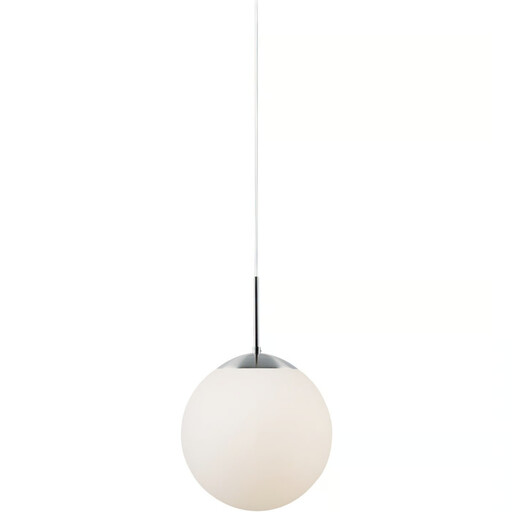
Why this choice suits this profile : With its 15 cm diameter and understated style, it’s an easy way to get started without putting a foot wrong in a kitchen, hallway or above a small piece of furniture.
The dimensions, E27 lampholder and maximum wattage of 15 W are clearly stated. Under these circumstances, it’s difficult to pair the light fitting with the wrong bulb.
Opal white glass, diffused light, 180 cm cable and IP20 protection for dry indoor spaces.
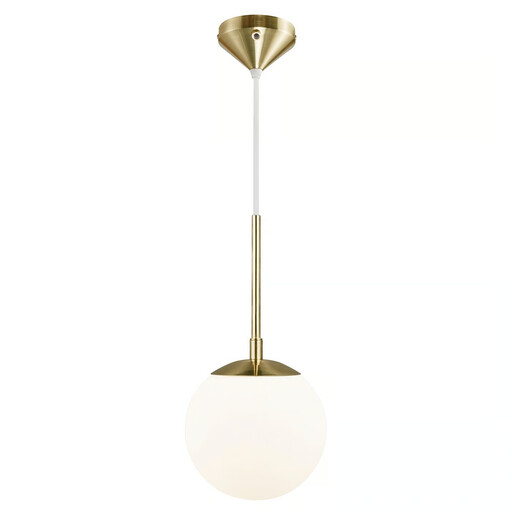
Why this choice suits this profile : Its opal glass and brass-coloured structure will sit naturally in a glamorous or Art Deco interior, or as part of a cluster of several pendants.
The 15 cm diameter, E14 lampholder, 10 W limit and fact that the bulb isn’t included are all specified. This means you know what extra purchases to expect before placing your order.
Mouth-blown opal glass, brass finish, 30 cm height and the option to combine it with other pendants in the range.
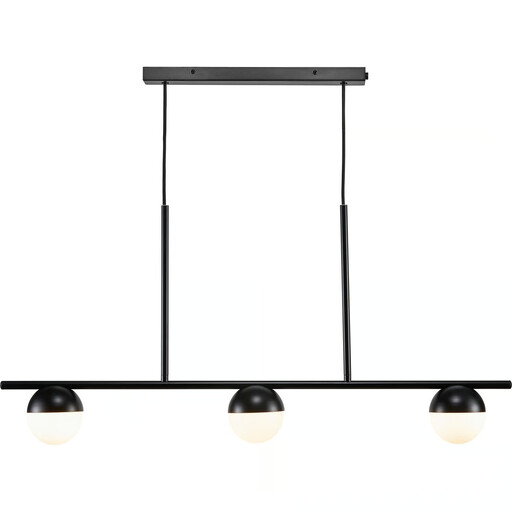
Why this choice suits this profile : At 90 cm long, it effectively lights a dining table or long worktop that needs several points of light.
Its three G9 lampholders and detailed dimensions make it possible to check the area it will actually cover, rather than choosing a light fitting based solely on looks.
Matt black metal, mouth-blown opal glass, 200 cm black fabric cable and maximum wattage of 5 W per light source.
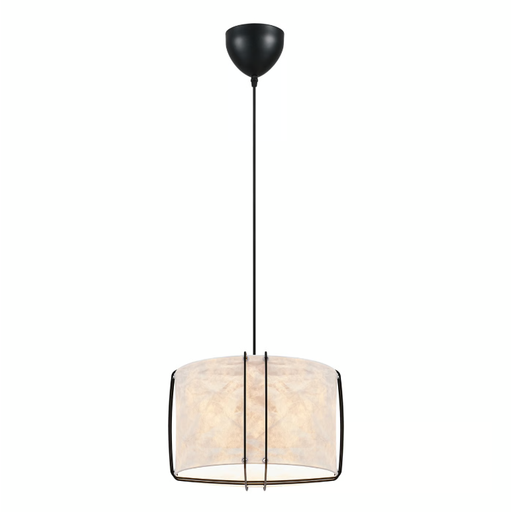
Why this choice suits this profile : Its delicately crinkled shade casts a soft light in a living room, bedroom, reading nook or dining room.
The instructions state that the paper must be kept away from flames, moisture and strong heat sources. You should therefore use an LED bulb that produces little heat.
Japandi style, paper and metal shade, subdued light, and care with a soft brush or a vacuum cleaner set to low power.
A pendant must be attached to a support capable of bearing its weight. Models that aren’t compatible with a ceiling hook require suitable mounting and a connection that complies with local electrical regulations. For a permanent electrical installation, using a qualified electrician remains the safest option.
Energy consumption mainly depends on the bulb’s wattage and how long it is used. An energy-efficient LED bulb can reduce consumption compared with a more power-hungry model, while also offering a wide choice of colour temperatures. For a warm atmosphere, warm white will generally be the most inviting. Above a worktop, however, a more neutral shade may improve visual comfort.
You need to leave enough space between the light fitting and the tabletop to prevent knocks and maintain clear visibility. Before adjusting the cable, measure the ceiling height, table thickness and users’ height. An adjustable pendant makes it easy to fine-tune the position once installed.
An IP20 rating is intended for indoor use in a dry space. An IP20 pendant can therefore be installed in a kitchen, dining room or living room, provided it is kept away from splashing water and direct steam. In a damp room, check the requirements for the installation zone and choose a suitable protection rating.
Its lifespan depends on the quality of the mounting, maintenance, condition of the cable and correct replacement of bulbs. Regularly inspect visible components, always dust with the power switched off and never exceed the maximum wattage specified by the manufacturer. Paper or fabric shades require extra care around moisture and heat.