
Livraison le jour même ou le lendemain

Qualité garantie

Débloquez vos offres de bienvenue: Livraison GRATUITE | Jusqu'à -80 % | 30 jours d'essai gratuits à JoyPlus
Téléchargez l'application
An interconnected wireless smoke detector can make it much easier to protect a house, flat or small business premises. When one device detects smoke, the other linked detectors can trigger their alarms too. This is particularly useful in homes with several rooms or floors.
However, product descriptions can sometimes blur the differences between battery life, connectivity and compliance. Before buying a wireless fire alarm, it is therefore worth checking a few practical points.
A radio-interconnected system generally does not rely on your internet router to make the detectors sound. This is a real advantage in the event of a power cut or network problem. However, it may not allow you to receive a notification on your smartphone.
By contrast, a Wi-Fi smoke detector or connected fire alarm can send an alert to an app. You should then check compatibility with the 2.4 GHz network, which app is used and how the system behaves when the internet connection is lost.
A stated battery life of ten years reduces the need for replacements, but it does not remove the need to test the device regularly. Depending on the model, the battery may be sealed or replaceable. When it is built in, you will generally need to replace the entire detector at the end of its service life.
Also check whether the batteries are included, which type they are and whether there is an audible warning when their charge becomes low.
A pack of smoke detectors is a convenient way to equip several rooms, but not all wireless devices can be linked together. Check the maximum number of detectors that can be interconnected, the radio frequency used and the pairing process.
Some Heiman models state that they can support up to 40 radio fire alarms, while other sets are already pre-paired. To avoid unpleasant surprises, it is best to stick to the same range when adding new devices.
For a detector intended for use in a home in France, look for the reference EN 14604, the applicable standard for self-contained smoke alarm detectors. Check for a compliance marking or declaration in the product description and the documentation supplied.
This standard alone does not tell you about all the practical features. You should also consider the installation requirements, maintenance needed and the alarm’s sound level.
A photoelectric smoke detector, also known as an optical detector, uses a sensor capable of detecting smoke particles. This technology is listed for some of the products in this selection.
Avoid installing a detector directly in a kitchen, near a very humid bathroom or in a particularly dusty area. These environments can cause false alarms. In rooms where smoke is not the only risk, a carbon monoxide detector can provide useful additional protection, particularly near bedrooms and living areas, in line with the manufacturer’s recommendations.
A level of 85 dB is often stated for detectors in this category, sometimes measured at three metres. This figure makes it easier to compare technical specifications, but the volume actually perceived depends on the layout of your home, closed doors and the detector’s position.
A silence button allows you to temporarily mute the alarm in certain situations, while the test button is used to check that it is working properly. These controls are practical for everyday use, provided you never leave a detector permanently disabled.
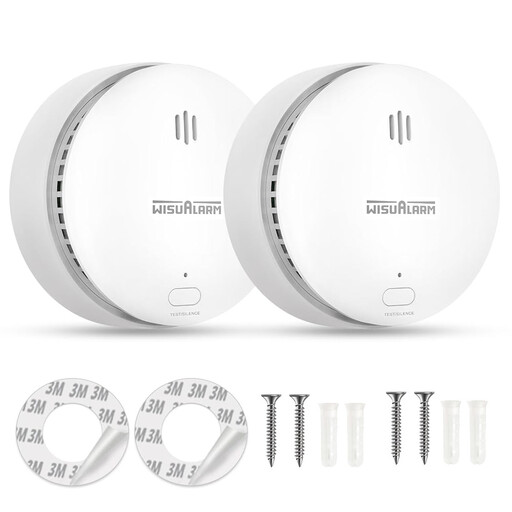
Why this product suits this type of user : With two devices, you can start equipping a flat or small home. Installation can be carried out using adhesive pads or screws, depending on your setup.
The product description states that it has a ten-year battery, test and silence buttons, and EN 14604 compliance tested and declared by TÜV.
Stated optical sensor, alarm louder than 85 dB at three metres and a remote control sold separately for muting the sound.
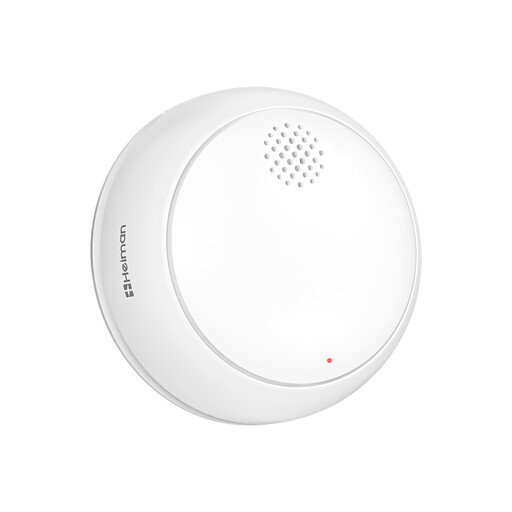
Why this product suits this type of user : This option is designed for people who want to receive alerts remotely and integrate fire safety into their connected home.
The product description specifies WLAN/Wi-Fi compatibility, a replaceable battery and a silence button. Nevertheless, check app compatibility before buying.
Alarm stated at 85 dB, app notifications and EN 14604 compliance indicated in the description.
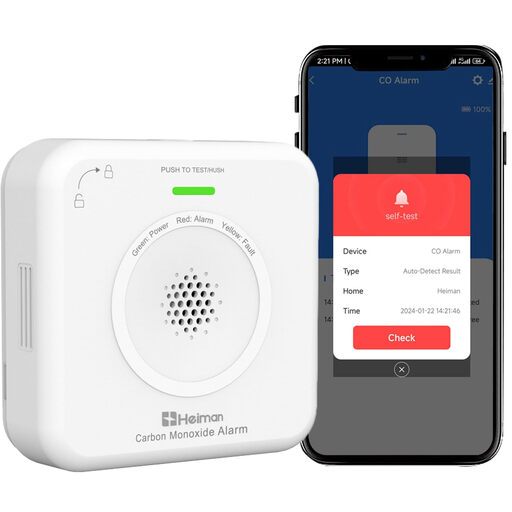
Why this product suits this type of user : It complements a network of smoke detectors in a home with heating or appliances that may produce carbon monoxide.
It does not replace a smoke detector. Its dedicated CO function prevents you from assuming that one device is enough to cover every risk.
Sensor stated to last ten years, replaceable batteries, 85 dB alarm and installation recommended near bedrooms and living areas.
We have put together a complete, real-time-updated list of products that meet these demanding selection criteria and European safety regulations.
The devices communicate with each other via a radio link. When one detector detects smoke, the other linked units can sound simultaneously. The actual range depends on the thickness of the walls and floors, as well as the presence of metal obstacles.
No. You need to test the alarm, monitor low-battery warnings and clean the casing. A sealed battery is generally not designed to be replaced by the user.
A smoke detector and a CO detector monitor different hazards. If your home has a boiler, stove, fireplace or other combustion appliance, a dedicated device can provide useful additional protection. Always follow the manufacturer’s placement instructions.