
Livraison le jour même ou le lendemain

Qualité garantie

Débloquez vos offres de bienvenue: Livraison GRATUITE | Jusqu'à -80 % | 30 jours d'essai gratuits à JoyPlus
Téléchargez l'application
An interactive toy for dogs or cats can help keep an indoor pet occupied, encourage them to move around or simply add variety to playtime. However, marketing claims alone are not enough to make the right choice. A highly mobile toy may turn out to be noisy, a ball advertised as durable may not withstand a dog that chews relentlessly, and a convenient charging port can quickly become a nuisance if it is exposed to dirt.
Here are the main criteria to check before buying, followed by a selection designed for different types of pet owners in France.
A material described as ‘bite-resistant’ does not automatically make a toy suitable for every dog. Jaw size, chewing strength and your pet’s behaviour are more important. Some models are designed for small or medium-sized dogs and are not recommended for particularly aggressive chewers.
A bouncing dog ball requires enough clear space. In a flat, its bounces may knock against furniture or annoy the neighbours. Similarly, an automatic cat toy with a sensor should be placed on a flat surface, away from stairs, cables and fragile objects.
Sensors, unpredictable movements and sounds attract attention, but no motorised toy should be left unsupervised for long periods. A seam coming undone, an exposed battery or a swallowed small part can turn playtime into a serious safety issue.
Start by checking the compatibility specified by the manufacturer: cat, small dog, medium-sized dog or all breeds. An interactive dog ball that is too small may present a swallowing risk, while a toy that is too large will be difficult to pick up.
For a dog that enjoys chewing, examine the toy’s construction rather than relying solely on the word ‘durable’. A PVC and TPR dog chew toy, such as a squeaky bone, should be inspected before and after every use. Replace it as soon as cracks, loose pieces or an exposed squeaker appear.
A USB-C rechargeable pet toy avoids the need to replace batteries regularly, but its charging port must stay clean and completely dry. Never leave the cable within your pet’s reach. For battery-powered models, remove the batteries before cleaning and during long periods of storage.
Also check which parts are washable: a removable cover, a surface that can be wiped with a cloth or components that must not be submerged. Electronic equipment should generally not be immersed in water, even if its outer coating appears waterproof.
A squeaky dog toy can encourage interaction, but some animals are particularly sensitive to sound. For an indoor cat, irregular movements, flapping wings or the presence of catnip may spark curiosity. However, every pet reacts differently: introduce the toy gradually and stop the session if your companion seems stressed.
Finally, check the safety instructions, the manufacturer’s contact details and, where necessary, whether there is an established responsible person in the European Union. This information helps you understand usage restrictions and what to do if a problem occurs.
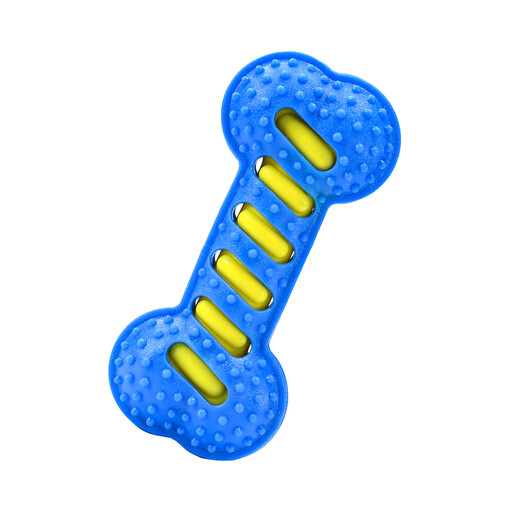
Why it suits this type of owner : Its bone shape and squeaky mechanism make it easy to start playing with a small or medium-sized dog, without a motor or recharging.
It works without a battery and its usage limitations are clearly stated for small and medium-sized dogs. However, you should still supervise chewing and check the condition of the squeaker.
PVC and TPR construction, an easy-to-hold shape, a rinseable surface and sound-based interaction when pressed.

Why it suits this type of owner : Its three sea-themed characters and rolling movements offer several ways to keep an indoor cat’s playtime fresh and engaging.
Rotating between three toys helps prevent boredom, while USB-C recharging means you do not have to keep buying batteries. The product is intended for indoor use and should be used under supervision.
Three shapes, multi-layer fabric, a built-in USB-C rechargeable battery and rolling movements.
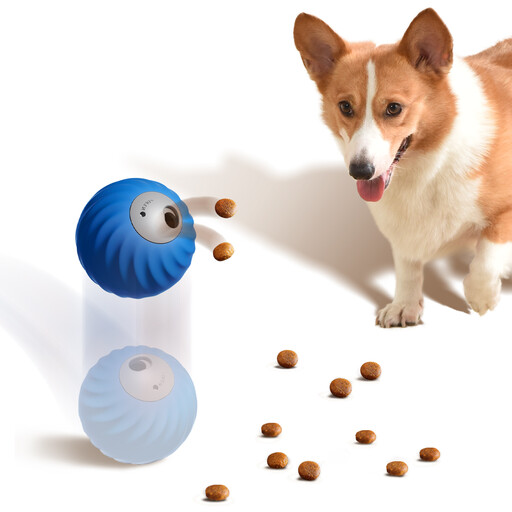
Why it suits this type of owner : This model combines movement with treat dispensing for dogs that quickly lose interest in a traditional ball.
The treat compartment adds a rewarding search activity, but the treats should be deducted from your dog’s daily allowance. Supervision is still necessary to prevent your dog from taking the toy apart.
Two play modes, bouncing and jumping movements, a replaceable removable cover and USB-C recharging.

Why it suits this type of owner : The flapping wings, sounds and catnip should appeal to cats drawn to chase-and-catch toys.
It combines several stimuli in one accessory while clearly stating that it is intended for indoor use and that the small parts and fabric should be monitored.
Moving wings, sound effects, a compartment containing catnip and a USB-C rechargeable battery.
We have put together a complete, real-time updated list of products that meet these strict selection criteria and the requirements of European safety regulations.
It may be triggered by a sensor or operate in automatic mode, but supervision is still recommended, particularly during the first few uses. Check that paws, claws and collars cannot become trapped in the moving parts.
The running cost mainly depends on the electricity required for recharging, which is generally limited, as well as wear to the covers or replaceable parts. Pay particular attention to using a suitable cable, the stated charging time and the possible replacement of damaged components.
Replace it as soon as it develops a crack, an open seam, a torn surface, an accessible battery or a small part that is coming loose. For a treat-dispensing toy, also inspect the compartment to ensure that no fragments could be swallowed.