
Livraison le jour même ou le lendemain

Qualité garantie

Débloquez vos offres de bienvenue: Livraison GRATUITE | Jusqu'à -80 % | 30 jours d'essai gratuits à JoyPlus
Téléchargez l'application
An interactive toy for dogs and cats can keep your pet entertained while you’re out, encourage them to move, and refresh playtime at home. But promises of automatic movement, artificial intelligence or unbreakable durability aren’t enough to guarantee a reliable choice.
Some models end up at the back of a cupboard after just a few weeks: a battery that’s fiddly to recharge, fabric parts that can’t be washed, or a size that doesn’t suit your pet. Here are the criteria to check before you buy, along with a selection of toys suited to different needs.
A material described as “bite-resistant” won’t necessarily stand up to a dog that chews everything in sight. Seams, soft coverings and small parts can give way long before the main body of the toy.
To reduce the risk, check the recommendations for your pet’s weight and size, their chewing behaviour, and the level of supervision required. A damaged toy should be removed immediately, especially if the motor, battery or stuffing becomes accessible.
An electronic toy that can’t be cleaned properly will usually end up gathering dust. A removable cover, an easily accessible compartment, or a well-protected USB-C port makes daily use much simpler.
USB-C recharging avoids having to replace batteries regularly, but it does require a few precautions: the port must stay dry, the cable must be kept out of your pet’s reach, and charging must follow the manufacturer’s instructions.
A bouncing ball can be a delight for a dog that loves chasing objects in an open room. It will be far less suitable in a small, cluttered flat, or with a dog that tries to tear it apart.
For cats, the movement should mimic that of prey: swaying, fluttering, unpredictable trajectories, or activation on contact. A noisy toy will attract some felines, but it can quickly become annoying in a quiet room.
The toy’s size must match your pet’s build. For a small dog, a ball that’s too heavy or too fast will be difficult to move. For a medium-sized dog, it’s better to choose a sturdier structure with a diameter suited to their jaw.
Also consider the space available:
A smart dog toy can offer several play modes, random movements, or a treat-dispensing system. These options are genuinely worthwhile if they match your pet’s temperament and habits.
A treat-dispensing toy should only be used with suitable rewards, in reasonable quantities. Check the opening diameter, how easy it is to clean, and whether you can adjust the difficulty level. This type of toy doesn’t replace walks or time spent interacting with you.
Look for a well-designed combination of hard plastic or rubber, removable fabric, and properly protected electronic components. Inspect the soft parts regularly. For a cat, also check the condition of the compartment that holds the catnip.
Before buying, read the instructions and warnings: recommended age or size, indoor or outdoor use, water resistance, charging time, and cleaning guidelines. For electrical products sold in the European Union, the manufacturer’s details and those of the responsible person in the EU must be available. This doesn’t, of course, replace the need to supervise your pet during play.
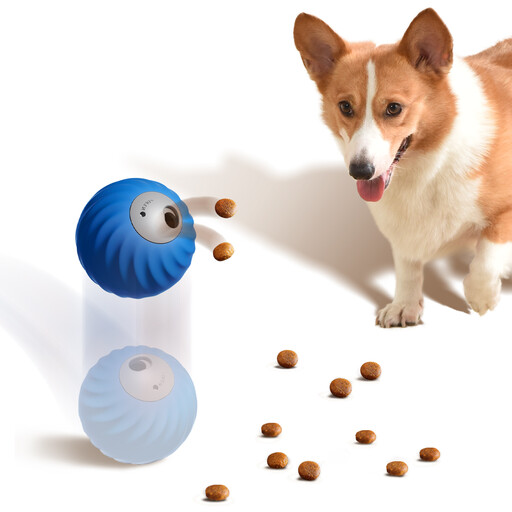
Why this choice suits them: This ball combines bouncing with a treat compartment. It’s a good first step into interactive dog play, provided you have an open space and supervise the sessions.
The plush cover is replaceable and the battery recharges via USB-C. This makes maintenance simpler and avoids having to buy disposable batteries regularly.
Two play modes, treat dispensing, removable cover and USB-C recharging.

Why this choice suits them: This set includes three animated sea creatures to vary play sessions with an indoor cat. It’s aimed at households looking for a rechargeable toy offering several types of stimulation.
The three toys allow you to vary the patterns and prevent boredom. The multi-layer fabric should still be inspected regularly for any tears.
Three shapes, rolling movements, soft fabric and USB-C recharging.
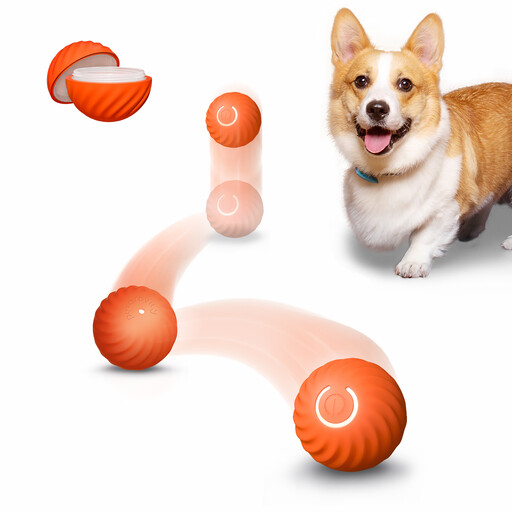
Why this choice suits them: Its size is ideal for small dogs, and its two play modes let you adjust the activity level. It can be used indoors and outdoors, always under supervision.
The removable cover can be hand-washed, while the toy’s core should be wiped dry. The recommendations advise against this model for dogs that chew aggressively.
Small-dog size, variable bounces, two modes and USB-C recharging.
We’ve put together a full, real-time updated selection of products that meet these demanding criteria and European safety regulations.
The ongoing cost is mainly the electricity used for charging, which is generally negligible compared to regularly replacing batteries. Also budget for the treats needed for a dispensing toy and, depending on the model, the possible replacement of a cover or outer layer.
It all depends on how often it’s used, your pet’s behaviour, how well it’s maintained, and exposure to moisture. A USB-C rechargeable toy for dogs or cats will last longer if its port stays dry, its cover is properly cared for, and your pet doesn’t chew it intensively.
No. Motorised toys, noisy toys, those containing catnip, or treat-dispensing toys should always be used under supervision, especially during the first few sessions. Remove the product as soon as any part is torn, broken, or becomes accessible to your pet.