
Livraison le jour même ou le lendemain

Qualité garantie

Débloquez vos offres de bienvenue: Livraison GRATUITE | Jusqu'à -80 % | 30 jours d'essai gratuits à JoyPlus
Téléchargez l'application
An interactive dog toy can keep your companion occupied, encourage them to exercise and strengthen the bond between you. But you should not simply rely on the claims displayed on the packaging. A toy that is too small, impossible to clean or unsuitable for chewing may end up at the back of a cupboard — or even become dangerous if pieces come loose.
Here are the criteria to consider before buying, along with a selection of models suited to different dogs and uses.
The word “durable” does not mean that the toy will suit every dog. A determined chewer may get through a rope, rip open a soft toy or crack a rubber component within a few days.
Durability depends in particular on:
A chew toy for a small dog is therefore in a different category from a durable model designed for a medium-sized or large dog.
A ball that bounces or moves by itself can be highly stimulating. However, it requires enough clear space and careful supervision. In a flat, a noisy model with unpredictable movements may sometimes be less practical than a quiet enrichment toy.
Before making your decision, ask yourself whether the toy will be used:
A treat-dispensing toy can collect food residue in its grooves. An electronic ball generally contains components that cannot be immersed in water. As for a rope, it can fray over the course of tugging sessions.
A truly practical toy should therefore fit easily into your cleaning routine. Inspect it regularly and replace it as soon as a component comes loose, becomes sharp or could be swallowed.
The size should match your dog’s build, but also the way they play. A bouncy ball for a small dog should be easy to push and catch, without being small enough to swallow. For a medium-sized or large dog, it is better to choose a larger format designed to withstand a firm grip.
The weight and size details shown on the product page are useful. However, they do not replace observing your pet’s jaw and habits.
TPR, natural rubber, nylon and polyester do not offer the same feel or durability. A toy made from several materials may also provide different textures, which are useful for chewing as well as tug games.
For a dog tug toy, check the strength of the handles and ropes. For a model designed for throwing and fetching, look at its visibility, bounce and ease of cleaning. For an enrichment toy, examine the size of the opening and whether it is compatible with dry or wet food.
A motorised toy rechargeable via USB-C avoids the need to buy batteries regularly, but a few precautions are essential:
For products sold in France, also consult the manufacturer’s information, the instructions in French where available, and the identity of the economic operator responsible within the European Union. CE marking does not remove the need to check the toy’s strength or its suitability for the intended use.
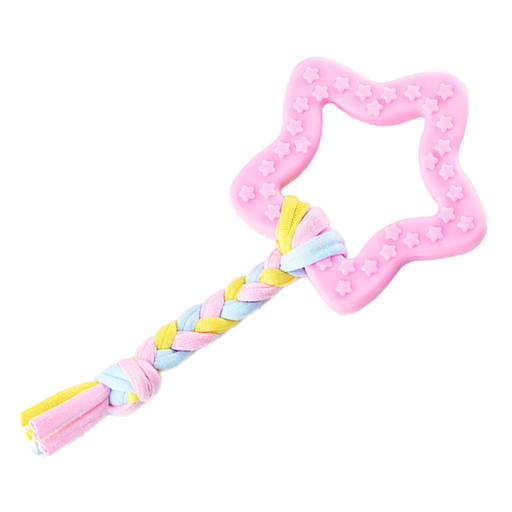
Why this choice suits this profile : Its star shape and feather-light weight make it suitable for small and medium-sized dogs to tug, fetch or chew moderately.
The product details state that it is suitable for dogs weighing up to around 15 kg and is not intended for aggressive chewers. This helps you avoid choosing the wrong product.
A combination of TPR and braided rope, a good grip and easy cleaning with warm soapy water.
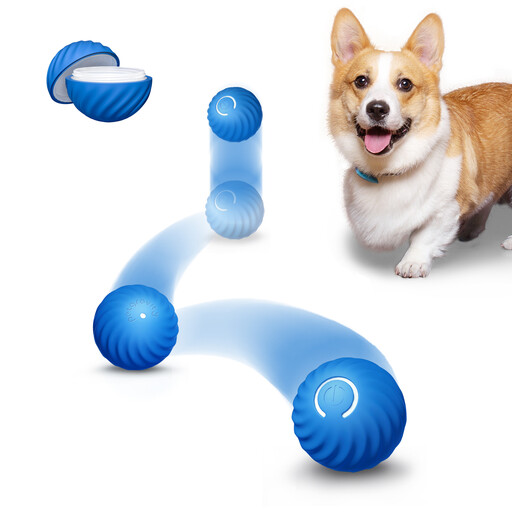
Why this choice suits this profile : This interactive ball offers two play modes and variable bouncing, making it ideal for small dogs that get bored with stationary toys.
The size is clearly designed for small dogs and the removable cover makes cleaning easier — two details that are often overlooked with motorised toys.
A USB-C rechargeable battery, a rubber core and a replaceable plush cover.
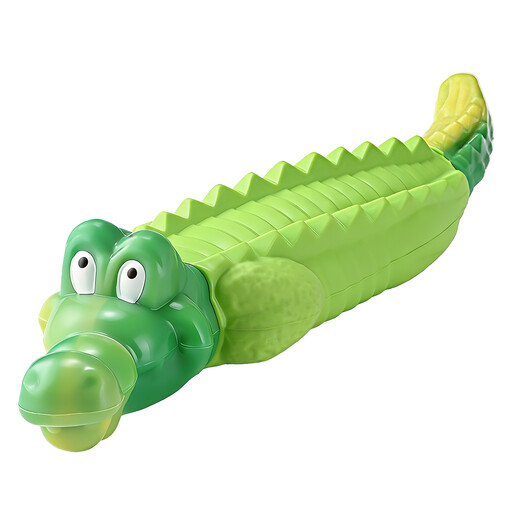
Why this choice suits this profile : Measuring 24 × 6 cm and featuring a dual-layer design, it is aimed at medium-sized and large dogs that enjoy chewing, fetching and tugging.
The product details clearly distinguish between medium-sized and large dogs and recommend regular checks: its durability is not presented as unlimited.
A nylon core, natural rubber coating and textured surfaces that make it easier for your dog to grip.
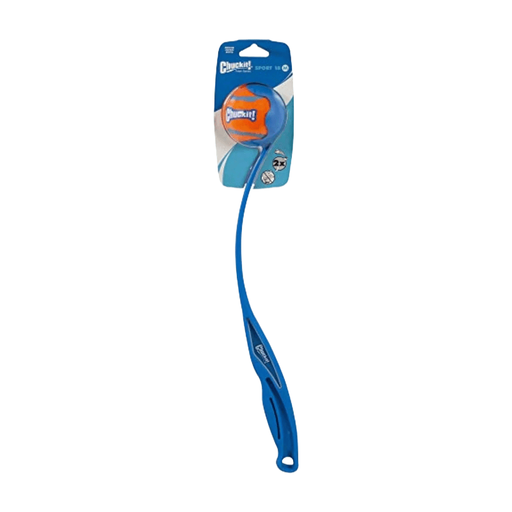
Why this choice suits this profile : This launcher is ideal for trips to the park and for owners who want to throw the ball further without having to pick up a wet or muddy object directly.
The 45 cm length, medium ball diameter and outdoor use are clearly stated. This allows you to check that it suits your dog and your play area.
A handle with a non-slip rubber coating, a lightweight design and a medium-sized tennis ball included.
We have put together a complete, real-time updated list of products that meet these demanding selection criteria and European safety rules.
Introduce the toy to your dog gradually and observe their reaction. Vary the activities: chewing, tugging, fetching, searching for treats or autonomous movement. Rotating the toys prevents you from leaving them all available at all times and helps you see what your pet really enjoys.
After each session:
It is impossible to predict precisely how long a toy will last. Its lifespan depends on the frequency of play sessions, chewing strength and maintenance. Even a durable dog toy should be used under supervision.
Choose a model suited to the size of their jaw and without parts that can easily be torn off. A rubber chew toy or treat dispenser may be suitable for short sessions, always under supervision. Avoid models intended for intensive chewers if the product details do not recommend them for puppies.
It depends on the toy and the animal’s behaviour. A session lasting a few minutes is enough to observe how your dog bites, pulls or handles the object. With an electronic model, remove it immediately if your dog tries to open it or attacks a moving part.
Not necessarily. The toy’s dimensions, weight and durability should match the dog’s build. A toy designed for a small dog may not withstand a large breed, while an oversized model will be difficult for a small animal to grip.