
Livraison le jour même ou le lendemain

Qualité garantie

Débloquez vos offres de bienvenue: Livraison GRATUITE | Jusqu'à -80 % | 30 jours d'essai gratuits à JoyPlus
Téléchargez l'application
An interactive dog toy is a great way to mix up activities, encourage movement and keep your companion occupied while you’re out. But the promises on the packaging alone aren’t enough to make the right choice. A toy advertised as “tough” won’t necessarily suit a dog that destroys its accessories in no time. Likewise, a squeaky ball can quickly become a nuisance in a flat.
To avoid disappointing purchases, take the time to compare the intended use, dimensions, materials and safety instructions. Here are the key criteria to consider before choosing a chew toy for dogs, an interactive ball or an enrichment toy.
A hard material isn’t automatically suitable for every dog. Bite force, age, temperament and jaw size vary greatly from one animal to another. A toy intended for a medium or large dog must be large enough and have a suitable structure. That said, it still needs to be checked regularly.
Conversely, a soft toy can work well for moderate use, such as throwing and fetching, without being designed for prolonged chewing. Terms like “bite-resistant” or “durable” should always be weighed against the manufacturer’s recommendations.
An electronic toy with unpredictable movements might appeal to an active dog, but you’ll need to remember to charge it and supervise its use. A squeaky ball can be fun for a game of fetch, but the noise might disturb neighbours in shared housing.
To keep a dog occupied at home, a treat-dispensing toy or a snuffle mat is often more suitable. For walks, an interactive ball for dogs or a toy designed for throwing and fetching will generally be more practical.
Grooves, ropes and crevices easily trap saliva and food residue. Check whether the toy can be cleaned with water, a damp cloth or a mild cleaning product. Instructions vary significantly from one model to another: some must not be submerged, while others can be washed.
Stop using the toy immediately if you notice a crack, a sharp edge, a loose seam, an exposed squeaker or any small detachable part.
For a dental chew toy for dogs, choose a texture that supports chewing without producing easily torn-off fragments. Nylon, natural rubber, TPR and braided fabrics each offer different levels of flexibility and mouthfeel.
A multi-layer structure, combining nylon and rubber for example, can offer a good balance between firmness and flexibility. That doesn’t guarantee it will hold up against a determined chewer, though. Supervision is still essential.
The toy should be large enough to reduce the risk of swallowing, yet still manageable for your dog to pick up and carry. Measure the width of your dog’s mouth and refer to the dimensions given in centimetres.
For a small dog, an oversized accessory will be difficult to carry. For a medium or large dog, a toy that’s too small may wear out quickly or be swallowed. An inflatable ball of 15 cm, for example, serves a different purpose from a chew toy measuring 11 × 3.5 × 16.5 cm.
A treat-dispensing toy must be able to hold dry food that’s easy to retrieve. In a snuffle mat, use only kibble or dry treats, then remove any leftovers to prevent moisture and unpleasant odours.
With an electronic toy, keep the charging cable out of your pet’s reach and use the device in an open space. Batteries and built-in power packs must never be accessible. Whatever type of toy you choose, always follow the manufacturer’s instructions and warnings.
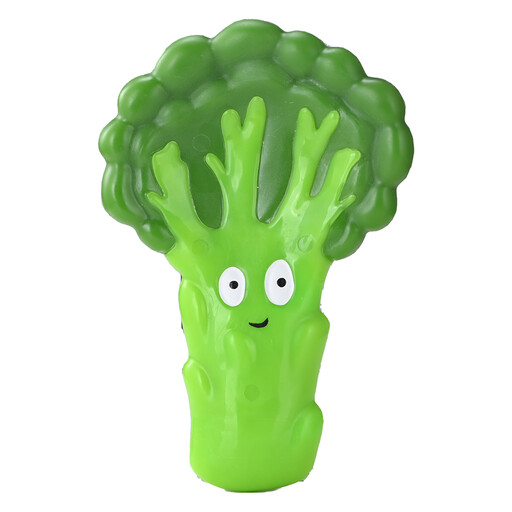
Why this choice suits this profile: This nylon toy, measuring 11 × 3.5 × 16.5 cm, combines chewing and fetch play. Its vegetable-inspired shape can work well for a dog that enjoys both independent play and time with its owner.
The product page clearly states the material, dimensions and the need to supervise your dog. This helps prevent prolonged use without monitoring.
Nylon construction, easy-to-grip shape, suitable for indoor and outdoor use, and can be cleaned with a damp cloth as per the instructions.
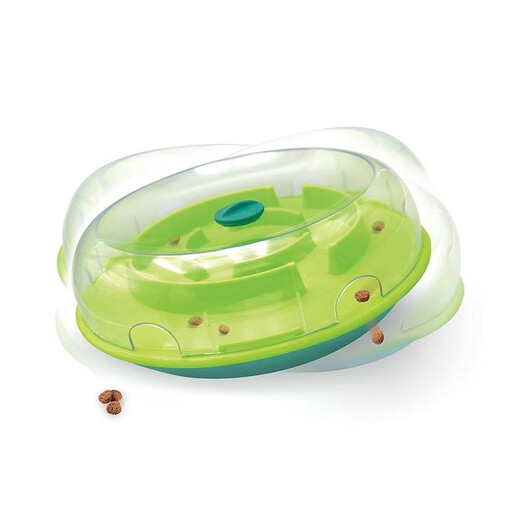
Why this choice suits this profile: This beginner-level puzzle game is aimed at owners looking for a structured feeding activity to complement walks and physical play.
The opening on top and the screw-off lid are clearly described on the product page. This makes filling and cleaning much simpler than with a hard-to-reach accessory.
Internal maze, multiple openings for dispensing treats, and materials stated to be free from BPA, PVC and phthalates according to the product page.
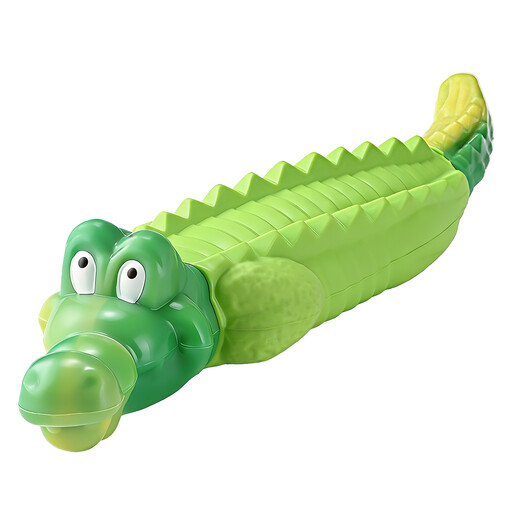
Why this choice suits this profile: With its 24 × 6 cm size and nylon and natural rubber construction, this toy is designed for medium and large dogs that enjoy chewing and fetching.
The product page states it is intended for medium and large dogs and recommends frequent checks, especially with powerful chewers.
Double-layer structure, crocodile-shaped texture, and functions for chewing, throwing and training.
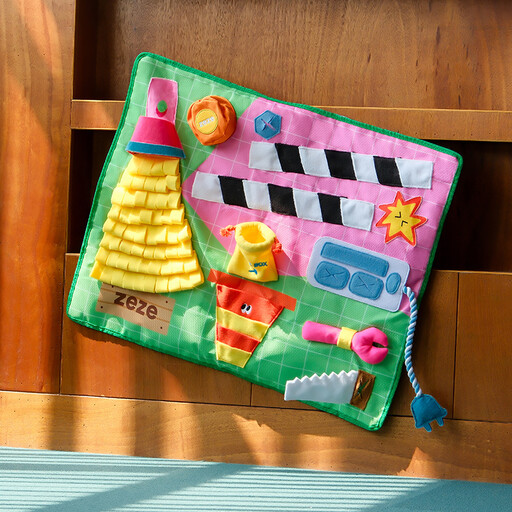
Why this choice suits this profile: With its dimensions of 70 × 57 cm and various compartments, this mat is ideal for kibble-searching sessions at home.
It focuses on food searching rather than promising automatic movement. The product page also recommends using dry food and removing leftovers.
Multiple hiding spots, a mix of fabrics and ropes, and a scent-based activity to be carried out under supervision.
We’ve put together a comprehensive, real-time selection of products that meet these strict criteria and European safety standards.
Start with short sessions of 10 to 15 minutes, especially with a treat-dispensing toy or a snuffle mat. Watch for signs of tiredness, overexcitement and how your dog handles the object. Stop the activity if it tries to tear off or swallow pieces.
Choose a simple structure with no small parts or long seams, and with dimensions suited to your dog’s mouth. A tough dog toy is never indestructible. Inspect it before and after each session, and replace it as soon as you notice any detachable fragments or sharp edges.
Chew toys, fetch toys and snuffle mats generally have no ongoing costs beyond replacement due to wear. An electronic model will need regular charging. A treat-dispensing toy may also require extra kibble or treats, which should be deducted from your dog’s daily food allowance.