
Livraison le jour même ou le lendemain

Qualité garantie

Débloquez vos offres de bienvenue: Livraison GRATUITE | Jusqu'à -80 % | 30 jours d'essai gratuits à JoyPlus
Téléchargez l'application
An interactive dog toy can keep your companion occupied, encourage them to move, and strengthen your bond. But you need to choose a model that’s genuinely suited to them. A ball that’s too small, a mechanism that’s a pain to clean, or a material that can’t withstand their jaw can quickly turn a promising purchase into a waste of money.
Here are the criteria to consider before choosing a dog ball, a treat-dispensing toy, a squeaky toy, or a chew accessory.
No toy is truly indestructible. Claims like “bite-resistant” or “tough” should always be weighed against the material used, the size of your dog, and their temperament. A toy that’s perfectly fine for a dog who chews gently may not last five minutes with a dedicated destroyer.
Inspect the toy before and after every session. At the first sign of a loose piece, a crack, or if the stuffing becomes accessible, it’s best to replace it.
Breed gives you a starting point, but weight, jaw width, and play style are just as important. A ball that can fit entirely inside your dog’s mouth is a choking hazard. On the other hand, a toy that’s too big will be hard to pick up and may end up at the back of a cupboard.
For a toy for a small dog, go for something that’s easy to hold in the mouth and reasonably lightweight. Medium and large dogs will often need a wider model, such as a toy for medium and large dogs made from rubber and nylon.
A treat-dispensing toy quickly builds up residue, especially if you use it with wet food or peanut butter. Check that it can be cleaned easily and that its parts come apart.
For a motorised toy, check the charging system, how watertight the port is, and whether any fabric parts can be removed. A USB-C rechargeable model saves you from buying batteries regularly, but its port must be kept completely dry during charging.
Before ordering, roughly measure the width of your dog’s jaw and compare it with the dimensions given by the manufacturer. A ball intended for fetching needs to be big enough that it can’t be swallowed, yet light enough to be carried without difficulty.
For outdoor play, also consider the environment:
Natural rubber generally offers more flexibility, while nylon focuses on rigidity. A combination of the two can suit a dog who likes to chew between play sessions, but it never removes the need for supervision.
Fabric toys, removable covers, and ropes should be inspected regularly. A chew toy should not be presented as a medical device or a guaranteed solution for cleaning teeth. Its ridges and textures can simply provide extra stimulation during play.
A toy designed to stimulate your dog’s intelligence should offer an appropriate level of difficulty. If treats fall out within seconds, your dog may quickly lose interest. Conversely, a mechanism that’s too complicated can discourage them.
Start with a small amount of kibble or treats that are easy to retrieve. Some models can be placed in the freezer once filled, which extends the playtime. For electronic versions, check the number of available modes, battery life, charging type, and cleaning instructions.
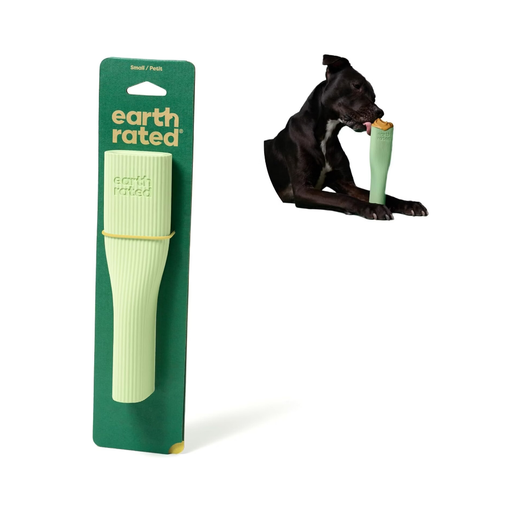
Why this choice suits this profile: With its ribbed shape measuring 17.8 × 5.1 cm, this toy is suitable for small dogs and lets you start simply with kibble, dry treats, or a wet preparation.
Its dimensions are clearly stated, and the toy can be washed on the top rack of the dishwasher. Once filled, it can also be placed in the freezer.
Natural rubber, treat dispensing, ergonomic shape, and easy maintenance.
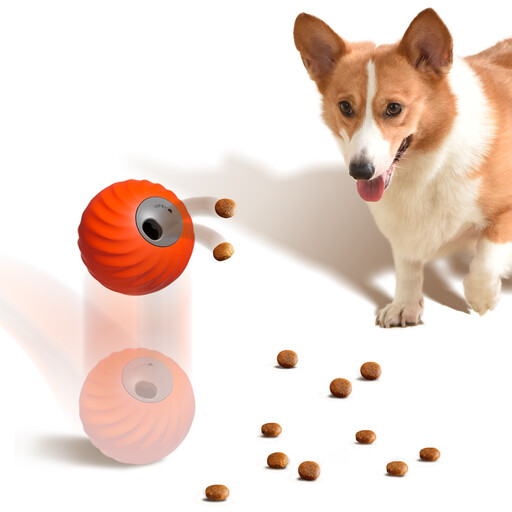
Why this choice suits this profile: This 72 mm ball combines bounce, treat dispensing, and two play modes for owners looking for a more interactive experience at home.
The toy doesn’t rely solely on a squeak or random movements – the treats add a genuine foraging activity. Its replaceable cover also makes it easy to refresh.
Bounce, treat compartment, two play modes, and USB-C charging. The toy should still be used under supervision.
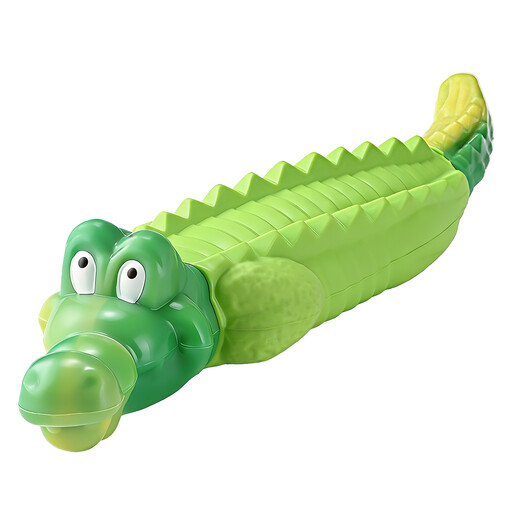
Why this choice suits this profile: Its dual-layer construction in nylon and natural rubber, measuring 24 × 6 cm, is aimed at medium and large dogs who enjoy chewing and fetching.
The size and materials are clearly stated, which reduces the risk of choosing a toy that’s too small. Regular checks are still essential, especially with dogs who chew very hard.
Crocodile shape that’s easy to grip, dual-layer construction, suitable for fetch-and-return play, and can be cleaned with water.
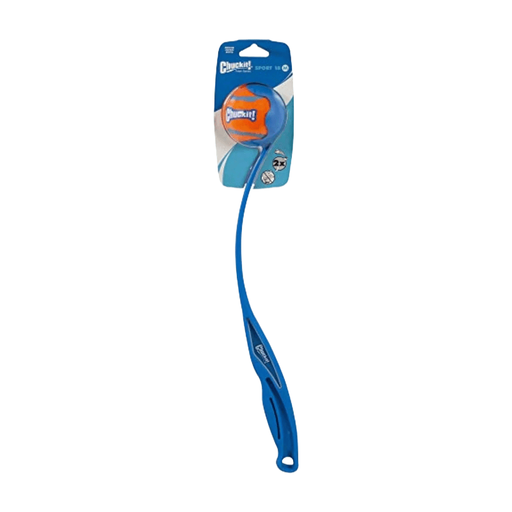
Why this choice suits this profile: For trips to the park, the 45 cm launcher lets you play fetch without having to bend down repeatedly or touch a wet ball directly.
The set combines a launcher and a medium-sized ball – so you can check that the ball suits your dog before you start throwing.
Ergonomic handle, 45 cm length, ball included, and stated compatibility with medium-sized balls.
We’ve put together a comprehensive, real-time updated selection of products that meet these demanding criteria as well as European safety regulations.
Start with sessions of 10 to 15 minutes, then adjust the duration based on your dog’s interest and behaviour. Remove the toy if they show signs of tiredness or frustration, or if they start chewing it excessively.
A treat-dispensing toy or a fillable model can work well for a calm period of occupation. First try it in your presence to make sure your dog doesn’t try to tear pieces off. A motorised toy should also be used in a clear space and under supervision.
Recharging generally avoids having to replace batteries, but the actual cost depends on how often you use it and the battery’s lifespan. Keep the cable out of your dog’s reach and follow the manufacturer’s instructions to preserve the device.