
Livraison le jour même ou le lendemain

Qualité garantie

Débloquez vos offres de bienvenue: Livraison GRATUITE | Jusqu'à -80 % | 30 jours d'essai gratuits à JoyPlus
Téléchargez l'application
An interactive dog toy can keep your companion entertained at home, accompany a game of fetch at the park, or make a walk more stimulating. But a colourful picture and the word "durable" aren't enough to make a reliable choice. Size, materials, the type of play, and how easy it is to clean often have a much bigger impact on its lifespan than any marketing promises.
No toy can withstand every set of jaws. A chew toy for dogs might be fine for moderate chewing, but a squeaky ball, a fabric cover, or a braided rope will wear out quickly with a dog that loves to shred its accessories.
The right approach is to read the manufacturer's warnings, then inspect the toy before and after each session. If a seam comes undone, a part comes loose, or an internal component becomes accessible, remove the toy immediately.
A ball that's too small can be difficult to pick up and may pose a choking hazard. On the other hand, an accessory that's too bulky might discourage a small dog or put too much strain on its jaw. So take the "all breeds" label with a pinch of salt: it doesn't replace checking the diameter, weight, and whether your pet can actually carry the toy.
For a toy for small dogs as well as for a medium-sized dog, compare the listed dimensions to your companion's actual build, rather than just its age.
A treat-dispensing ball assumes your dog enjoys foraging for food and that you're prepared to clean it regularly. A USB-C rechargeable dog toy needs a dry storage space and supervision of the charging cable. As for a floating dog ball, it needs to be rinsed after a swim in the sea or a chlorinated pool.
Before you place an order, ask yourself whether the toy will mainly be used for fetching, tugging, retrieving, keeping your dog occupied alone under supervision, or encouraging movement.
For a dog ball, the diameter is the first thing to check. Models designed for medium or large dogs are often over 7 cm, whereas a small dog will generally prefer a lighter format. The toy should be easy to carry without fitting entirely inside the mouth.
For outdoor play, choose a colour that stands out, such as orange or yellow, especially in long grass. A bouncy dog ball works well in open spaces, but its unpredictable bounces are harder to manage indoors.
Rubber, latex, nylon, polyester, and plush fabric all behave differently with use. A smooth rubber model is generally easier to clean than a rope or a fabric-covered toy. Even if it's washable, a toy must be completely dry before being stored away.
Don't rely solely on claims like "safe" or "bite-resistant". Check the composition, age recommendations, and usage limits listed on the product page. Pet toys are not intended for children and must be used according to the instructions.
A motorised or light-up toy offers a different experience, but it also contains a battery, a motor, and sometimes sensors. For a glow-in-the-dark dog toy, check whether the lighting runs on batteries or a rechargeable battery. With a USB-C rechargeable dog toy, the charging port must stay dry and the cable kept out of your pet's reach.
Unless explicitly stated, electronic toys should not be submerged. Charge them away from water, unplug them after use, and stop the session immediately if the casing cracks or a part becomes loose.
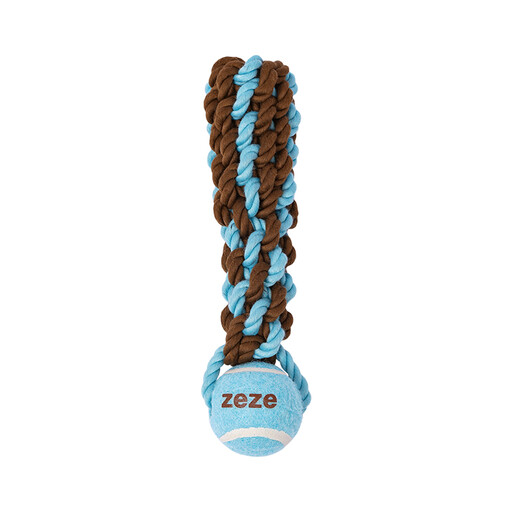
Why this choice suits this profile: This combination of a tennis ball and a braided rope is ideal for early fetch or gentle tug sessions. Its size makes it easy to handle by hand.
The product page clearly states it is not suitable for dogs that chew intensively and recommends regularly checking the rope and ball.
Braided rope, integrated ball, and versatile uses: fetch, gentle tug, and two-player games.
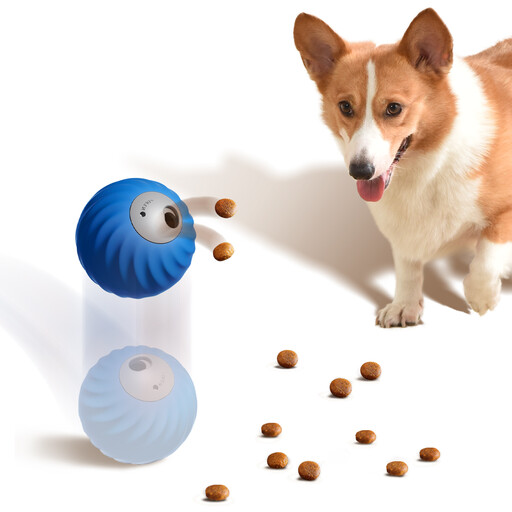
Why this choice suits this profile: This model combines bouncing movements, two play modes, and a treat compartment to vary activities at home.
USB-C charging means you won't need to keep buying batteries, while the removable cover makes cleaning and replacement easy.
72 mm diameter, USB-C rechargeable, and built-in treat dispenser.
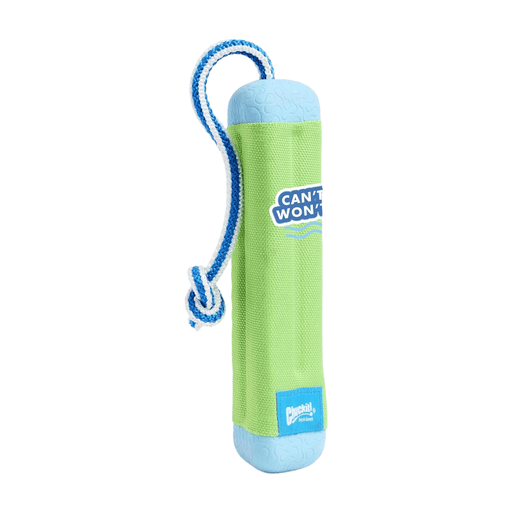
Why this choice suits this profile: This fetch toy is designed for throwing, tugging, and playing both on land and in water. Its handle features a knotted rope.
Its floating design and orange and blue colours fix the drawbacks of toys that are hard to spot or poorly suited to water play.
Nylon, rubber, and memory foam; non-slip handle; and easy cleaning with soapy water.
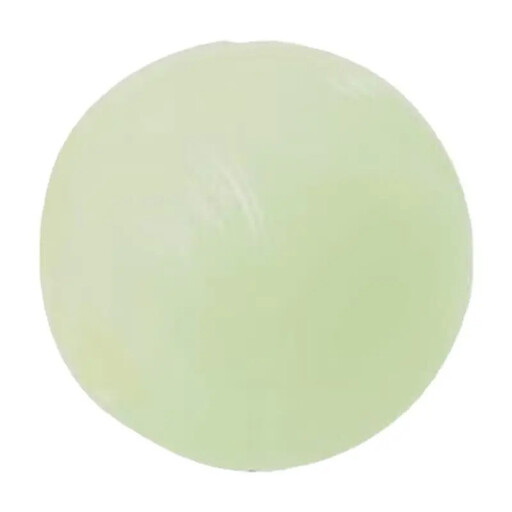
Why this choice suits this profile: This photoluminescent ball is designed for owners who want to extend fetch sessions after dark, with no cables or batteries required.
The product page states that the ball charges in the light and remains visible for 20 to 30 minutes. This duration may, however, vary depending on usage conditions.
7.6 cm diameter, smooth rubber, and stated compatibility with compatible Chuckit! launchers.
We've put together a comprehensive, up-to-date selection of products that meet these demanding criteria and European safety regulations.
Start with short sessions, especially with a squeaky dog toy or a motorised ball. Observe your pet's behaviour, its level of excitement, and the condition of the toy. The ideal duration depends on its temperament, age, and environment. Close supervision is essential every time it's used.
Rotate the toys rather than leaving all of them out permanently. Clean each model according to its instructions, dry it thoroughly, then store fabric toys in a dry place. Also, avoid using a fetch ball as a chew toy if the manufacturer doesn't recommend it.
The price depends on the material, size, and whether or not it contains electronic components. A classic ball or a throw toy for dogs generally requires little maintenance. A treat-dispensing ball or a rechargeable model, on the other hand, may include a battery, a replacement cover, or additional parts. So when comparing offers, take into account the purchase price, accessories, and the replacement conditions stated on the product page.