
Livraison le jour même ou le lendemain

Qualité garantie

Débloquez vos offres de bienvenue: Livraison GRATUITE | Jusqu'à -80 % | 30 jours d'essai gratuits à JoyPlus
Téléchargez l'application
Finding the right interactive dog toy can quickly become overwhelming. Between marketing promises and real-world performance, it's easy to end up with a toy that's shredded in minutes or, worse, one your companion completely ignores. As a Product Expert at Joybuy, my mission is to help you navigate this landscape. Let's break down the common pitfalls to avoid and the essential criteria to ensure you never make the wrong choice again.
The market is flooded with products featuring catchy slogans. Unfortunately, these fine words often hide design flaws that can be costly, both for your wallet and your peace of mind.
To avoid making a mistake, focus on objective features. Here are the three things you absolutely must check before you check out.
The choice of material is crucial for the toy's safety and longevity. Each material has its strengths:
Always ensure the toy is made from non-toxic materials and has no small parts that could be torn off and swallowed.
A dog has varied needs. The perfect toy will depend on its temperament and what you want to achieve:
A toy for a Chihuahua will never be suitable for a German Shepherd, and vice versa. The toy's size must be large enough not to be swallowed but manageable enough for the dog to grip in its mouth. The resistance should be chosen based on the dog's jaw strength. A toy for large dogs is generally designed with a reinforced structure to withstand pressure of several hundred pounds.
To put theory into practice, here are a few concrete examples that cater to very different dog profiles.
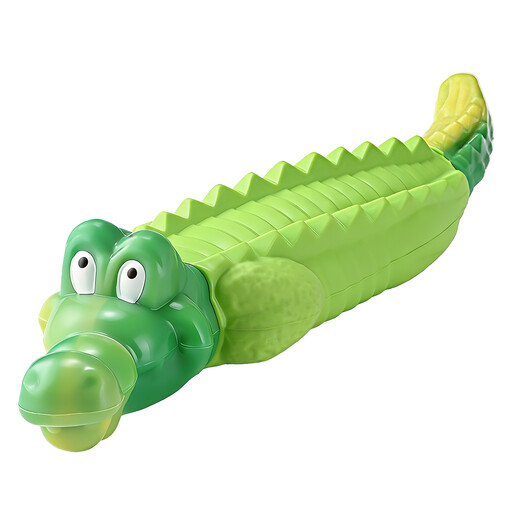
Why it’s a great fit: Designed specifically for medium to large dogs, this toy satisfies the deep-seated need to chew for powerful jaws, which are often frustrated by flimsy toys.
Instead of promising to be "indestructible," it relies on a verifiable dual-layer construction: a hard nylon core and a softer natural rubber shell. This design provides tangible, long-lasting resistance.
The combination of hardness and flexibility satisfies the need to chew while being gentle on the gums. Its textured crocodile shape makes it easy to grip.
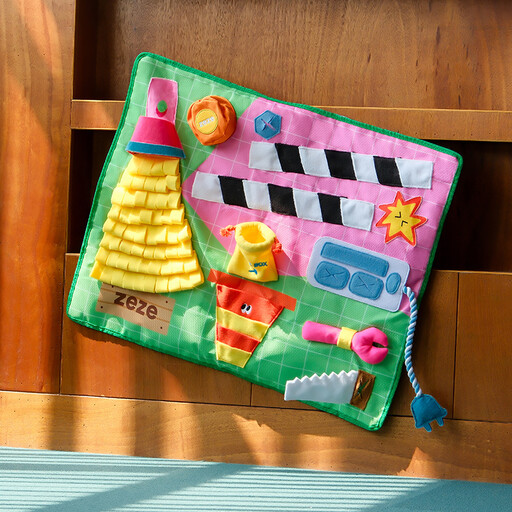
Why it’s a great fit: Ideal for dogs that get bored easily or show signs of anxiety. It turns mealtime into a full-fledged scavenger hunt, stimulating their sense of smell and intellect.
It provides authentic cognitive stimulation by tapping into the dog's natural foraging instinct. It's a far more engaging puzzle toy than a simple kibble dispenser.
Perfect for channeling energy, reducing stress, and fighting boredom. The different textures and hiding spots keep the dog interested with every use.

Why it’s a great fit: Perfect for active dogs that need to burn off energy. This ball stimulates their prey drive and keeps them moving, even when you're not available to play.
Its "smart" feature isn't about dispensing treats, but an algorithm of unpredictable movements. It jumps and bounces erratically, which holds a dog's attention far longer than a simple squeaky toy.
Rechargeable via USB-C for endless play sessions. The plush cover is removable and washable, making it easy to refresh the toy's appeal and ensure perfect hygiene.
We've compiled a complete and up-to-date selection of products that meet our strict specifications for safety and durability.
For a notorious "destroyer," opt for a durable dog toy specifically designed for powerful jaws. Look for materials like hard nylon or dense natural rubber, ideally in solid or dual-layer designs. Always supervise the first few play sessions and don't hesitate to offer several toys in rotation to prevent your dog from focusing on just one until it's exhausted.
The cleaning method depends on the materials. Rubber, nylon, or hard plastic toys can usually be hand-washed with warm water and mild soap. Be sure to rinse thoroughly. For snuffle mats or fabric toys, check the label; some are machine-washable on a low temperature. Electronic toys, like smart balls, should be cleaned with a slightly damp cloth after removing the washable cover.
A toy's lifespan depends on a trio of factors: its manufacturing quality, your dog's jaw strength, and the frequency of use. There's no one-size-fits-all answer. The best practice is to inspect your pet's toys regularly. Replace them as soon as they show significant signs of wear (cracks, pieces breaking off) or if the internal mechanism becomes accessible. Safety always comes before longevity.