
Livraison le jour même ou le lendemain

Qualité garantie

Débloquez vos offres de bienvenue: Livraison GRATUITE | Jusqu'à -80 % | 30 jours d'essai gratuits à JoyPlus
Téléchargez l'application
An interactive cat toy can keep an indoor cat occupied, encourage them to move, and mimic certain hunting sequences. But marketing promises alone aren't enough to guarantee a purchase that suits your home and your cat's habits. A model that's too noisy, fiddly to recharge, or made of small, fragile parts is likely to end up at the back of a cupboard before long.
Before comparing products, here are the most common pitfalls to avoid.
A toy that moves continuously won't necessarily appeal to all cats. Some prefer to trigger the action themselves with a paw swipe, follow an unpredictable path, or enjoy a pause between sequences. An automatic cat toy fitted with a sensor or a standby mode may be better suited to an animal that likes to provoke movement.
Batteries can be convenient, but replacing them is a recurring cost and means keeping a suitable stock on hand. Conversely, a USB-C rechargeable cat toy needs to be charged regularly, with its cable kept out of the animal's reach. Also check whether the product runs solely on battery or requires AA batteries.
Ears, tails, strings, seams and small accessories can be chewed or pulled off. A fabric toy should therefore be inspected regularly. As soon as any stuffing, motor or internal component becomes accessible, stop using it immediately. The presence of catnip may attract some animals, but it doesn't replace suitable movement or a sufficiently robust design.
To stimulate the hunting instinct, choose a movement that alternates between acceleration, pauses and changes of direction. A hunting cat toy that always moves at the same speed is likely to lose its appeal quickly. Models with a moving tail, flapping wings or rotating elements offer different kinds of stimulation.
Touch activation is useful for cats that play in short bursts. A motion sensor can, in turn, restart activity when the animal approaches. If your cat is sensitive, pay attention to the noise level: a sound cat toy may attract them, but a motor or squeak that's too audible could just as easily scare them off.
The USB-C port simplifies charging with a compatible adapter you may already have at home. Still, check the product label for charging time and usage precautions. A battery-powered model, such as some circular toys, can be a good option if you want to avoid cables, provided you remove the batteries before any prolonged storage.
Choose a stable base for electronic toys and sufficiently thick fabrics for soft models. External surfaces should be wipeable without submerging the motor. Regularly check the seams, moving parts, battery compartment and attachments.
A fishing rod toy should always be stored out of the cat's reach after playtime. Even a stimulating indoor cat toy designed for daily use should not be left unsupervised if a string, stuffing or small component could become detached.
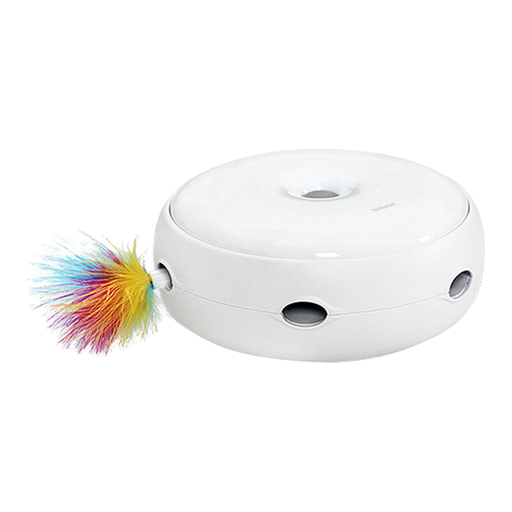
Why this choice suits this profile: Its circular shape and motion sensor make it a simple model to get to grips with for discovering independent play on a flat surface.
Movement triggered by the cat's approach avoids continuous operation. The low, stable base also limits tipping over from paw swipes.
Stated dimensions of 172 × 72 mm, moving elements to chase and powered by 4 AA batteries.

Why this choice suits this profile: This set of three sea creatures lets you vary the toys and refresh play sessions in a home where the cat has enough space.
USB-C charging avoids regularly buying batteries. The multi-layer design and three shapes also reduce monotony over time.
Three toys, integrated motor, rolling movements and fabric composed of a soft outer layer, intermediate padding and an inner lining.
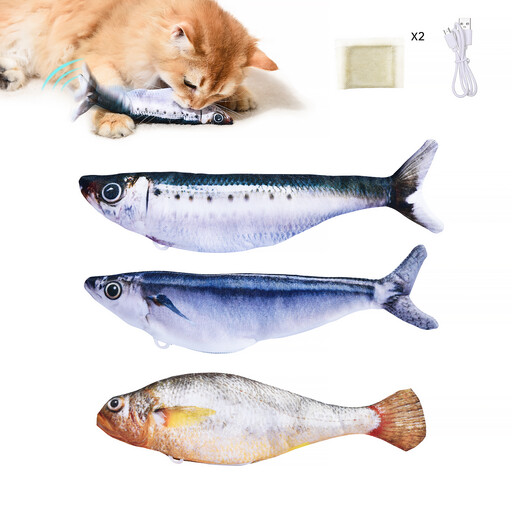
Why this choice suits this profile: Its fish shape, moving tail and tap activation suit cats drawn to prey-like movements.
The three fish and their random movements avoid relying on a single accessory. USB-C charging also simplifies power management.
Pack of three, tail inspired by fish movement, activation by light pressure, catnip included and USB-C rechargeable battery.
We've put together a comprehensive, real-time updated list of products that fully meet these strict selection criteria and European safety regulations.
For a first session, place the toy in a clear space, away from stairs, cables and fragile objects. Watch your cat's reaction for a few minutes before extending playtime. Rotate toys to prevent boredom and store string-based models after each session.
Accessories containing catnip should be kept properly sealed. With an electronic cat toy, avoid water and remove the batteries or unplug the cable before cleaning. Regular inspection helps you spot an open seam, a detached part or a damaged casing.
It's best to follow the manufacturer's instructions and prioritise supervision, especially during the first few uses. Models with moving parts, a string, padding or an accessible compartment should not be left out without supervision.
The cost mainly depends on the type of power supply. A battery-powered model involves regular replacements, while a USB-C rechargeable model requires electricity and monitoring of the battery's condition. So compare the purchase price with the intended frequency of use.
Turn off the device, keep the cable away and only wipe the parts that are suitable for surface cleaning. Never submerge the motor in water. Check the seams and fabric before each session, then stop using the toy if the padding or internal components become visible.