
Livraison le jour même ou le lendemain

Qualité garantie

Débloquez vos offres de bienvenue: Livraison GRATUITE | Jusqu'à -80 % | 30 jours d'essai gratuits à JoyPlus
Téléchargez l'application
That chilly draught sneaking under your front door, those bathroom seals turning black despite relentless cleaning... Beyond just being uncomfortable, these daily annoyances drive up your energy bills and slowly damage your home. The market is flooded with solutions for insulation and sealing, but in this jungle of options, it's easy to make the wrong choice.
I'm a Product Recommendation Manager at Joybuy, and my mission is to help you see things more clearly. Before you jump on the first product you see, let's review the common pitfalls that can turn a quick fix into a long-term headache.
For an effective and long-lasting installation, three technical criteria must be closely monitored. Ignoring them means risking having to do it all over again a few months later.
The choice between adhesive and screws is crucial, especially for a door's thermal insulation.
The type of flooring is just as decisive: a soft-lip door bottom seal will be perfect for a smooth floor, while a brush model will adapt better to an uneven one.
For seals in wet areas like bathrooms and kitchens, the sealant's composition isn't an option—it's a requirement.
It's a golden rule, and yet it's often overlooked. Before any purchase, take out your tape measure and precisely measure the gap to be filled. Manufacturers always indicate the effective range of their products. A foam seal for window weatherstripping might be designed for gaps of 1 to 3?mm, while another can fill a space up to 6?mm. A door bottom seal can seal a gap of 15?mm or even more. Choosing the right size guarantees optimal insulation without obstructing the closing of the door or window.
Rather than an endless list, here are our targeted recommendations, tailored to specific needs to help you get it right the first time.
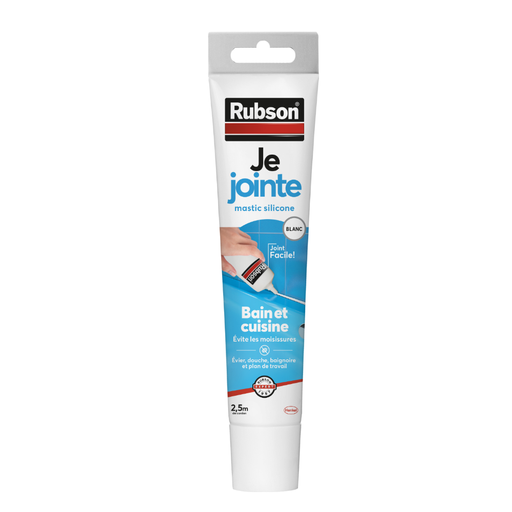
Why it's a great choice: Perfect for the occasional DIYer who needs to reseal a small joint around a sink or basin without bringing out the heavy-duty tools. Its ready-to-use tube format is ultra-practical.
This product eliminates the need for a caulking gun, a tool many occasional DIYers don't own. Direct application from the tube simplifies the task and avoids an extra purchase for a small repair.
Anti-mould formula suitable for sanitary applications. Adheres to most common materials (enamel, porcelain, ceramic). Easy application and simple smoothing.
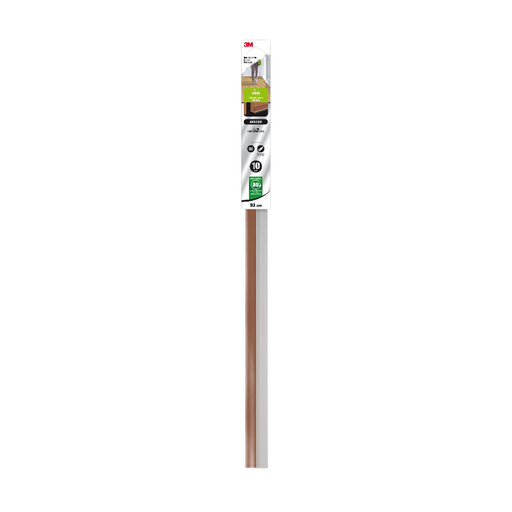
Why it's a great choice: Perfect for a renter who wants to improve thermal and acoustic comfort without drilling into the door. The installation is clean, fast, and reversible, while still offering remarkable performance.
It avoids the trap of low-quality adhesive that peels off at the first cold snap. 3M's adhesive technology is renowned for its durability. The manufacturer claims a 10-year lifespan, a true sign of reliability.
Designed for smooth floors, it seals gaps up to 15 mm. According to 3M, it can reduce air infiltration by up to 80%. The transparent lip is discreet.
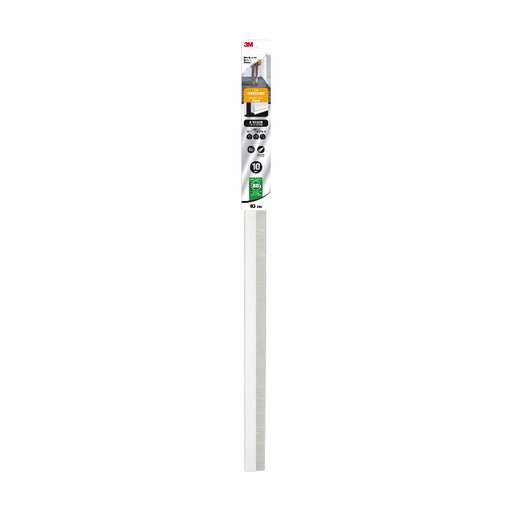
Why it's a great choice: For the homeowner who is renovating and looking for a definitive solution for a door over an uneven floor (terracotta tiles, old tiling). The screw-in fastening ensures rock-solid durability.
It tackles the problem of classic door bottom seals, which are ineffective on uneven floors. Its double row of nylon brushes adapts to irregularities where a simple rubber lip would quickly be overwhelmed.
Durable aluminium structure. Concealed screw fastening for a flawless finish. Specifically designed for uneven floors and gaps up to 15 mm.
Explore our full selection of products that meet our quality criteria and current standards.
Its longevity heavily depends on the quality of the adhesive, the surface preparation, and the usage conditions. An entry-level product might peel off in less than a year. Higher-quality models, like those from 3M, are designed to last: the manufacturer often states a lifespan of 5 to 10 years. The secret? A perfectly clean, dry, and smooth surface before application.
This is an essential step to ensure the new sealant adheres properly. Use a utility knife or a dedicated tool to remove the bulk of the old sealant. Then, apply a silicone remover to soften the residue, which you can scrape off with a plastic scraper to avoid scratching the enamel or tile. Finally, degrease the surface with denatured alcohol to remove any traces before applying the new anti-mould bathroom sealant.
Absolutely, and the impact is measurable. Heat loss under doors is far from negligible. By installing an effective door bottom seal, you limit cold draughts in the winter and keep your air-conditioned cool air inside during the summer. According to manufacturers like 3M, proper weatherstripping can significantly reduce energy consumption related to heating. It's a small investment that pays for itself quickly, both in comfort and on your wallet.