
Livraison le jour même ou le lendemain

Qualité garantie

Débloquez vos offres de bienvenue: Livraison GRATUITE | Jusqu'à -80 % | 30 jours d'essai gratuits à JoyPlus
Téléchargez l'application
An insulating door bottom seal can block draughts, dust, some noise and water ingress beneath a door. However, choosing the wrong model can quickly lead to disappointment: adhesive that comes away, a brush unable to follow uneven flooring or a profile that is too thick and prevents the door from opening properly.
Before buying a door bottom seal, check three essential points: the type of flooring, the width of the gap to be filled and the fixing method. These criteria are far more important than the vague claims of ‘enhanced insulation’ displayed on some packaging.
An adhesive door bottom seal is quick to install and requires no drilling. Its effectiveness nevertheless depends on the condition of the surface: it must be clean, completely degreased and sufficiently smooth. On uneven tiles, an old threshold or a grainy surface, the lip may not follow the floor properly. The adhesive may also lose some of its grip.
On wood flooring, laminate, vinyl, PVC or polished concrete, an adhesive strip can be perfectly suitable if the surface is clean and dry. For uneven flooring, however, it is better to choose a mechanical fixing combined with soft brushes.
A door seal for uneven floors will not necessarily suit every gap. The models presented here are designed to cover a space of up to 15 mm, according to the product listing details. Beyond this, part of the opening may remain visible or the brushes may be placed under excessive strain.
Measure the gap in several places, particularly in the centre and at both ends of the door. A slightly sloping floor can significantly change the available height.
A draught excluder is generally placed on the floor and can easily be moved. It can be a handy temporary solution or suit a door that is rarely used, but it may obstruct the passage and collect dust.
A door draught seal fixed directly to the door stays in place every time it is opened. This is a neater solution for an entrance, a heated room or a commercial premises. However, check the opening direction: depending on the product’s safety instructions, some screw-on models are not suitable for doors that open outwards.
The selected products measure 93 cm, a length suitable for many internal doors and entrance doors. Measure the width of the door, then make a clean cut if the profile is too long.
Screw-on models can generally be cut to size with a suitable saw. Once cut, check that the ends do not extend beyond the door and that it opens and closes without resistance.
For uneven flooring, prioritise a combination of two rows of brushes and a slim membrane. Brushes absorb changes in level better than a simple rigid lip. This design is particularly useful in an older house, on a slightly warped floor or for a door leading to a garage.
On a perfectly smooth surface, a transparent or flexible lip can provide a more discreet finish. The product listing for the adhesive model presented indicates compatibility with wood flooring, laminate, polished concrete, vinyl and PVC.
A screw-on door bottom seal requires a little more preparation — marking out and drilling — but provides a durable fixing. The adhesive model is quicker to install, provided the surface is prepared carefully.
Whichever system you choose, regularly inspect the condition of the brushes, membrane or lip. Gentle cleaning prevents dust from building up on them. If the door is exposed to moisture, also check that the profile is installed correctly and that water does not collect against the door.
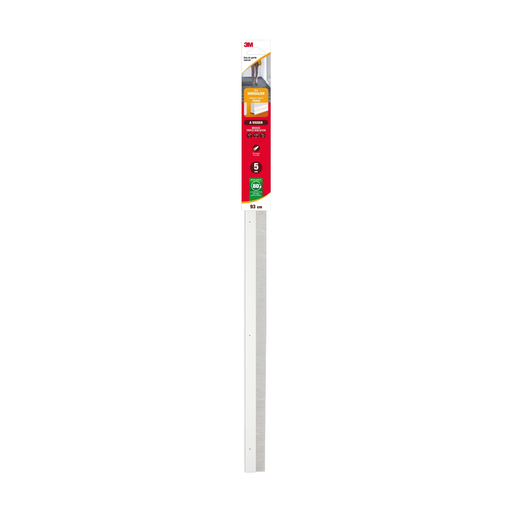
Why this choice suits this profile : Its screw fixing is ideal for a durable installation, while the white finish complements most internal doors.
It avoids using adhesive on an uneven surface and can be trimmed to the exact width of the door.
Two rows of brushes, a slim membrane, coverage advertised for gaps of up to 15 mm and a length of 93 cm.
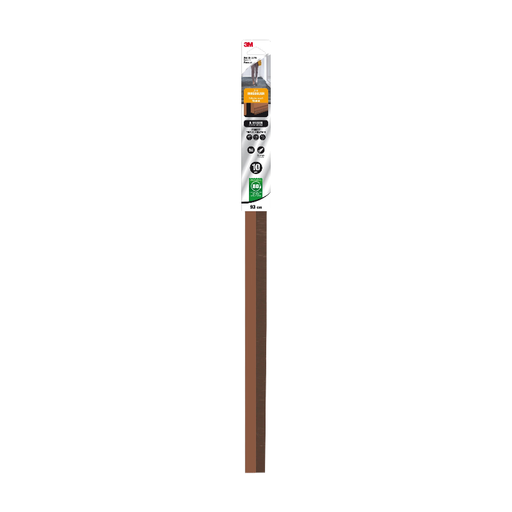
Why this choice suits this profile : Its brown finish and combination of brushes and a membrane pair naturally with wooden doors and darker-toned interiors.
The screw fixing reduces the risk of the seal coming away, which can happen on dusty or uneven surfaces.
93 cm long, can be cut with a saw and designed for gaps of up to 15 mm.
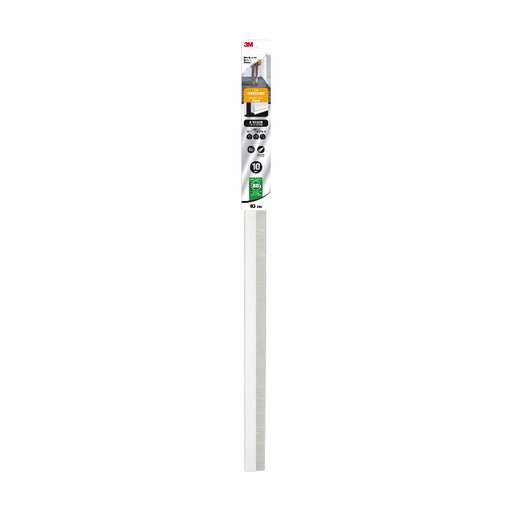
Why this choice suits this profile : Its aluminium construction and two rows of brushes are suitable for frequently used doors and uneven floors.
It does more than rely on a rigid lip: the brushes and membrane are designed to follow changes in the floor.
Aluminium, concealed screw fixing, two rows of nylon brushes and can be cut for precise fitting.
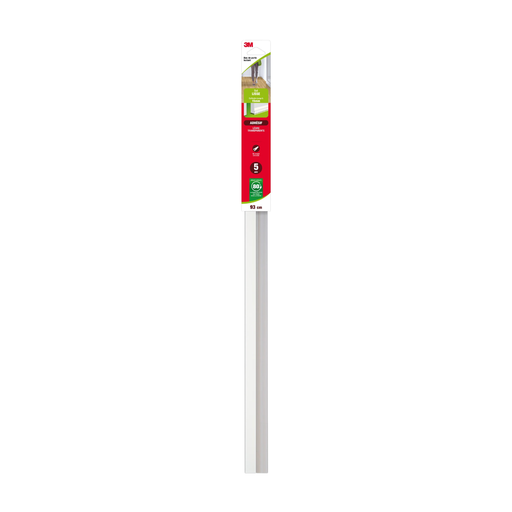
Why this choice suits this profile : Adhesive installation avoids drilling and is suitable for smooth surfaces when you want a quick, discreet solution.
The product listing clearly reserves its use for smooth floors and advises against uneven or textured surfaces.
PVC, transparent lip, tool-free installation and advertised compatibility with several smooth floor types.
We have put together a complete, real-time selection of products that meet these demanding criteria and European safety regulations.
Choose a screw-on model with soft brushes and a slim membrane. It will generally follow changes in the floor better than a rigid adhesive strip. Nevertheless, measure the available gap to ensure it falls within the advertised coverage range, here up to 15 mm.
A door bottom seal can reduce noise passing through the gap beneath the door, but it will not turn a lightweight door into a genuine acoustic solution. The result also depends on the thickness of the door, gaps at the sides and the structure of the partition wall. Product listings mention that some references may reduce air passage, but do not provide a universal acoustic measurement.
Once installed, a mechanical or adhesive system uses no electricity. The cost is therefore essentially limited to the purchase, installation and possible replacement of worn components. A fixing suited to the floor and regular maintenance can help prevent premature replacement.