
Livraison le jour même ou le lendemain

Qualité garantie

Débloquez vos offres de bienvenue: Livraison GRATUITE | Jusqu'à -80 % | 30 jours d'essai gratuits à JoyPlus
Téléchargez l'application
Is a chilly draft creeping into your living room even when the heating is on full blast? Are your energy bills skyrocketing for no apparent reason? The culprit is often easy to find: poor insulation around your doors and windows. But hold on—before you rush to buy the first adhesive seal you see, let's review the common mistakes that turn a good intention into a complete waste of time and money.
I'm a Product Recommendation Manager at Joybuy, and my role is to help you see things more clearly. Let's skip the marketing jargon and get straight to the point: getting your home cozy again and keeping your expenses in check. Here are the mistakes you absolutely must avoid:
adhesive door bottom will be ineffective on tiled floors with deep grout lines or on old parquet. In this case, you need a solution designed to conform to these imperfections.For truly effective door weatherstripping or window sealing, three criteria must be inspected closely. This is your guarantee for choosing a product that will last.
The material of your seal directly impacts its lifespan and effectiveness.
thermal insulation seal provides an excellent seal and much better longevity. Some models are reinforced for enhanced resilience.This is the crucial step, yet it's the one most often forgotten. Before any purchase, precisely measure the gap between the fixed frame and the opening part of your window, or between the bottom of your door and the floor. The modeling clay trick is foolproof: wedge a small ball of it in the gap, close the door or window, then measure the thickness of the flattened clay. Products always indicate the thickness they can fill (e.g., 1 to 3 mm or 2 to 6 mm). Getting the size right is the key to stopping drafts for good.
There's a solution for every situation.
uneven floor door bottom, you'll need a model with a soft brush or a flexible lip that can conform to the floor's imperfections. Screw-in models also exist for a rock-solid attachment.garage door seal needs to fill much larger gaps. Likewise, for cracks around frames, a cartridge-based sealant caulk may be essential.Rather than an endless list, here are a few products chosen to meet specific needs, keeping the common pitfalls in mind.
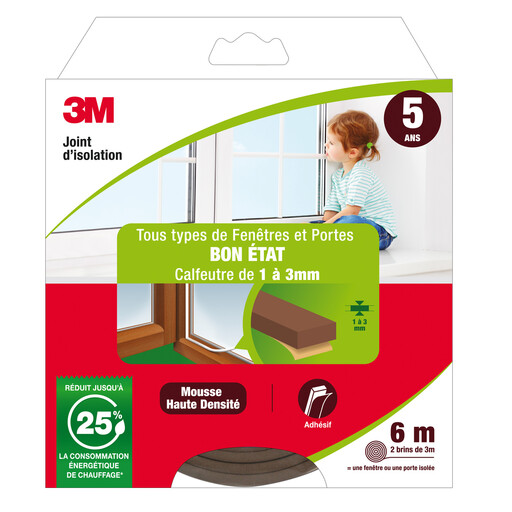
Why we chose it: Perfect for renters or for a quick and affordable first insulation project. Ideal against light drafts, its soft foam is a breeze to install and adapts to minor imperfections.
It's specifically designed for small gaps (1 to 3 mm), which avoids the common trap of using a poorly sized seal on joinery that's in good condition.
Ultra-soft, high-density foam for optimal compression. The manufacturer claims up to a 25% reduction in heating-related energy consumption.
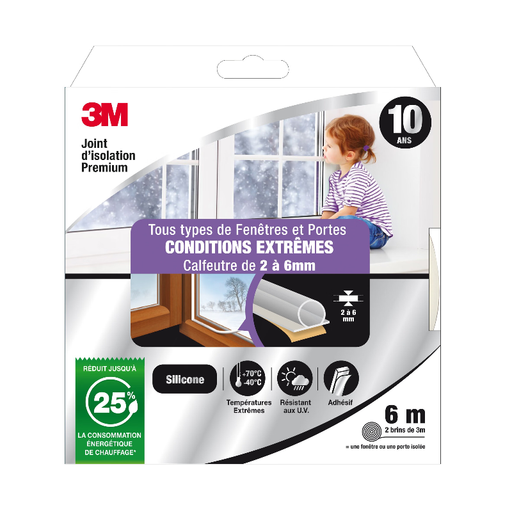
Why we chose it: The solution for those who want to invest in peace of mind. Silicone is perfect for old or warped windows with significant gaps and high exposure to the elements.
It avoids the trap of materials that age poorly. Silicone resists UV rays and extreme temperatures, ensuring its effectiveness doesn't fade, winter after winter.
Designed for wide gaps (2 to 6 mm). The manufacturer states a lifespan of at least 10 years under normal conditions.
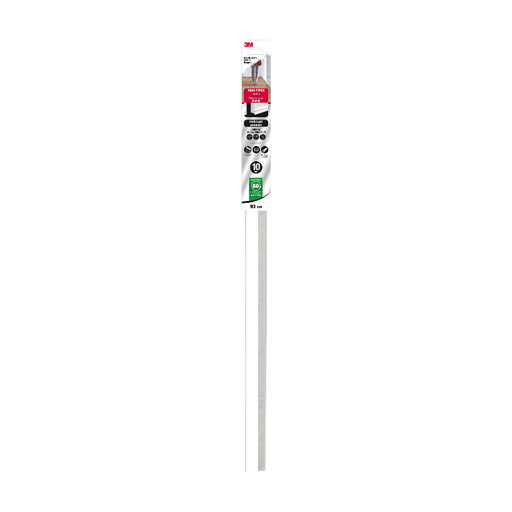
Why we chose it: The miracle solution for older homes with wide-grout tiles, terracotta, or a well-worn parquet floor. It's specially designed to fill significant gaps and conform to the floor's imperfections.
It solves problem #3: the ineffectiveness of a standard door bottom on an uneven floor. Its flexible design ensures constant contact with the floor across the entire width.
Capable of filling gaps up to 25 mm. Its extra-strong adhesive simplifies installation, with no drill or screws required.
It all depends on the material and, most importantly, the quality of the installation. An entry-level foam window weatherstrip will last between 2 and 5 years. A quality rubber or silicone model, applied to a well-prepared surface, can remain effective for 10 years or more.
The modeling clay method is foolproof. Take a small ball, place it on the fixed frame, and close the window. Carefully remove the flattened clay and measure its thickness with a ruler. This will give you the exact dimension of the gap you need to fill.
Yes, provided the installation is done properly. The effectiveness of an adhesive door bottom or window seal relies entirely on its adhesion. The surface must be impeccable: clean (dust-free), dry, and degreased (using rubbing alcohol, for example). Then, apply the seal without stretching it and press firmly along its entire length for perfect contact.