
Livraison le jour même ou le lendemain

Qualité garantie

Débloquez vos offres de bienvenue: Livraison GRATUITE | Jusqu'à -80 % | 30 jours d'essai gratuits à JoyPlus
Téléchargez l'application
An insulated mug can accompany you on your daily commute, during office days and on outdoor trips. You still need to choose the right model, though. Leaking lids, laborious cleaning, an unsuitable capacity or insulation claims without any supporting details can all lead to unpleasant surprises. To avoid buying something impractical, it is better to look beyond the colour and marketing promises.
A lid with a fold-down opening helps limit splashes, but that does not necessarily mean the mug can travel on its side in a bag. Check the closure system, whether it has a silicone seal and the manufacturer's recommendations. Even a properly closed travel mug should generally be kept upright when it contains a hot drink.
A 350 ml mug is suitable for a serving of coffee, tea or a cold drink. A 600 ml model is better suited to a long morning, while a 1.2 L mug is intended more for prolonged hydration or larger drinks. A larger capacity also takes up more space and may not fit in your car's cup holder.
The body of the mug may be easy to wash, while seals, valves and straws can sometimes retain residue. Even when a model is described as a dishwasher-safe mug, it will generally need to be completely dismantled before putting it in the machine. If the manufacturer recommends hand washing, it is best to follow this advice to protect the seals and finish.
A double-walled coffee cup creates an insulating layer between the inner and outer surfaces. Double-walled vacuum models, often made as an stainless steel mug, reduce heat transfer even further. However, the actual length of time the drink stays hot or cold depends on its starting temperature, how full the mug is, how often it is opened and the ambient temperature.
Good insulation does not remove the need for caution: the drink may remain scalding hot for a long time. Always check its temperature before taking the first sip and do not exceed the recommended fill level.
Avoid pouring a very cold liquid suddenly into a scorching-hot container, even if it is advertised as resistant to thermal shock.
For the car, choose a tapered base that is compatible with most standard cup holders, without assuming that this compatibility is universal. On the train or bicycle, weight and a reliable closure become priorities. An insulated cup with a lid intended to be carried in a bag should first be tested with cold water before you put a hot drink in it.
A handle makes the mug easier to hold, while a straw is mainly suitable for cold drinks consumed regularly. Fizzy drinks are not recommended in many sealed models, as the pressure can lift the lid.
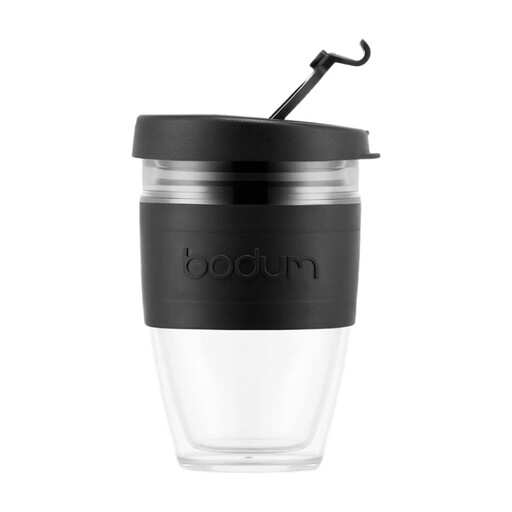
Why this choice suits this profile : With its 250 ml capacity, this model is ideal for a sensible serving. Its transparent body also makes it easy to see how much is left. It is aimed at anyone looking for a compact reusable cup for the office or short journeys.
The product listing mentions a double-wall construction and dishwasher cleaning. Even so, check the closure before putting it in a bag.
Double wall, integrated silicone band, stated BPA-free plastic body and 250 ml capacity.
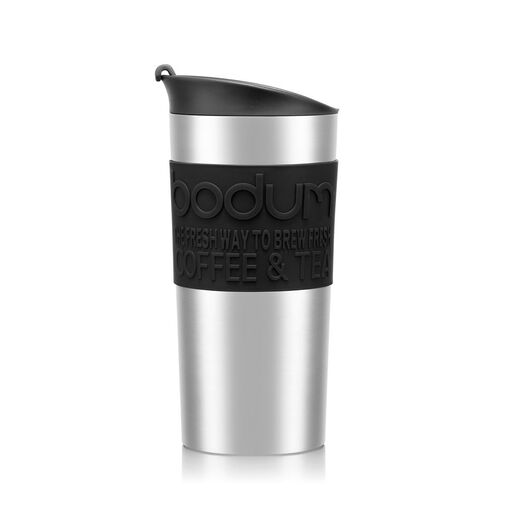
Why this choice suits this profile : Its 350 ml capacity is ideal for one serving. Its double-walled vacuum-insulated stainless steel body is well suited to everyday travel, whether you are heading to the office or driving.
The product listing specifies a silicone seal and recommends checking its condition regularly. This is a useful precaution to avoid confusing effective insulation with guaranteed leak-proofing in every situation.
Double-walled vacuum-insulated stainless steel, fold-down lid and silicone seal. The manufacturer advises against using it in a microwave.
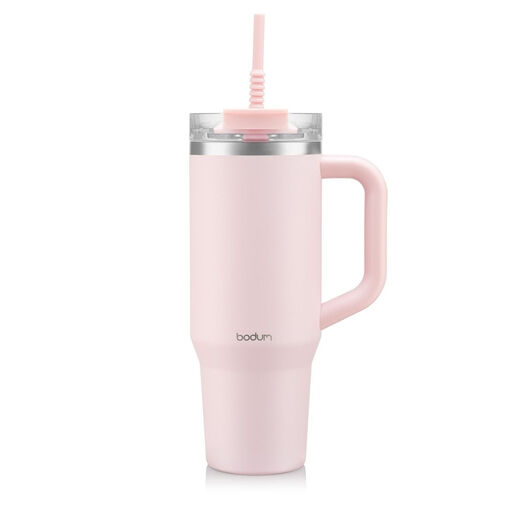
Why this choice suits this profile : Its large capacity is ideal for long days, working from home or outdoor activities, when refilling several small cups quickly becomes inconvenient.
The straw, handle and lid are designed for different uses. Clean each component separately and check how much space it takes up before using it in the car.
1.2-litre capacity, insulated stainless steel body, straw, handle and components advertised as dishwasher-safe.
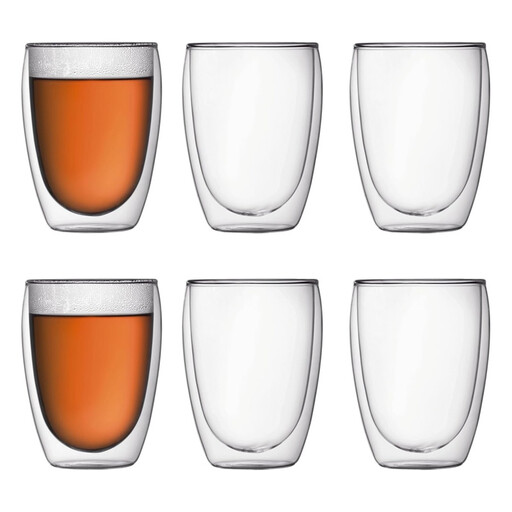
Why this choice suits this profile : With their handles, these coffee cups are designed for use at home or in the office. They are particularly well suited to lattes, teas and iced coffees, all beautifully showcased by the transparent glass.
The double wall does not protect against sudden thermal shocks. The product listing also recommends avoiding abrasive cleaning products.
Double-walled borosilicate glass, 350 ml capacity, handle and dishwasher cleaning specified in the product listing.
We have put together a complete, real-time updated list of products that meet these demanding selection criteria and European safety regulations.
To keep your insulated tumbler in good condition, rinse it after every drink and dismantle the lid whenever possible. The seals must be allowed to dry completely to prevent odours from developing. With a stainless steel mug, never use a microwave and follow the manufacturer's instructions for dishwasher cleaning.
The lifespan mainly depends on knocks, the condition of the seal and the integrity of the insulating system. Replace the lid or stop using the mug if a crack appears, if the seal becomes misshapen or if the insulation seems less effective.
It depends on the model. Some reusable cups, particularly those made from plastic or glass, are advertised as dishwasher-safe. For a mug with a straw, remove the straw, seal and lid before starting a cycle. If in doubt, choose hand washing.
A 250 to 350 ml size is generally suitable for one serving and easy to carry. If you want enough for the whole day without having to refill the mug regularly, choose 600 ml or more. Even so, check its dimensions and compatibility with your cup holder.
Yes, many models are designed for both. You simply need to follow the warnings concerning fizzy drinks, high temperatures and the fill level. With a straw, the mug will mainly be practical for cold drinks. Also avoid drinking a very hot drink too quickly.