
当日/次日达

品质保障

开启新人专享福利: 全场免邮 | 低至 2 折 | 免费试用 30 天 JoyPlus 会员
下载 Joybuy
An insulated travel mug is ideal for train journeys, days at the office, lectures or outdoor trips. However, some models become frustrating to use after just a few weeks: a lid that leaks in your bag, a drink that is scalding when you take a sip, a finish that starts to deteriorate or a capacity that does not suit your habits.
Before buying a travel mug, it is therefore worth separating genuinely useful features from vague marketing claims.
A lid with a flap can reduce splashes while you are walking without making the container completely leak-proof. If you plan to carry your mug in a bag, check that it has a silicone seal, that the closure system is reliable and that you follow the manufacturer’s recommendations. Even a mug with a leak-proof lid must be closed properly and should not be filled right to the brim.
The starting temperature, volume of liquid, frequency of opening and outdoor temperature all directly affect how long your drink stays at the desired temperature. A double wall or vacuum insulation effectively limits heat transfer, but no mug can keep its temperature perfectly stable from morning to evening.
The body of a stainless steel insulated mug is generally easy to clean. Flaps, straws and seals, however, can retain traces of coffee, tea or sugary drinks. If the different parts are difficult to take apart, the mug may be harder to keep clean every day. Check the manufacturer’s instructions to find out whether it should be washed by hand or in the dishwasher.
A double-wall construction creates an insulating layer between the inside and outside of the mug. Vacuum insulation reduces heat transfer even further and is suitable for both hot and cold drinks. Stainless steel is popular for its durability and low tendency to retain odours. Double-wall glass, meanwhile, lets you see the contents and is particularly pleasant to use at home.
For use on the go, also examine the materials used for the lid and seal. Plastic or silicone components should be inspected regularly and replaced at the first sign of a crack.
A 350 ml travel mug easily fits in a cup holder or compact bag. By contrast, a 500 ml insulated bottle or larger water bottle will be better suited to staying hydrated for longer.
When carrying a hot drink, choose a closure that locks firmly and a mug that feels stable in your hand. Straw models are convenient for cold drinks but require particularly thorough cleaning. Fizzy drinks are generally not recommended in sealed insulated containers: the pressure can cause leaks or even force the lid off.
Never put a stainless steel container in the microwave. Also leave a little space below the rim, avoid pouring boiling liquid straight into it and check the temperature before taking your first sip to reduce the risk of burns.
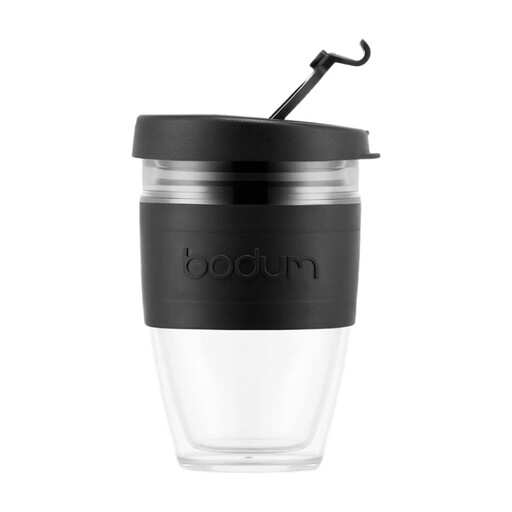
Why this choice suits this type of user: With a capacity of 250 ml, this mug is suitable for a short coffee, tea or a small drink during your daily commute. Its transparent body makes it easy to see how much is left.
The lid must be closed properly before carrying, and the seals should be checked regularly. This model is dishwasher-safe.
Double wall, silicone band for a comfortable grip and BPA-free materials according to the product details.
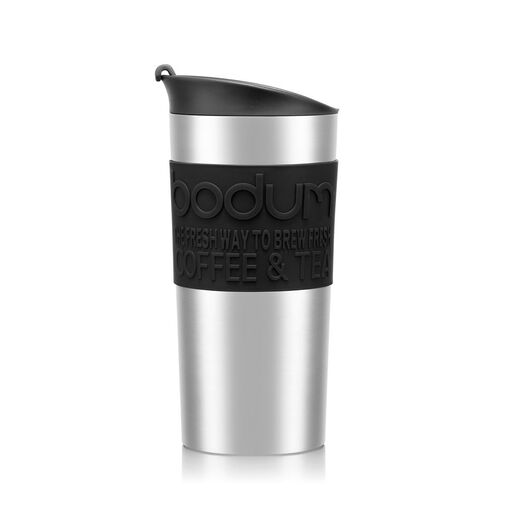
Why this choice suits this type of user: Its 350 ml capacity and double-wall vacuum-insulated stainless steel body make it a suitable companion for commuting and regular coffee breaks.
The flip-top lid and silicone seal help prevent spills when closed properly. Hand washing helps preserve the finish.
Double-wall vacuum-insulated stainless steel, compact size and an opening that can be used with one hand.
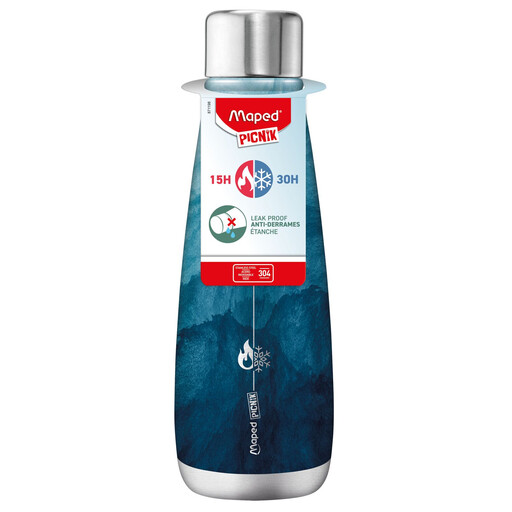
Why this choice suits this type of user: Its 500 ml capacity is suitable for work, lectures, hikes and journeys when you want to carry an insulated bottle without taking up too much space.
The product details state that it has a leak-proof closure and recommend gentle washing. This helps reduce the risk of leaks and preserve the finish, provided the cap is checked regularly.
Double-wall vacuum-insulated stainless steel, 500 ml capacity and advertised heat retention for up to 15 hours and cold retention for up to 30 hours.
We have put together a complete, real-time updated selection of products that meet these demanding criteria and European safety standards.
For a coffee flask, a 240 to 350 ml size is enough for an individual serving. If you prepare your drink at home to enjoy later, choose a lid that is easy to open and clean. An insulated water bottle of 500 ml or more is better suited to cold water, workouts and long days.
Design lovers can also choose a geek bottle featuring Zelda, Harry Potter, Pokémon, Marvel, Disney, Squid Game or Wednesday designs. However, the design should not distract from the essentials: capacity, closure, care and compatibility with your bag remain the priorities.
For coffee or tea during a journey, 250 to 350 ml is generally enough. If you spend several hours without access to a water fountain or drinks machine, a 500 to 515 ml size provides a more comfortable reserve without taking up as much space as a large tumbler.
Its lifespan depends on the quality of the materials, knocks and impacts, cleaning and the condition of the seal. Replace the lid or seal as soon as it is damaged, where the manufacturer allows this. A sudden loss of insulation, a leak or deformation of the body means you should stop using the mug.
It depends on the model. Some containers and their components are dishwasher-safe, while others must be washed by hand to protect the finish, seal or decorative designs. Check the product details before each wash and dry the lid and its various components separately.