
Livraison le jour même ou le lendemain

Qualité garantie

Débloquez vos offres de bienvenue: Livraison GRATUITE | Jusqu'à -80 % | 30 jours d'essai gratuits à JoyPlus
Téléchargez l'application
An insulated mug can make your daily commute, university days and coffee breaks at the office far more enjoyable. But not all models are created equal. A lid marketed as “leak-proof” might still let a few drops escape into your bag, while a large capacity could make the mug too bulky for a cup holder.
Before choosing an insulated mug, it’s worth looking beyond the colour and marketing claims. Here are the key factors to consider, the common mistakes to avoid, and a selection of sizes suited to different needs.
A mug with a lid and flip-top reduces splashes when walking or driving. That doesn’t necessarily mean it can be carried lying down in a bag. To judge its leak-proofing, check for a silicone seal, the closure mechanism and the manufacturer’s recommendations.
A poorly positioned lid also increases the risk of leaks. Close it until it clicks into place, and avoid filling the mug to the brim.
Thermal performance varies depending on the initial temperature of the drink, the volume poured, how often the lid is opened and the ambient temperature. A double wall or vacuum insulation slows heat exchange, but no stated duration can suit every situation.
For a coffee drunk during a commute, a 350 ml travel mug can be perfectly adequate. To last a full day, a 500 ml or larger insulated bottle will generally be more suitable.
The body of the mug is often easy to clean. However, the flip-top and seal tend to trap coffee, milk or tea residue more readily. Even when a model is advertised as dishwasher-safe, disassemble any removable parts if the manufacturer allows it, then leave them to dry separately.
For hot drinks, also be wary of containers that are difficult to inspect. A clear mug or a double-walled glass lets you monitor the level and appearance of the drink, but glass remains vulnerable to knocks and drops.
Also measure the diameter of the container if you plan to use it in the car. A mug may fit perfectly in a bag yet be too wide for a cup holder.
Stainless steel is particularly well suited to on-the-go use thanks to its good impact resistance. A double-walled, vacuum-insulated stainless steel bottle limits temperature exchange. However, it must never go in the microwave, be placed on a hob or be brought near a flame.
Borosilicate double-walled glass is better suited to use at home, in the office or at the table. It lets you see the drink and reduces condensation on the outside, but requires more care. In particular, avoid pouring a boiling hot drink into a very cold glass to minimise the risk of thermal shock.
A leak-proof mug should be assessed based on its actual use: upright transport, car journeys or storage in a bag. In particular, check:
In an insulated container, a very hot drink can remain dangerously hot for longer. Always check its temperature before drinking.
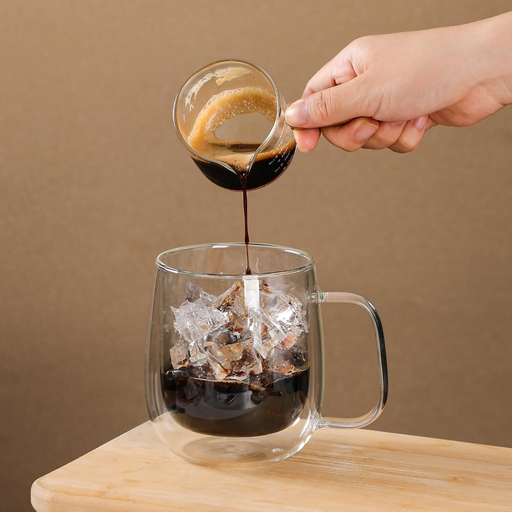
Why this choice suits this profile: this pack of two 350 ml mugs is ideal for home, the office or a couple who want to use the same size. The handles make them easy to grip, and the glass lets you see the contents.
The double wall helps retain heat and reduces the feeling of heat on the outside. However, these are glasses, not leak-proof containers to slip into a bag.
A pack of two 350 ml mugs with an integrated handle and dishwasher-safe according to the product listing.
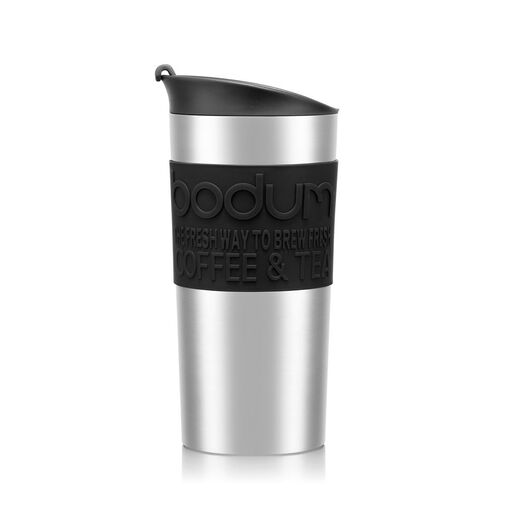
Why this choice suits this profile: its double-walled, vacuum-insulated stainless steel body is well suited to daily commutes, business trips and use in a cup holder.
The silicone seal and flip-top lid reduce the risk of splashes. However, you should still manually check the closure before transporting the mug.
Stainless steel, 350 ml capacity and one-handed opening. Hand washing is recommended to preserve the seal and finish.
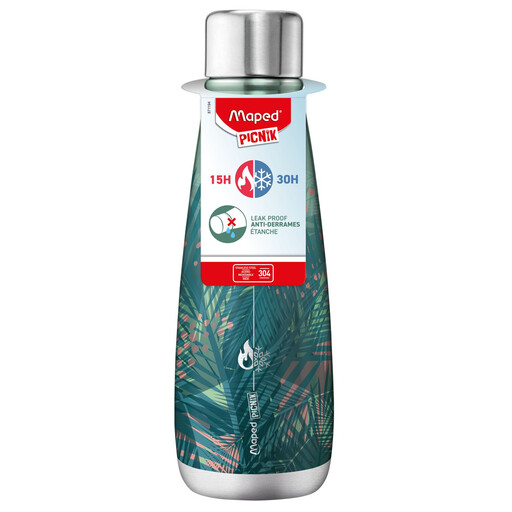
Why this choice suits this profile: with its 500 ml capacity, double-walled stainless steel construction and a system advertised as leak-proof, this reusable bottle is ideal for workdays, outings and hikes alike.
Its cap is designed to minimise leaks, making it better suited for transport in a bag than an open glass. Screw it on properly and avoid overfilling the bottle.
A 500 ml capacity, vacuum-insulated stainless steel and dishwasher-safe according to the product listing. It claims up to 15 hours for hot and 30 hours for cold.
We have curated a full range of products in real time that meet these strict criteria and European safety regulations.
Rinse the mug or bottle after each use, especially after drinking a milk or sugar-based beverage. Clean the lid, flip-top and seal with a soft brush where the design allows. Leave each part to dry separately before reassembling the container.
Avoid abrasive products, bleach and metal utensils, which could scratch the surface. Regularly inspect the mug for any cracks, dents, deformations or signs of wear on the seals. A damaged lid can compromise leak-proofing, even if the body of the container is still in perfect condition.
For an on-the-go coffee drunk during a commute or break, 350 ml is a common capacity. If you drink several beverages throughout the day and don’t have easy access to a water source, a 500 ml or larger bottle will give you greater autonomy.
It depends on the model. Some double-walled glasses, such as several Bodum references, are advertised as dishwasher-safe. Mugs fitted with a seal and flip-top will often retain their qualities better with hand washing. Always check the product listing and separate the different components before cleaning.
A travel mug is generally designed for drinking directly from, with a lid and sometimes a size that fits a cup holder. An insulated bottle prioritises transport and often offers a larger capacity. At home, a Bodum thermal glass or an insulated cup may be sufficient. For a container to slip into a bag, choose a suitable closure system and an easily accessible seal.