
Livraison le jour même ou le lendemain

Qualité garantie

Débloquez vos offres de bienvenue: Livraison GRATUITE | Jusqu'à -80 % | 30 jours d'essai gratuits à JoyPlus
Téléchargez l'application
An insulated lunch bag does more than just carry a lunchbox. It has to withstand daily commutes, be easy to clean, and offer enough space without becoming bulky. Whether for a child at school, an adult at the office, or a family on a picnic, certain details really make all the difference.
Manufacturers' claims, however, are worth decoding. A "waterproof" lining doesn't necessarily mean the seams are too. Similarly, a large capacity can turn the bag into a dead weight once it's full. So before you choose your insulated lunch bag, take the time to check the following points.
The thickness of the foam, the inner lining and the closure all affect thermal performance. The outside temperature, the contents of the bag, and the use of ice packs matter just as much. A duration stated on a product page should be taken as a rough guide, not a guarantee valid in all circumstances.
A compact lunch bag for a child can hold a small lunchbox, a water bottle and a snack, but it will quickly show its limits with a larger meal. Conversely, a large soft cooler will be ideal for several people, but impractical inside a school bag.
Compare the internal dimensions, rather than relying solely on the stated volume. A narrow shape or thick dividers can significantly reduce the usable space.
A lining that can be wiped clean with a damp cloth will be far more practical day-to-day than a model that requires delicate washing. Also check whether it's machine-washable: many insulated bags aren't, as water can damage the foam, seams or structure.
For everyday use, choose a lining made from PEVA, aluminium film, or a material described as easy to clean. Insulating foam slows down temperature exchange, but it doesn't replace a proper cold chain for sensitive foods.
For a longer outing, an insulated picnic bag with a waterproof lining, used with ice packs, will be more suitable. Close the compartment carefully and avoid leaving the bag in direct sunlight.
A compartment dedicated to food prevents your meal from coming into contact with school supplies or a laptop. For a lunch bag intended for school, a dedicated bottle pocket also helps reduce the risk of spills.
Models designed for work or study can include a padded laptop compartment, pockets for cables, and a strap to attach them to a suitcase. An insulated lunch bag with a laptop compartment is versatile, but it will generally be heavier than a standard lunch bag.
An insulated backpack distributes the load better across both shoulders. For a young child, choose a lightweight model with adjustable straps and a reasonable capacity. For an adult, pay close attention to the back padding, strap width, and the sturdiness of the zips.
The terms "water-resistant" and "waterproof" are not interchangeable: a fabric that resists splashes does not guarantee full protection in persistent rain. In any case, carry liquids in perfectly sealed containers.
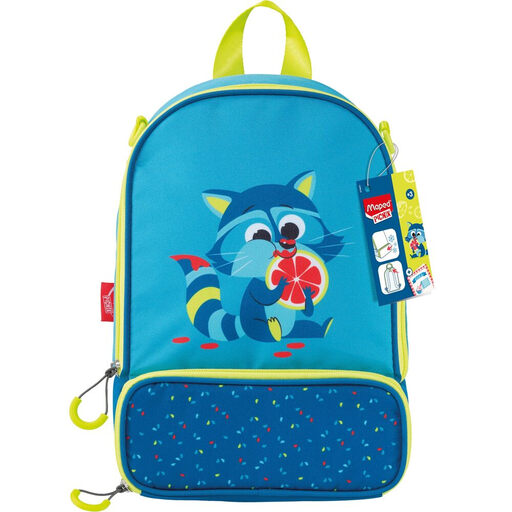
Why this choice suits this profile: With its 6.5 litres and stated 217 g, this bag is suitable for a child's meals at school, nursery or on a day out. It can be carried by hand, over the shoulder or on the back.
Its two compartments separate the insulated meal section from the upper space. The product page states it can be cleaned with a damp cloth, not in the machine.
Upper compartment with elastic to hold the bottle and a space for writing the child's name.
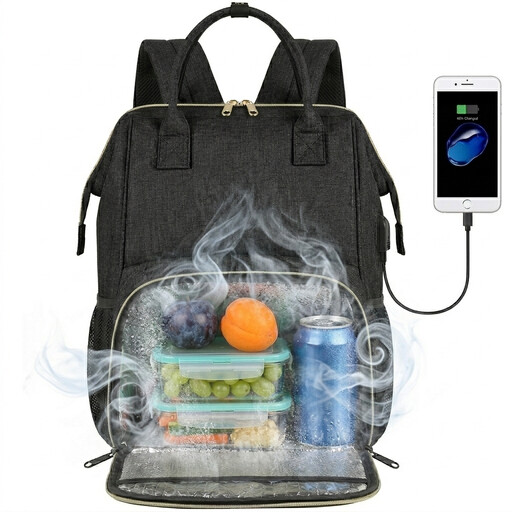
Why this choice suits this profile: This insulated lunch bag combines a meal compartment with a pocket for a laptop up to 15.6 inches. It's suitable for commuting, studying and business travel.
The insulated and waterproof compartment is separate from the electronics. The product page states a capacity of up to nine 330 ml cans and a washable lining for easy cleaning.
Padded laptop pocket, USB port usable with an external power bank, and a concealed rear pocket.
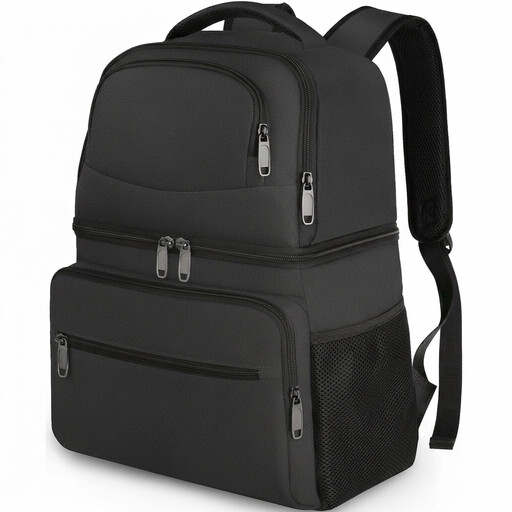
Why this choice suits this profile: This insulated backpack is designed for picnics, camping, the beach or hiking. It has two separate zones for drinks and dry food.
The separation between the insulated lower compartment and the dry upper section helps prevent contents from mixing. The bag should still be cleaned after each use.
Stated capacity of 26 cans, PEVA inner lining, adjustable straps and a waist belt.
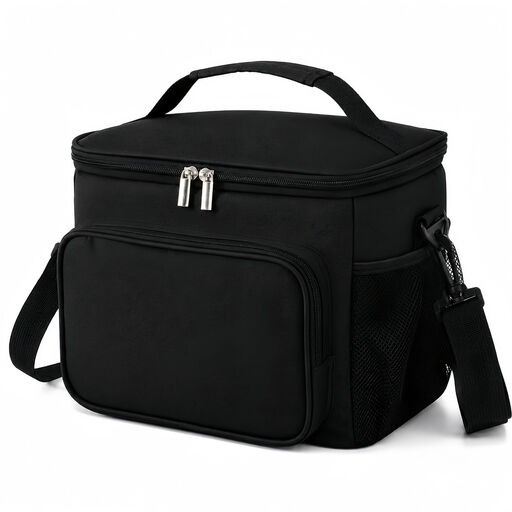
Why this choice suits this profile: With its stated 15 litre capacity and shoulder strap, this bag is suitable for carrying a lunch, drinks or a meal to share during a commute or picnic.
The stated capacity is clearly given, making it easy to compare with the volume of your lunchboxes and bottles. Still, check the dimensions before ordering.
Reusable format with shoulder strap, practical for work as well as meals outdoors.
We've put together a comprehensive, real-time updated selection of products that meet these exacting criteria, as well as European safety standards.
It all depends on the bag's design, the outside temperature, the type of food and whether you use ice packs. The two-to-four-hour durations stated on some models correspond to the conditions set out on their product page. They are not a guarantee valid in every situation.
For a child, go for a lightweight lunch bag that's easy to open and compact enough to fit inside a school bag. Two compartments, a name label and a convertible carrying option can be very handy. A capacity of around 6 to 7 litres is often enough for a meal, a water bottle and a few extras, depending on the size of the lunchbox.
Yes. Some insulated backpacks include a padded pocket that can hold a laptop up to 15.6 inches. Check the exact dimensions of your device and keep liquids in a separate compartment. Where present, the USB port usually works with an external power bank.