
Same-day & Next-day Delivery

Quality Guaranteed

Unlock Your Welcome Offers: FREE Delivery | Up to 80% OFF | Free 30-day JoyPlus trial
Download the APP
An insulated lunch bag makes daily commutes, office days, school trips and picnics easier. However, some models quickly disappoint: the capacity may be unsuitable, the compartment difficult to clean or the claimed storage time too vague. Before buying an insulated lunch bag, lunch box or food flask, a few checks can help you avoid unpleasant surprises.
Oxford fabric or water-repellent polyester protects against splashes, but it will not necessarily stop melted ice from leaking out. For carrying chilled drinks, it is better to choose an easy-clean PEVA or aluminium inner lining, properly assembled seams and a well-protected fastening.
Also bear in mind that leakproofing often applies only to the insulated compartment. The outer pockets of a lunch bag may have no protection at all.
The starting temperature, amount of ice, frequency of opening and outdoor temperature all directly affect how long food stays hot or cold. A claim such as ‘2 to 4 hours’ or ‘4 to 6 hours’ is therefore an estimate that applies under certain conditions, not a universal guarantee.
For perishable foods, use suitable ice packs and follow the applicable food storage guidance. An insulated bag is not a substitute for a fridge.
A capacity stated in cans does not always give an accurate idea of how much room is available for a lunch box, insulated bottle and cutlery. The shape of the compartments matters just as much as the total volume. A very spacious insulated backpack can also become particularly heavy once full.
A layer of insulating foam, often a few millimetres thick, limits heat exchange. The Summer Cooler Bag 26 Cans, for example, claims to feature 8 mm foam and two separate compartments: an insulated lower section designed to hold 16 cans and a dry upper section that can hold 10. This layout may be suitable for a picnic or outdoor trip, but the actual dimensions are more informative than the product name alone.
For an individual meal, a 700 to 900 ml lunch box may be easier to store. The 900 ml Maped Picnik model is made from stainless steel and has an attached lid with a clip fastening. It is dishwasher-safe, but must not be placed in the microwave.
Stainless steel resists odours well and is generally easy to clean. However, double-wall vacuum-insulated models, such as insulated bottles and insulated food jars, require particular attention to the seal and lid. Gentle washing followed by thorough drying helps prevent lingering odours.
Some products are hand-wash only. Also check whether the bag’s lining can be wiped clean with a damp cloth, particularly after carrying foods with sauces.
For the office or university, make sure the bag fits inside your main bag, locker or bicycle basket. A model weighing 700 to 800 g when empty can already feel heavy once loaded. Adjustable shoulder straps, a padded back and a waist strap are particularly useful when hiking or travelling for longer periods.
A laptop compartment can be useful in a professional setting. By contrast, a dedicated cool bag generally prioritises space for drinks and food.
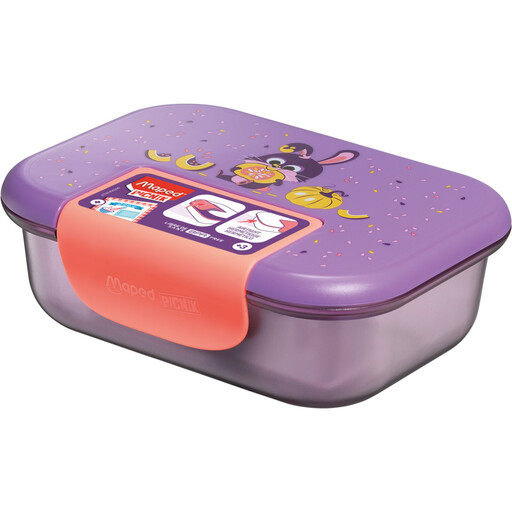
Why this is a good fit for this profile : This 900 ml lunch box is suitable for school meals, office lunches and solo picnics. Its rectangular shape fits easily into a bag.
The capacity is clearly stated and the attached lid reduces the risk of losing it. However, please note : this box must not be used in the microwave.
Stainless steel, 900 ml capacity, fluorescent clip, attached lid and dishwasher-safe design.
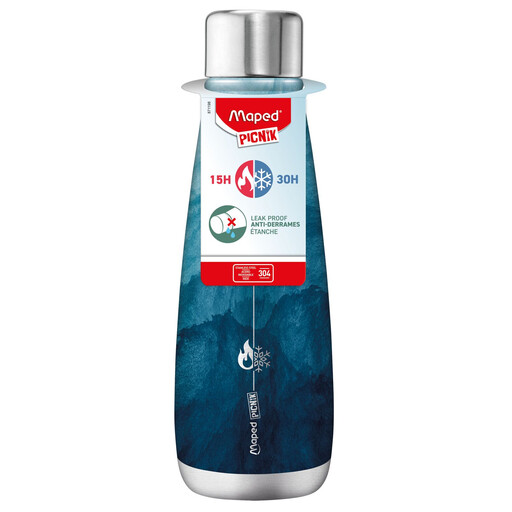
Why this is a good fit for this profile : A 500 ml stainless-steel bottle fits easily into a lunch bag, backpack or hiking bag. It is equally suitable for daily commutes, school and travel.
The capacity, material and fastening type are clearly specified. The bottle is hand-wash only and must not be placed in the microwave or freezer.
Double-wall vacuum insulation, fastening described as leakproof, 500 ml capacity and claimed heat retention of up to 15 hours and cold retention of up to 30 hours.
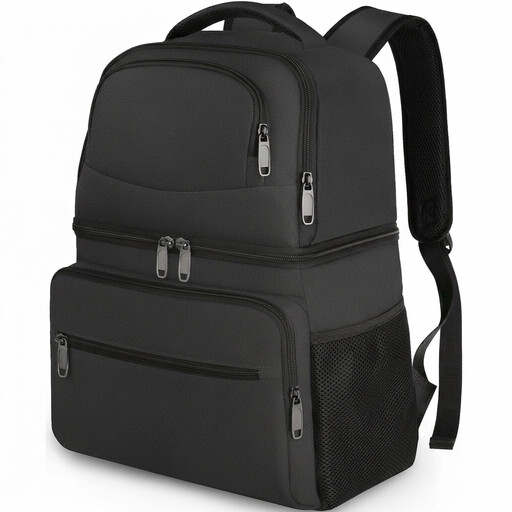
Why this is a good fit for this profile : This insulated backpack is designed for group outings, camping, fishing, hiking or long picnics, thanks to its two compartments.
The lower compartment is described as leakproof and insulated. Separating dry foods from drinks helps prevent mixing, but you should keep an eye on the total weight.
Claimed 8 mm foam, two storage compartments, side pockets, adjustable shoulder straps and a claimed weight of 700 g.
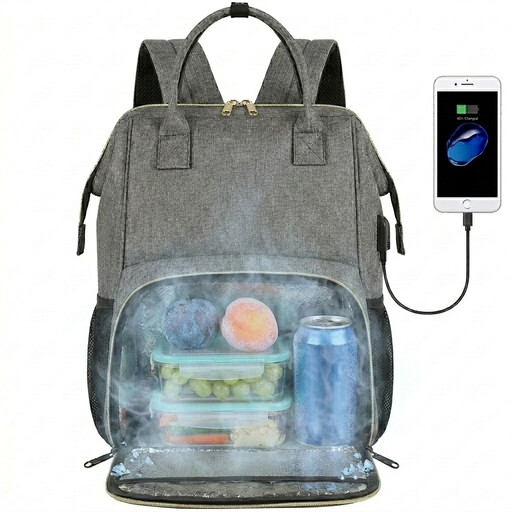
Why this is a good fit for this profile : This bag combines a lunch compartment with space for a laptop of up to 15.6 inches. It is a practical combination for students and professionals who carry their equipment every day.
The lunch compartment has a lining described as leakproof and easy to clean. However, the USB port requires a power bank, which is not included.
Insulated compartment claimed to keep food cool or warm for 2 to 4 hours, space for a 15.6-inch laptop, multiple pockets and a claimed weight of approximately 771 g.
We have put together a complete, real-time-updated list of products that meet these demanding selection criteria and European safety regulations.
It depends on the insulation, contents, outdoor temperature and whether ice packs are used. Manufacturers claim retention times ranging from a few hours to much longer for some vacuum-insulated bottles. For perishable foods, minimise the time they spend out of the fridge as much as possible and follow food storage recommendations.
Empty the bag completely, then clean the lining with a soft sponge and mild detergent. Leave it to dry fully with the bag wide open. Avoid machine washing unless the product information specifically allows it. For a stainless-steel box, check whether it is dishwasher-safe and carefully remove any residue around the seal.
For a child, a compact 300 to 900 ml lunch box may be suitable, depending on their age and the meal being packed. For an adult, a medium-capacity insulated lunch bag will generally hold a lunch box, bottle and some cutlery. Group outings require a larger model, but remember to check its weight when full and the quality of its shoulder straps.