
Livraison le jour même ou le lendemain

Qualité garantie

Débloquez vos offres de bienvenue: Livraison GRATUITE | Jusqu'à -80 % | 30 jours d'essai gratuits à JoyPlus
Téléchargez l'application
An insulated lunch bag does more than simply carry a meal. It should protect your food, be comfortable to carry and fit easily into your daily routine. A child taking it to school, a student travelling all day or an employee having lunch at the office may not have the same requirements.
Some product descriptions promote a shiny lining, a USB port or a large capacity without always explaining what these features actually mean. Here are the criteria to consider before buying an insulated lunch bag, along with a selection of models suited to different uses.
A lining made from aluminium, PEVA or insulating foam helps limit temperature exchange, but it does not replace a genuine cold source for perishable food. How long food stays fresh depends on factors including the outdoor temperature, the contents of the bag, how full it is and whether an ice pack is included.
A model may therefore be perfectly suitable for the journey between home and school or the office, without maintaining a constant temperature all day. For a longer picnic, it is better to choose a cooler bag with enough room for ice packs.
In many product descriptions, the term ‘waterproof’ mainly refers to the inner compartment or its leak-resistant lining. It does not necessarily mean that the entire bag will withstand heavy rain or immersion.
Distinguish between a leak-resistant lining, water-repellent fabric and a genuinely waterproof design. Zips and seams are often the weak points. If you are carrying soup or sauce, you should still use a completely leak-proof container.
An oversized lunch bag can quickly become heavy once it is full. Conversely, a compact model may not have room for a water bottle, lunch box and snack. Additional features, such as a USB port or laptop compartment, also add weight and reduce the available space.
The best choice therefore depends on what you actually carry each day, not on the number of visible pockets in the photo.
For a child, a capacity of 6 to 7 litres is generally enough for a lunch box, water bottle and a few accessories. For an adult, a 12 to 15-litre bag offers more room for a working day or lunch away from home. Large insulated backpacks can sometimes exceed 25 litres and are more suitable for days out, camping or group meals.
Compare the external dimensions with those of your containers. An advertised capacity does not always tell you much about the shape of the insulated compartment. If you plan to carry a laptop, also check the maximum dimensions of the padded compartment, which are usually given in inches.
The most common materials are PEVA, insulating foam, aluminium film, polyester and Oxford fabric. They may be easy to clean, but the product description should specify the care requirements. A bag that can be washed by hand or wiped with a sponge cannot necessarily be put in the washing machine.
After each use, remove the packaging, wipe away any marks and leave the compartment open until it is completely dry. This habit helps prevent unpleasant smells and protects the lining.
An insulated backpack distributes weight more evenly across your shoulders, while a shoulder bag is better suited to short journeys. For a child, convertible straps allow the bag to be carried by hand, over the shoulder or on the back.
The internal layout matters just as much. A lower insulated compartment, a dry pocket for the water bottle and a space for writing the child’s name can make school days easier. For an adult, a padded laptop pocket, trolley sleeve or discreet back pocket will often be more useful.
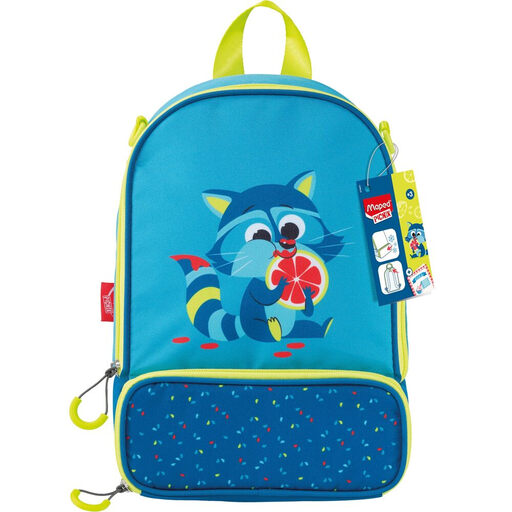
Why this choice suits this profile : With a capacity of 6.5 litres and a listed weight of 217 g, this bag is suitable for a child’s meals at school, nursery or on a short outing.
The product description details two compartments, including an insulated base, rather than simply stating a large capacity without explaining how the space is arranged.
Convertible straps, an internal elasticated holder to keep the bottle in place and space for writing the name.
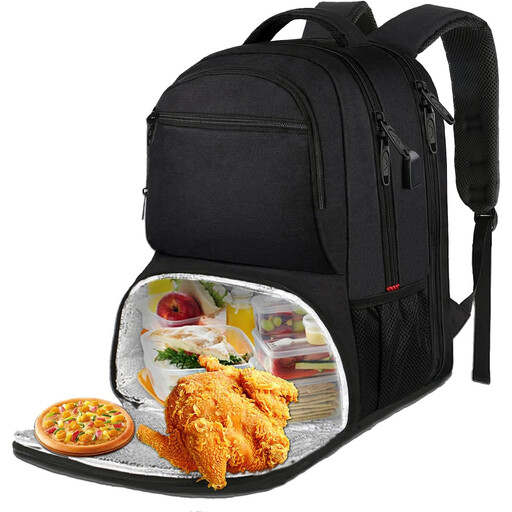
Why this choice suits this profile : This large backpack combines a meal compartment, space for a laptop of up to 17 inches and several pockets for business travel or holidays.
The USB port is simply a cable pass-through and requires a power bank. It therefore cannot be mistaken for an integrated battery.
Advertised 40-litre capacity, laptop compartment for devices of up to 17 inches and easy-clean aluminium lining.
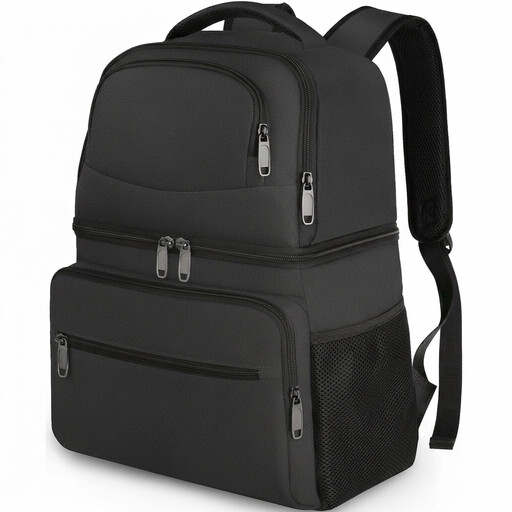
Why this choice suits this profile : Its two-zone design is ideal for picnics, camping, hiking and days out that require several drinks and meals.
The lower insulated compartment is separate from the dry upper section, preventing drinks, food and accessories from being mixed together.
Advertised capacity of 26 cans, 8 mm insulating foam, leak-resistant PEVA lining and waist strap.
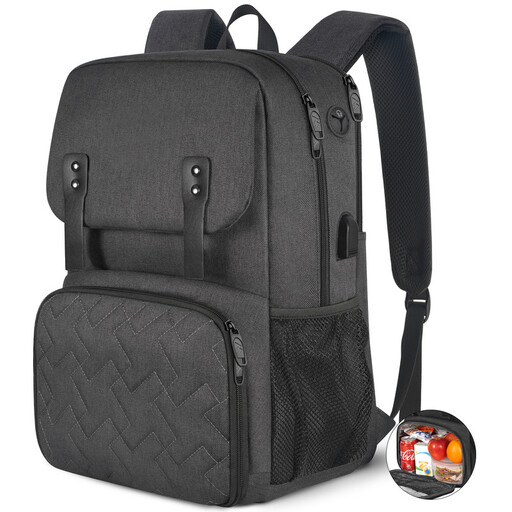
Why this choice suits this profile : It combines a compartment for a 15.6-inch laptop, a foldable meal section and thoughtfully designed storage for daily journeys.
The product description distinguishes the water-repellent fabric from the insulated meal compartment and specifies that the USB port requires a power bank.
Foldable insulated compartment, anti-theft pocket, luggage strap and USB port with integrated cable.
We have put together a complete, real-time updated selection of products that meet these demanding criteria as well as European safety standards.
The length of time depends on the insulation, room temperature, contents and whether an ice pack is used. Some product descriptions claim 2 to 4 hours, but this range is not a guarantee that applies in every situation. For longer journeys, fill the bag properly and add a suitable cold source.
A model of around 6 to 7 litres can hold a lunch box, a small water bottle and a snack. Pay particular attention to the dimensions of the inner compartment: two bags with a similar capacity may accommodate containers of very different sizes and shapes.
Not necessarily. Many models have a lining and coating that can only be cleaned by hand. Machine washing may damage the seams, insulating foam or water-repellent treatment. Check the manufacturer’s instructions and opt for targeted cleaning, followed by thorough drying.