
Livraison le jour même ou le lendemain

Qualité garantie

Débloquez vos offres de bienvenue: Livraison GRATUITE | Jusqu'à -80 % | 30 jours d'essai gratuits à JoyPlus
Téléchargez l'application
An insulated lunch backpack isn’t just for carrying a packed lunch. For a child, it needs to be lightweight and easy to spot. For a student or someone who works, it might also need to fit a laptop, a water bottle and a few personal items. For picnics or camping, capacity and leak resistance become the priority.
Some models can disappoint after just a few weeks. Here are the pitfalls to avoid before choosing an insulated lunch bag, an insulated food bag or a multi-purpose backpack.
A silver lining or a thick layer of foam isn’t enough to keep a constant temperature. The claimed duration depends on the outside temperature, the amount of food you’re carrying, how full the bag is, and whether you use ice packs.
An insulated cooler bag slows down heat exchange, but it doesn’t replace a proper cold chain for sensitive foods. For your daily lunch, focus on a well-sealed compartment that’s easy to clean, and always use an airtight container.
A roomy bag might seem practical, but it quickly becomes uncomfortable once it’s filled with lunch boxes, drinks and accessories. For school, a 6 to 7 litre model is usually enough for a meal and a water bottle. Family outings or long days sometimes call for a capacity of 12 to 26 cans, which means more weight and bulk.
The usable volume doesn’t always match the external size. Separate compartments, thick walls and pockets all reduce the actual space available.
Labels like insulated waterproof bag, “leak-proof” or “water-resistant” don’t guarantee the same level of protection. A PEVA lining, careful stitching and well-fitted zips can limit spills. That doesn’t mean the bag can be submerged or left out in heavy rain without risk.
To avoid nasty surprises, put liquids in well-sealed containers, check the condition of the zips, and clean up any spills straight away.
A lunch bag for work needs to hold your main lunch box, a water bottle and, if needed, a piece of fruit or a snack. For school, go for a model with a separate insulated bottom compartment and a dedicated spot for the bottle. An internal elastic strap can also keep it upright.
For picnics, a double-compartment model separates food from items that need to stay dry. This kind of organisation is just as handy for travel or outdoor activities.
The most common materials are insulating foam, PEVA, aluminium film and Oxford fabric. The product description should, where possible, state the lining material and care instructions.
An insulating foam of 6 to 8 mm, when specified, gives you a much clearer idea than a vague claim like “superior performance”. The warm or cold retention times stated by the manufacturer are only a guide – they’re not a guarantee that works in every situation.
For a child, adjustable straps and a low weight are essential. The Maped Picnik, for example, weighs just 217 g and offers three ways to carry it: by hand, over the shoulder or on the back.
For heavy use, check the back padding, the width of the straps, whether there’s a chest strap, and how the pockets are arranged. A bag with a 15.6-inch laptop compartment can be handy for work or university, but it will generally be heavier than a simple insulated lunch bag.
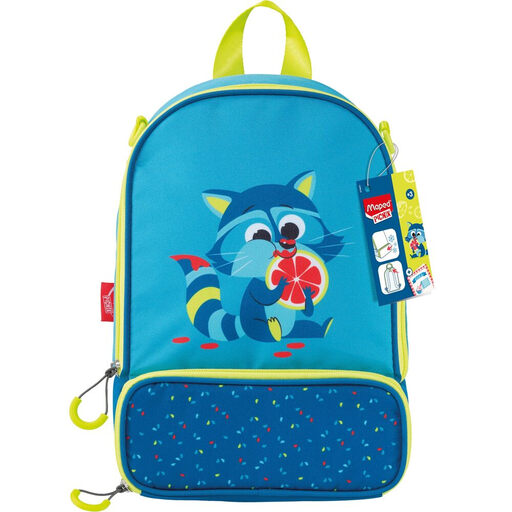
Why this choice suits this profile: With its 6.5 litres, this bag can hold a child’s meal, a water bottle and a few bits for school or a short outing.
Its insulated bottom compartment is separate from the top section – meal, bottle and small accessories stay neatly organised.
217 g, two compartments, convertible straps and space to write the child’s name.
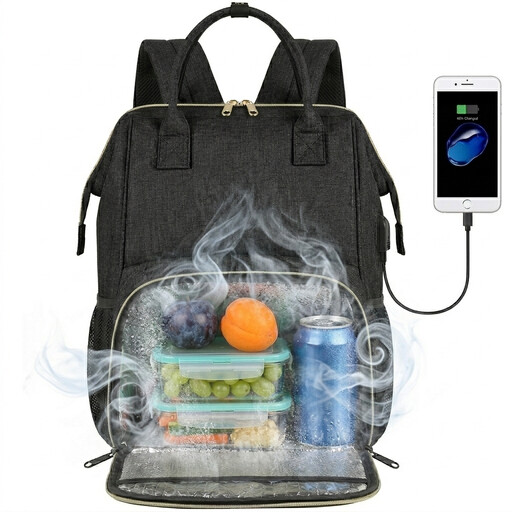
Why this choice suits this profile: This bag combines an insulated food compartment, a laptop space for up to 15.6 inches and several pockets for work or university commutes.
The food function doesn’t take up all the space – dedicated areas stop food from coming into contact with your laptop and personal items.
Water-resistant fabric, food compartment described as leak-proof and USB port (requires external power bank).
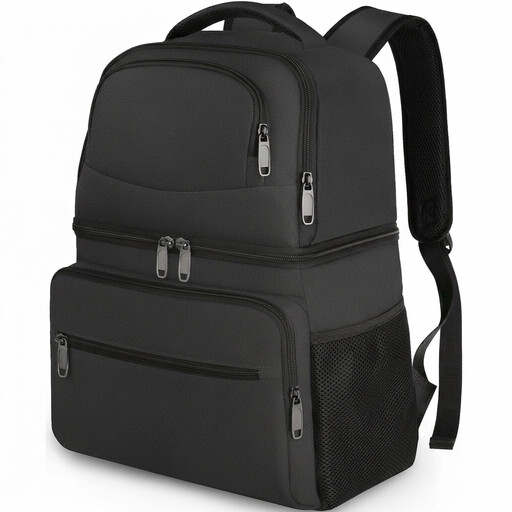
Why this choice suits this profile: Its cooler-backpack design is ideal for picnics, camping, the beach and outings where you need to carry a large amount of drinks and food.
The insulated and dry zones are separated by a double zip – organisation is simpler and any spills stay contained in the dedicated section.
Claimed capacity of 26 cans, leak-proof PEVA lining, water-resistant Oxford fabric and chest strap.
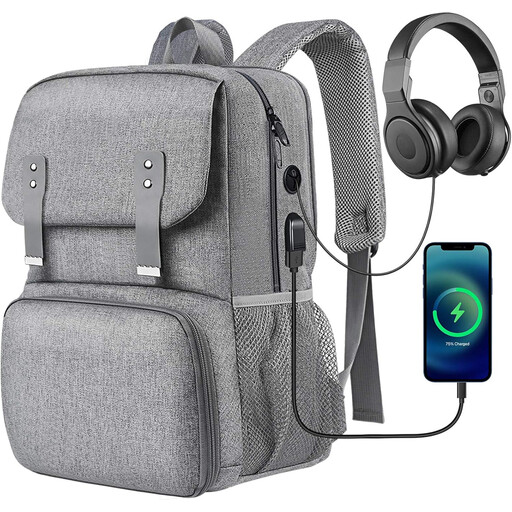
Why this choice suits this profile: This design is aimed at students and professionals who want to carry their lunch, a 15.6-inch laptop and accessories all in one bag.
The separate food compartment reduces the risk of placing a lunch box or bottle near your laptop.
12-litre capacity, 6 mm foam insulation with PEVA lining, 420D polyester fabric and carrying straps.
We’ve put together a full list, updated in real time, of products that fully meet these strict selection criteria and European safety regulations.
To keep your lunch bag for school or work in good condition:
How long it lasts depends on how often you use it, the weight you carry, how well you look after it, and the quality of the stitching. A clean, dry lining helps prevent odours, while a damaged zip can compromise leak protection.
For one person, 5 to 8 litres is usually enough for a lunch box, a water bottle and a snack. For several meals or a family outing, go for a larger volume, but don’t forget to check the empty weight of the bag.
This is generally not recommended unless the manufacturer explicitly says so. The foam, inner films, reinforcements and USB ports could be damaged. Hand washing with a damp cloth is the safest option.
It slows down temperature changes, but how long it keeps food cool depends on how you use it. For a long day, fill the compartment properly, open it as little as possible, and add an ice pack if the food you’re carrying needs it.