
Livraison le jour même ou le lendemain

Qualité garantie

Débloquez vos offres de bienvenue: Livraison GRATUITE | Jusqu'à -80 % | 30 jours d'essai gratuits à JoyPlus
Téléchargez l'application
Enjoying a hot, homemade meal for lunch without relying on the communal microwave is a small luxury that can transform your day. Whether you're at the office, on a construction site, or at university, a reliable insulated food jar is a true game-changer. The problem? The market is flooded with marketing promises that often end in disappointment and a lukewarm meal.
As a product expert for the editorial team, my mission is to help you see through the noise. Let's break down the common pitfalls and the real technical criteria to look for, ensuring you make a choice you won't regret.
Before you even start comparing models, you need to know how to sidestep the three classic traps that turn a promising purchase into a daily regret.
To avoid these pitfalls, focus on objective technical specifications. These, not marketing claims, are what guarantee the quality and longevity of your future insulated hot food container.
The body of a good stainless steel insulated lunch box is always made of double-walled stainless steel. But be aware, there are crucial differences:
The capacity should match your appetite and the type of meal you carry. A 750 ml container might be enough for a soup or a side dish, but for a full meal, aim for a large-capacity food container between 1.4 L and 1.8 L.
Beyond volume, check the diameter of the opening. A wide mouth not only makes filling and cleaning easier but also allows you to eat directly from the container without having to transfer its contents.
For a leak-proof soup thermos, opt for a screw-top lid with a thick, well-fitted silicone gasket. This system distributes pressure evenly and is far more reliable than simple clips. Some models also include a small button on the lid to release steam pressure before opening, which prevents splashes and makes unscrewing easier.
Here are a few options that stand out for their technical specs and suitability for specific user profiles.
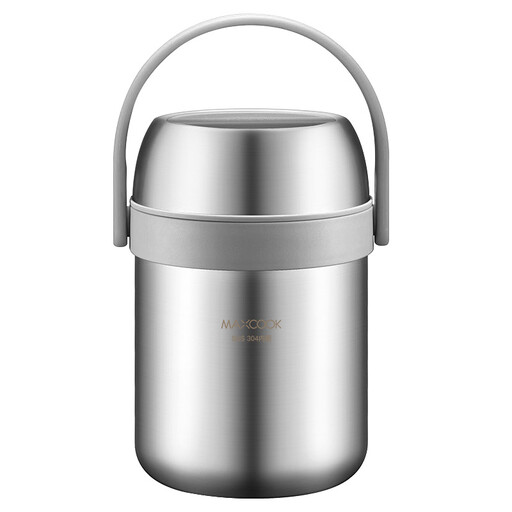
Why we recommend it: Perfect for professionals and students who want to pack a real, complete meal. Its 1.5 L capacity is generous, and its 304 steel is a reliable standard for varied daily use.
It promises realistic heat retention (4 to 6 hours) and its screw-top lid with a thick gasket prevents leaks from saucy dishes, a common flaw of clip-on closures.
Excellent capacity-to-price ratio with a wide opening that's very practical for eating directly from the jar and for cleaning.
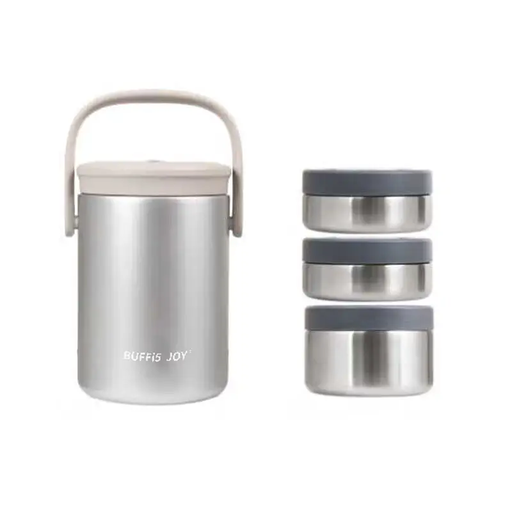
Why we recommend it: Perfect for big appetites or for those who like to separate meal components (e.g., a saucy dish on one side, rice on the other). Its tiered structure is highly versatile.
It goes beyond the simple "jar" concept to offer a compartmentalized solution, preventing flavours and textures from mixing. Its robust design is built for more demanding conditions than an office.
1.8 L capacity and three internal compartments for optimal meal organisation, all in a vertical format that's easy to carry.

Why we recommend it: For those who make no compromises on durability and regularly consume soups, tomato-based dishes, or vinaigrettes. The 316 stainless steel offers long-term peace of mind.
It tackles the low-grade material pitfall head-on. The 316 stainless steel is more resistant to corrosion from salt and acids, guaranteeing no metallic taste.
Uses premium 316 stainless steel for maximum corrosion resistance and intact flavour preservation, even with acidic foods.
Explore our full selection of products that meet our quality criteria and current safety standards.
The #1 trick is preheating. Before adding your meal, fill your jar with boiling water, close the lid, and let it sit for 5 to 10 minutes. Empty the water, then immediately add your hot food. Also, fill the container as much as possible to limit the amount of air, which accelerates cooling.
With proper care, a good stainless steel model will last for years. Its only weak points are major impacts (which can damage the double wall and ruin the insulation) and wear and tear on the lid's silicone gasket. Always wash it by hand and avoid abrasive sponges to preserve the integrity of the metal and the seal.
For most people, 304 stainless steel is perfectly adequate. However, if you plan to use your jar very frequently for soups, tomato-based sauces, or other acidic foods, investing in a 316 stainless steel model is a smart move. It will offer better protection against long-term corrosion and guarantee absolute taste neutrality.