
Livraison le jour même ou le lendemain

Qualité garantie

Débloquez vos offres de bienvenue: Livraison GRATUITE | Jusqu'à -80 % | 30 jours d'essai gratuits à JoyPlus
Téléchargez l'application
Enjoying a delicious, hot, homemade meal during your lunch break is a small luxury, but transporting it can quickly become a nightmare. Between dishes that cool down in a few hours and sauces that leak into the bottom of your bag, finding the ideal container can feel like an uphill battle. As a product expert at Joybuy, my role is to help you see things more clearly. Let's break down the pitfalls to avoid and the criteria that truly matter to make the right choice.
The market is full of promises, but not all are created equal. Here are the most frequent disappointments that you can easily avoid.
To ensure you make the right choice, focus on a few objective technical features. They are the true indicators of the quality and reliability of an insulated jar for hot food.
The mere mention of "double-wall" isn't enough. The technology to look for is vacuum insulation. This means the air has been removed from between the two stainless steel walls, which significantly limits heat transfer by convection. This is what separates a simple container from a truly high-performance food thermos.
The material is also crucial. Food-grade stainless steel (often type 304 or 316) is the gold standard. It's robust, doesn't impart any taste to food, and resists corrosion. Type 316 offers even greater resistance, especially to very salty or acidic foods.
A reliable seal depends on two elements: a removable silicone gasket and a secure locking system. The gasket must be thick enough to create a perfect barrier. A lid that screws on tightly over several turns is usually a good indicator. Ensure the gasket can be easily removed for thorough cleaning, thus preventing the build-up of residue and bacteria.
The capacity of your insulated food container should match your habits. An insulated soup container of 500 to 750?ml might be enough for soup, but for a full meal, a capacity of 1?L to 1.5?L is more comfortable.
Another often-overlooked point is the diameter of the opening. A wide-mouth stainless steel insulated jar is much more practical. It allows you to fill the container without making a mess, eat directly from it with a fork or spoon, and most importantly, clean it effortlessly.
To help you see how these criteria apply in practice, here are a few options that meet specific needs.
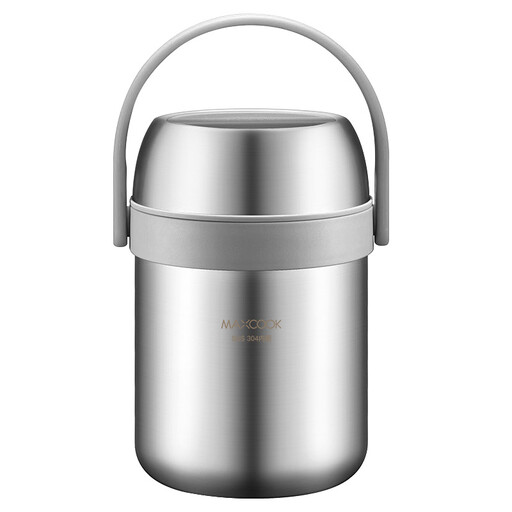
Ideal for those who bring a substantial meal to the office. Its large 1.5 L capacity allows you to carry a generous single dish, like chili, curry, or pasta, without having to settle for a small portion.
Its design relies on vacuum insulation and a secure screw-on lid, avoiding unfulfilled insulation promises and leaks. The wide mouth prevents the pitfall of difficult cleaning.
Large capacity (1.5 L) for full meals. Durable and food-safe 304 stainless steel. The stated thermal retention is 4 to 6 hours, a realistic estimate for daily use.
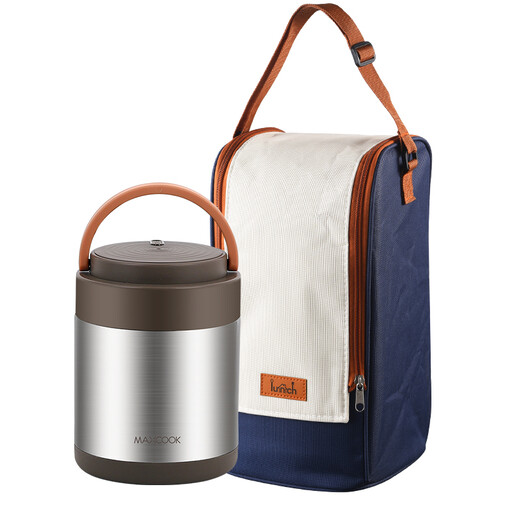
Perfect for students or mobile workers who need a reliable solution that isn't bulky. The 1.4 L capacity is an excellent compromise between volume and portability, suitable for soups, saucy dishes, or large salads.
This model focuses on the fundamentals: effective vacuum insulation, a leak-proof lid, and a wide mouth. It doesn't make excessive promises and concentrates on reliable performance for everyday use.
Versatile size (1.4 L) that adapts to different types of meals. Simple and robust design made of 304 stainless steel, easy to use and maintain.

For those looking for a complete solution and who prioritise material quality. The included carrying bag makes transport easier and adds a layer of insulation, while the 316 steel offers extra peace of mind.
This kit avoids the trap of impractical design by providing an integrated transport solution. The use of 316 steel is a mark of quality that goes beyond the usual standards.
Complete set with an insulated carrying bag. Premium 316 stainless steel for enhanced corrosion resistance. It's a practical and durable all-in-one solution.
We have compiled a comprehensive list of products that meet our strict selection criteria and current safety regulations.
For best results, it's advisable to "preheat" your container. Before adding your meal, fill it with boiling water, close the lid, and wait 5 to 10 minutes. Empty the water just before adding your very hot food. This simple step heats the inner walls and helps minimise initial heat loss.
A high-quality stainless steel food thermos is a long-lasting investment. With proper care, it can last for many years. The performance of the vacuum insulation does not degrade over time, unless it suffers a severe impact that could damage the structure (a major dent). The main point of wear is the lid's silicone gasket, which can dry out or warp. Check if it's possible to buy a replacement.
Both are excellent choices for food contact. 304 stainless steel is the most common and is perfectly suitable for most uses. 316 stainless steel also contains molybdenum, which gives it superior corrosion resistance, especially against salt and acids. If you plan to regularly transport very salty (like commercial soups) or acidic (tomato- or vinegar-based) dishes, 316 can offer enhanced durability. For general use, 304 is perfectly sufficient.