
Same-day & Next-day Delivery

Quality Guaranteed

Unlock Your Welcome Offers: FREE Delivery | Up to 80% OFF | Free 30-day JoyPlus trial
Download the APP
Tired of cold sandwiches for your lunch break and the mounting expense of local restaurants? The solution? Bringing a delicious homemade meal that's both more budget-friendly and healthier. For that, a quality insulated food jar is an essential accessory. It will keep your meals hot for hours. But with an overwhelming number of options on the market, it can be hard to know where to start.
This guide is here to help you see things more clearly, with key selection criteria and our favourite models to help you find the perfect insulated lunch box for the office, a construction site, or a family outing.
Before we dive into our selection, let's review the essential points to consider to make the right choice.
The highest-performing insulated containers are almost all made of stainless steel. This material offers multiple benefits: it's durable, neutral (it won't retain odours or flavours), and is a breeze to clean. There are two main types of stainless steel:
Double-wall vacuum insulation technology is the secret to effective temperature retention. This is a non-negotiable feature.
A food thermos must be completely leak-proof. Nobody wants to find soup at the bottom of their bag! Carefully check the lid's design: a silicone seal and a reliable screw-on mechanism are essential, especially for transporting liquids like soups or stews. A wide opening is also a major plus, as it makes filling, serving, and, of course, cleaning much easier.
The capacity will naturally depend on your appetite. A 0.75 L capacity might be enough for a soup, whereas a 1.4 L or 1.5 L insulated jar will be better suited for a full meal. Some models come with thoughtful accessories, like a matching lunch bag that adds an extra layer of insulation and simplifies transport.
We've selected a few models that stand out for their performance and design.

Why It Stands Out
This set is the ultimate all-in-one solution. It combines a large-capacity jar with its own dedicated carrying bag, making it an ultra-practical choice for daily commutes.
Its Strengths
Who is it for?
Ideal for mobile professionals or anyone who wants a complete, ready-to-use solution without worrying about buying accessories separately.

Why It Stands Out
This model gets straight to the point: a large capacity and high-performance materials. Its simplicity makes it a reliable and durable choice for those who need to pack hearty meals.
Its Strengths
Who is it for?
Perfect for outdoor workers, athletes, or those who prepare generous portions and prioritise capacity and robustness above all else.
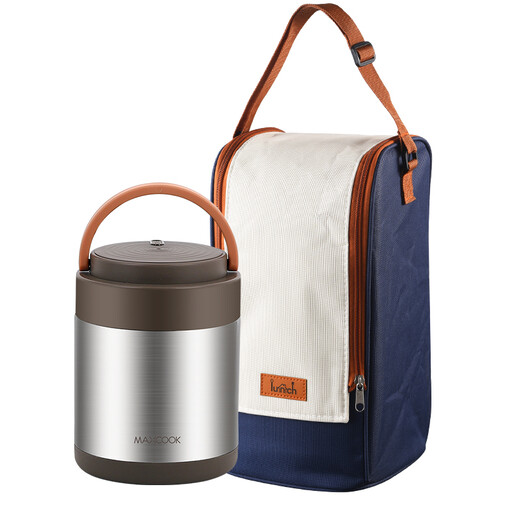
Why It Stands Out
This insulated jar offers an excellent balance of capacity, performance, and reliability. The 304 stainless steel makes it a tried-and-true choice for everyday use.
Its Strengths
Who is it for?
A highly versatile option, suitable for students and office workers alike who are looking for a reliable, high-capacity insulated hot food container for their daily lunches.
If the models presented don't quite match your needs in terms of size, design, or features, don't worry—other solutions are available.
Discover our full range of leak-proof products to find the container that will fit perfectly into your routine.
The pro tip for maximising performance? Preheat your jar! Fill it with boiling water, close the lid, and wait 5 to 10 minutes. Empty the water just before pouring in your hot meal. This simple step can add an extra hour or two of heat retention.
As a general rule, this is not recommended. The intense heat and harsh detergents of a dishwasher can damage the seal and compromise the vacuum insulation layer. To preserve its performance long-term, nothing beats a good hand wash with hot, soapy water.
Both are food-grade stainless steels. The main difference is the addition of molybdenum in 316 steel, which boosts its resistance to corrosion (especially from salt and acids). For everyday use with a variety of dishes, 304 is more than sufficient. 316 is a plus for durability if you frequently transport very salty or acidic foods.