People who dine alone and are short on time
A single-serve sachet lets you make one measured portion without having to prepare several bowls. Still, check whether you simply need to add hot water or whether cooking is required.


For a quick midweek dinner, start by choosing between a single-serve sachet and a larger format that makes several bowls. Consider how many people you’re serving and how you’d like to prepare it. Then check the yield, instructions, ingredients, allergens and salt content of the specific recipe. The format or a claim such as ‘organic’ won’t tell you all you need to know.
A single-serve sachet lets you make one measured portion without having to prepare several bowls. Still, check whether you simply need to add hot water or whether cooking is required.
A family-size sachet may suit you when several people are eating together. The stated number of portions, amount of water and recipe-specific instructions matter more than the sachet’s weight alone.
Allergens and salt content vary by recipe. Read any warnings about traces and compare the nutritional information for a prepared portion that matches the amount you’ll serve.
For a midweek dinner, start with the number of bowls you need, then check the preparation time and method. Finally, look at the ingredients in the sachet you’ve chosen: two soups in the same format can contain different ingredients.
| What to consider | What to check | Who it matters to |
|---|---|---|
| Time and portions | Number of bowls, amount of water and whether it’s prepared with hot water or in a pan. | When I’m dining alone and eating late, I want to make one bowl without ending up with several portions. Around 42% of consumers would put format and speed at the top of their list of priorities. |
| Sachet yield | Net weight, volume of soup prepared and number of portions stated on the pack. | If several people are eating, I want a sachet that makes enough bowls without having to use several packs. Yield would be the top priority for around 25% of consumers. |
| Ingredients | Ingredients, stated allergens and traces, and salt content per reconstituted portion. | When certain ingredients need to be avoided, I want to check the exact recipe before serving it. Around 33% of consumers would prioritise ingredients, allergens and salt above all else. |
Sachets of different weights don’t necessarily make the same volume of soup. You could end up with too few portions for dinner, or more than you expected.
Before choosing a format, compare the number of portions and the prepared volume stated on each pack.
A claim such as ‘organic’ doesn’t tell you about allergens or salt on its own. Ingredients can also vary between recipes from the same brand.
Read the ingredients list, highlighted allergens, any warnings about traces and the nutritional information for the exact product.
Anses lists soups and broths among the foods that contribute to salt intake. The Maggi organic vegetable and vermicelli soup featured by Auchan France contains 1.6 g of salt per 250 ml.
Check the salt content for the portion you’ve prepared, and don’t automatically add more salt.
Instructions vary by recipe: Carrefour France’s Knorr 9 Vegetable Soup is made with 750 ml of water and simmered for 3 minutes, while the Maggi organic vegetable and vermicelli soup featured by Auchan France calls for 1 L of water and 5 minutes of cooking.
Follow the water measurement and steps on the sachet you’re preparing.
Auchan France features a 60 g Maggi organic vegetable and vermicelli soup, stated to serve four people.
Royco offers single-serve soups, including a chicken, vermicelli and carrot recipe featured by Carrefour France in three 20 cl sachets.
The Knorr 9 Vegetable instant soup featured by Carrefour France makes three bowls with 750 ml of water.
Carrefour France features several Carrefour Classic' instant soups, including vegetable recipes and other packet soups.
E.Leclerc features Regal Soupe packet soups, including minestrone and cream of asparagus recipes.
These products cover the two uses discussed here: making several bowls from one sachet or serving individual portions. Recipes and yields aren’t interchangeable, so check each product’s details before choosing.
 Image unavailable
Worth considering if you’d like to make soup to share rather than use individual sachets.
The title lists 69 g and 0.70 L. Before buying, check how many bowls it serves and which recipe corresponds to the ‘2 Assorted’ variant.
To compare salt content, look at the amount in the portion you’ll actually serve rather than just the value per 100 ml of prepared soup.
 Image unavailable
This sachet of instant soup is worth considering if you’d like to keep a soup that needs cooking in the cupboard.
Check the pack for the amount of water and number of bowls it makes before comparing portions. Preparation instructions and the nutritional serving size should be considered separately.
Check for gluten and any warnings about traces of egg, soya, milk and celery if these ingredients matter to you.
 Image unavailable
The three separate portions may suit you if you’re making one bowl at a time.
The stated format is 3 × 20 cl. Check the pack instructions for the preparation steps and time.
The recipe lists gluten, celery, milk and chicken, and may contain traces of other allergens. Read the exact label if you need to avoid an ingredient.
 Image unavailable
This instant soup that needs cooking may suit you if you prefer to make dinner in a pan.
Check the sachet for the amount of water, yield and serving size used for the nutritional information before deciding how many bowls to serve.
The recipe lists gluten and celery, and may contain traces of egg, soya and milk.
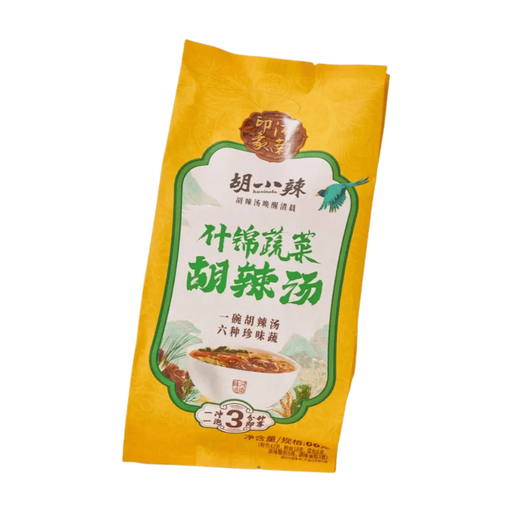 Image unavailable
This rehydratable preparation may suit you if you’d like to make your soup in a bowl.
The sachet weighs 66 g. Check the pack for the amount of water and yield before treating it as a full portion. Compare salt content for the amount prepared, too, rather than just per 100 g of dry product.
The ingredients include gluten, soya, sesame and sweeteners.
A bowl on its own doesn’t tell you whether dinner meets your needs. Check the nutritional information for the prepared portion and plan the rest of your meal around what you’d like to eat.
Read the ingredients list and any warnings about traces on the exact pack. In France, allergens in prepacked foods must be listed and highlighted, as the Ministry of the Economy explains. Don’t assume a soup has the same ingredients as another recipe, even if it’s from the same brand.
First check the instructions and salt content for the recipe you’ve chosen. The Maggi organic vegetable and vermicelli soup featured by Auchan France says there’s no need to add salt and contains 1.6 g of salt per 250 ml. This doesn’t apply to every soup.
Follow the date and storage instructions on your pack. For its Maggi organic vegetable and vermicelli soup, Auchan France recommends storing it in a cool, dry place before preparation and consuming the prepared soup promptly. Check the instructions for any other product.