
Livraison le jour même ou le lendemain

Qualité garantie

Débloquez vos offres de bienvenue: Livraison GRATUITE | Jusqu'à -80 % | 30 jours d'essai gratuits à JoyPlus
Téléchargez l'application
Choosing a pack of instant yakisoba noodles is not as straightforward as it may seem. Between Japanese stir-fried noodles, very spicy Korean recipes, cup formats and value packs, the differences are noticeable not only on the plate, but also when it comes to preparation and checkout.
To avoid disappointment, it is worth looking beyond the photo and marketing claims. Here are the criteria that really matter when comparing instant Asian noodles available in France.
Not all instant noodles are prepared in the same way. Some need to be drained before the sauce is added, while others are eaten with their broth. Wording such as “stir-fry” or “sauté” generally refers to a broth-free preparation: the sauce coats the noodles directly.
Take the time to check the instructions and the amount of water required. A recipe designed to be drained can become decidedly watery if you keep all the cooking water.
Concentrated sauces give noodles plenty of character, but their nutritional profile varies significantly from one recipe to another. As a guide, Nongshim Shin Stir-Fry Ramyun contains 2.5 g of salt per 100 g, while the 140 g Samyang Buldak Jajang lists 3.6 g of salt per serving.
Buldak and other spicy Korean recipes may also contain chilli, pepper or habanero. For a first order, it is therefore best to check the spice level and whether the sauce contains added sweetness.
A pack of 30 portions is ideal for building up a family supply, stocking an office or supplying a small catering business. However, it is much less suitable if you simply want to try a flavour. Cups are easy to carry, but their price per portion often differs from that of a large pack.
Compare the total weight, number of portions and price per portion, rather than relying solely on the displayed price.
Stir-fried noodles that are ready in just a few minutes generally come in three formats:
The stated preparation time is generally between three and six minutes. Some products are cooked in a saucepan before being drained, while others are prepared directly in their container.
Most recipes contain wheat and soya. Depending on the product, you should also check for sesame, peanuts, fish, shellfish, milk, celery or oysters.
Yakisoba sauce can also contain wheat and soya, even when sold without noodles. If you follow a halal diet, always check the information shown on the product page and packaging. The five-pack Samyang Buldak Jajang is listed as halal-certified in the information provided, as are certain Yum Yum products. However, the cup version should be checked separately.
A portion of instant noodles may include a sauce, seasoning powder and a few dehydrated vegetables. The topping is generally fairly light. There is nothing to stop you adding vegetables, an egg, tofu or your preferred protein to complete the dish.
If you are cooking for several people, a bottle such as the Otafuku Yakisoba Sauce 500 ml — or the larger 2.15 kg format — will often be more practical. The 500 ml bottle contains Worcestershire sauce, fruit, vegetables and soya, among other ingredients. The 2.15 kg container is better suited to large gatherings and kitchens that regularly prepare Japanese stir-fried noodles.
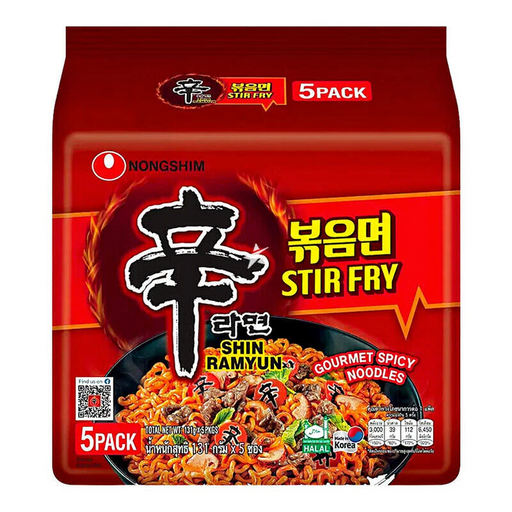
Why this choice suits this profile: With five portions, this pack lets you try a spicy Korean recipe without investing in a large supply. Allow four to five minutes in boiling water, then drain the noodles before adding the seasoning.
The five sachets mean you do not have to fill your cupboard before testing the spice level and checking whether the product is compatible with your allergies, particularly to wheat, soya and fish.
Five 130 g portions, with separate sachets for the sauce, oil and toppings. Preparation is stated as taking four to five minutes.
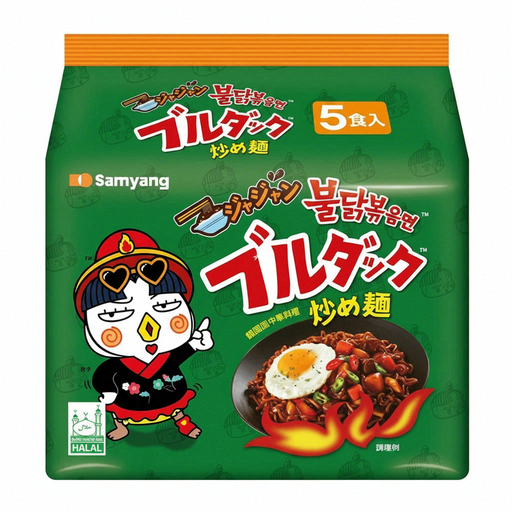
Why this choice suits this profile: This recipe combines jjajang-inspired sauce, sweet-and-savoury notes and Buldak’s distinctive heat. With five 140 g portions, it is designed for lovers of bold flavours and generously filled bowls.
The product page lists the weight of each portion, the allergens and the stated halal certification. Even so, remember to check the label on the product you receive and adjust the amount of sauce to suit your tolerance for chilli.
Five 140 g portions, with sauce, sesame and seaweed topping. Preparation involves cooking followed by mixing over a low heat.
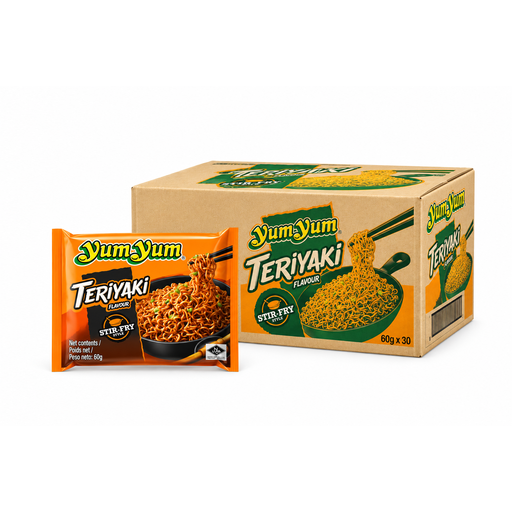
Why this choice suits this profile: The 30 x 60 g portions are ideal for building up a supply at the office, in student accommodation, for a family or for a small catering business. The teriyaki sauce offers a gentle balance of sweet and savoury notes, with preparation using hot water.
The total weight and number of sachets are clearly stated: 30 x 60 g portions, totalling 1.8 kg. This makes it easy to calculate the price per portion and plan your stock management.
A pack of 30 individual 60 g sachets, preparation taking approximately three minutes and a halal statement in the product information.
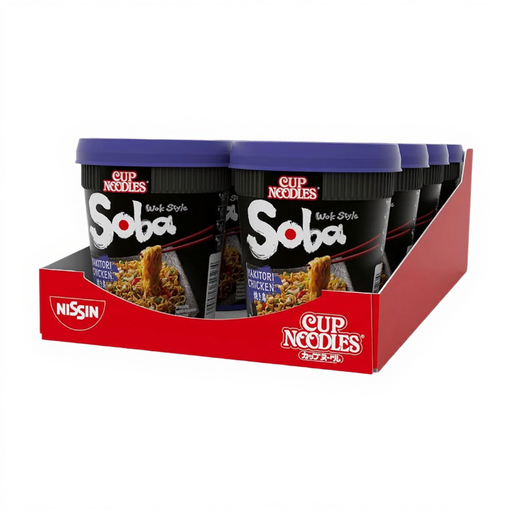
Why this choice suits this profile: This format can be prepared without a saucepan or plate. Easy to keep in an office drawer, it simply requires boiling water and around three minutes’ waiting time.
The lid has a built-in draining system and the container doubles as a bowl. Even so, make sure you use a stable surface and handle the hot cup carefully.
Pack of eight 89 g cups, with yakisoba sauce, pieces of chicken and spring onions according to the product description.
Explore a complete selection, updated in real time, of products that meet these exacting criteria and comply with European safety regulations.
Start by following the instructions on the packaging. For sachets that need to be drained, cook the noodles in boiling water, remove almost all the water, then stir in the sauce and toppings. Some products, such as Miyakoichi, then require another one to two minutes in a frying pan. With a cup, fill it to the indicated line, leave it for the stated time, drain it and then mix everything together.
Dry noodles and unopened sauces can generally be stored in a cool, dry place away from light. The “best before” date is shown on the packaging. Once the dish has been prepared, eat it immediately. Bottled sauces often need to be refrigerated after opening: always follow the instructions on the label.
The term yakisoba refers to a Japanese-inspired stir-fried noodle dish. Buldak refers to Korean recipes that are often very spicy, while Mi Goreng is inspired by Indonesian stir-fried noodles, generally enhanced with a sweet-and-savoury sauce. To make the right choice, compare the ingredients, spice level, allergens and format of each product.