Households making several bowls
If you plan to use a whole sachet for a shared meal, check the number of portions and the amount of water required before stocking up.


To stock your cupboard, choose family-size sachets if you make several bowls at once, or individual portions if you usually make soup for one. Then choose vermicelli or noodle recipes based on their ingredients and preparation instructions: the toppings alone won’t tell you how many portions you’ll get.
If you plan to use a whole sachet for a shared meal, check the number of portions and the amount of water required before stocking up.
An individual portion lets you make a cup or bowl without opening a large sachet. Carrefour, for example, lists a Royco product with three sachets, each making 20 cl.
If you need to avoid certain allergens or ingredients of animal origin, check the label for each recipe—even if you already know the brand.
First, work out how many bowls you usually make. Then check how much cupboard space you have and review the ingredients in each recipe before buying several sachets.
| Factor | What to check | Who it matters to |
|---|---|---|
| Number of bowls | Compare the stated number of portions and the amount of water needed, rather than looking only at the sachet’s weight. | When I’m making a shared meal, I want to know how many bowls each sachet will make. Around 42% of consumers put yield first. |
| Storage and preparation | Check how much space you’ll need, the preparation instructions and the storage guidance printed on the pack. | For a quick standby meal, I look for a format I can store and prepare in a way that suits my routine. This is the priority for around 33% of consumers. |
| Ingredients and salt | Read the ingredients list, check for declared allergens and look at the “salt” line in the nutrition information. | If certain ingredients aren’t suitable for me, I need to be able to choose each recipe individually. Around 25% of consumers put checking ingredients ahead of other factors. |
An individual sachet and a family-size sachet won’t make the same number of bowls. Even family-size recipes can vary in the number of portions they provide.
Before buying several packs, compare the number of portions with the amount of water stated on each one.
Vegetable, vermicelli and chicken soups can all have different ingredients. Another recipe from the same brand won’t tell you what’s in the one you’re stocking up on.
Read each ingredients list and keep the packaging so you can check it again when you’re ready to prepare the soup.
France’s food safety agency, Anses, lists soups and broths among the foods that contribute to salt intake. The amount can vary from one recipe to another.
Compare the “salt” line in the nutrition information on a like-for-like basis, for example per 100 g or per portion, depending on the values provided.
The printed date and storage instructions apply to the specific product you’ve bought. Don’t assume the guidance for one product applies to another.
Keep products with the earliest dates within easy reach and follow the storage instructions on each pack.
Instant soups in sachets, including options designed to make several bowls.
A range that includes vegetable soups and noodle recipes.
Soups available in individual portions, among other formats.
The retailer sells instant soups under its Carrefour and Carrefour Classic’ brands.
A range of soup sachets that includes vegetable and chicken recipes.
A brand featured among the instant soups available from Auchan.
This selection includes individual portions, noodle soups and pasta soups. If you’re buying in bulk, check the pack size for each product: a single sachet and a multipack of individual portions won’t meet the same needs.
 Image unavailable
The pack of 8 units could suit you if you prefer to make soup as and when you need it. If soya, gluten or salt are important factors in your choice, check the label on the unit being sold.
 Image unavailable
The three 20 cl portions are designed to be prepared one bowl at a time. If you avoid certain allergens or ingredients of animal origin, check the ingredients in this recipe before buying several packs.
 Image unavailable
This noodle and mushroom soup is worth considering if you’re looking for this style of recipe rather than a smooth soup. The “2 Assorted” description doesn’t tell you how many units are included, so check the pack size and instructions before stocking up.
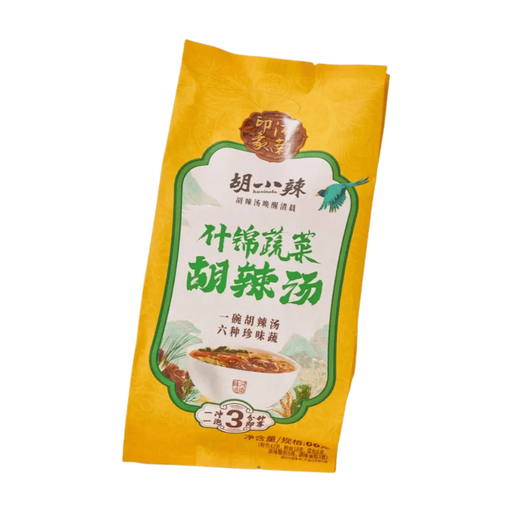 Image unavailable
The 66 g sachet is a good option if you want to try a spicy recipe now and then; don’t mistake it for a multipack. Check the label if gluten, soya, sesame or salt are important factors in your choice.
 Image unavailable
This chorba soup sachet may appeal if you’d like to add more variety to your cupboard. Before buying several, check the pack for the amount of water needed per sachet and how many bowls it makes.
Compare the number of portions, the amount of water needed and the preparation instructions. A 20 cl portion and a sachet designed to make several bowls serve different purposes, even if both fit in your cupboard.
No. Also check the ingredients list, allergens and nutrition information for the specific recipe. To compare salt content, use values given on the same basis, such as per 100 g or per portion.
Read the ingredients list for each product. France’s Directorate-General for Competition Policy, Consumer Affairs and Fraud Control (DGCCRF) says that allergenic ingredients must be highlighted in the list. Also check the pack for any “may contain” statements.
Check the date printed on each product, then read its storage instructions. The French Ministry of the Economy distinguishes between a best-before date (DDM) and a use-by date (DLC), so don’t assume every sachet carries the same date label.
No—the name alone doesn’t tell you what’s in it. Check the ingredients list for the product you choose, even if another soup from the same brand is labelled as vegetarian.