What should you check?
First decide whether organic certification is essential, then check the recipe, pack size and terms of the offer you’re interested in.
| What to check |
Look for |
Who is it for? |
| Organic certification |
Check the packaging for the EU organic logo, the agricultural origin and the certification body’s code. The word ‘natural’ on its own is no substitute for these details. |
If organic certification is my main priority, I want to be able to check it before choosing a jar. Around 36% of shoppers prioritise this certification. |
| Offer and pack size |
Check the net weight and the terms that apply, depending on the shop or how you order. |
When choosing between several jars in a sale, I want to take home an amount that suits me and know the terms of the offer. This is the top priority for around 36% of shoppers. |
| Recipe and flavour profile |
Read the ingredients and descriptions such as ‘100% Arabica’ or the stated intensity, but don’t treat them as a guarantee of taste. |
For breakfast, I’d rather choose based on the ingredients and the profile described than on the packaging alone. Around 18% of shoppers put this criterion first. |
| Preparation and storage |
Check the recommended amount, the date shown and the storage instructions for the product you choose. |
If I use my coffee a little at a time, I want a pack I can store according to the product instructions. Convenience is the top priority for around 10% of shoppers. |
Organic instant coffee on Joybuy
This 100 g pack of organic instant coffee is suited to a breakfast made with hot water. If certification is important to your choice, check the details on the product you receive.
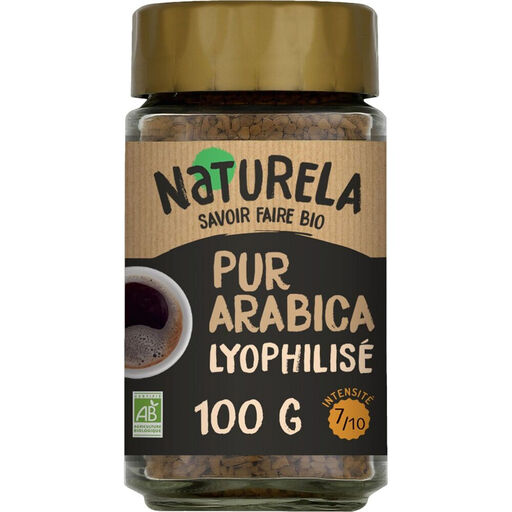 Image unavailable
NATURELA organic instant coffee 100 g
For making instant coffee with hot water at breakfast. 100 g pack; Joybuy describes this coffee as freeze-dried and certified organic. Check the packaging for the EU organic logo, the agricultural origin and the storage instructions.
View on Joybuy
Frequently asked questions
How can you identify organic instant coffee from its packaging?
Look for the EU organic logo and the details that accompany it. Agence BIO explains that the EU organic logo is compulsory for prepacked products of European origin that meet the conditions for its use. The agricultural origin and the certification body’s reference must also be shown. The AB logo may also appear, but it’s optional.
Is a sale offer enough to help you choose a jar?
No. Also check whether the product meets any organic certification requirements you have and whether the pack size suits how much you use. Read the offer terms for the shop or ordering method before making your choice.
What should you look for in an instant coffee’s ingredients list?
The ingredients list helps you tell the difference between instant coffee made from coffee alone and a preparation containing other ingredients, such as sugar or milk. Also check the product name, net quantity and date shown on the packaging. The DGCCRF highlights their role in the labelling of prepacked food.
Is the recommended amount the same for all organic instant coffees?
No. Follow the instructions for the product you buy. For its 100% Arabica organic instant coffee, Auchan recommends 1 to 2 teaspoons in 150 ml of hot water. For Spécial Filtre BIO, NESCAFÉ France recommends 1 teaspoon with 100 ml of steaming water.
How should you recycle the packaging once you’ve finished the coffee?
Follow the sorting information on the product or its packaging, or in the accompanying documents. According to the French ministries responsible for the ecological transition, this information tells you how to sort the relevant components. Don’t rely on the apparent material alone to decide what to do.


