Regular coffee drinkers who care about format
If you often make instant coffee, check the net weight, serving size and stated number of cups before choosing between a jar, refill or sticks.


For budget-friendly shopping, compare the weight, recommended serving size and stated number of cups for similar instant coffees. Then choose a product whose label specifies the blend you want. Arabica-Robusta and 100% Arabica are different compositions; if caffeine is your priority, look instead at decaffeinated options. Format matters too: a large container is only worthwhile if it suits how often you drink coffee.
If you often make instant coffee, check the net weight, serving size and stated number of cups before choosing between a jar, refill or sticks.
If you want an Arabica-Robusta or 100% Arabica blend, check the ingredients for the exact product. A range name or intensity rating alone won’t tell you which beans it contains.
If you prefer decaffeinated instant coffee, look for this wording on the product you choose. It doesn’t necessarily mean the coffee is completely caffeine-free.
Start by choosing the feature that matters most for your daily cup, then check the serving size and format of the product you’re considering.
| Criteria | What to check | Who is it for? |
|---|---|---|
| Value | Net weight, stated number of cups and serving size per cup, comparing instant coffees with similar compositions. | I make coffee almost every day and want to know how many cups the container will make. Around 40% of consumers put value first. |
| Blend | Look for Arabica, Robusta or 100% Arabica on the exact product; don’t assume the intensity rating tells you the composition. | I prefer to choose my beans rather than rely on the range name. For around 30% of consumers, the stated blend is the top priority. |
| Caffeine | Check that the instant coffee you choose is labelled “decaffeinated”; check its blend separately if that matters too. | My main aim is to reduce my caffeine intake, even if I then have to choose between several blends. This is the top priority for around 20% of consumers. |
| Convenience | Choose a jar, refill or sticks according to how often you use it, whether you need to carry it, and the storage instructions. | I don’t drink much instant coffee or want to take individual servings with me. Around 10% of consumers prioritise this format. |
An intensity rating alone doesn’t tell you whether the instant coffee contains Arabica, Robusta or both.
If the blend is important to you, look for the relevant information on the packaging or the listing for the exact product.
For the relevant coffee extracts in France, the decree of 26 October 2001 published by Légifrance sets a maximum of 0.3% anhydrous caffeine in the dry matter derived from coffee for use of this description.
Bear this limit in mind if your main priority is to reduce your caffeine intake.
A jar, refill and sticks don’t all meet the same storage or single-serving needs.
Choose a format to suit how often you drink coffee, and follow the storage instructions for the product you choose.
A large format may stay open for a long time if you rarely make instant coffee.
The range includes Spécial Filtre L’Original, Spécial Filtre Décaféiné and Espresso Intenso.
Classic instant coffee is available in formats including jars, sticks and refills.
Jacobs Krönung is among the 200 g jarred instant coffee products listed by retailer Kaffek France.
These own-label brands appear in Carrefour’s instant coffee range, which includes a Gold product and an organic option described as 100% Arabica.
Auchan’s range includes instant coffees at different intensities, sticks, a decaffeinated option and an organic product described as 100% Arabica.
E.Leclerc lists a 100 g freeze-dried instant coffee and a box of 25 sticks totalling 50 g.
These products include a decaffeinated option, sticks, a refill and a small pack. Compare how you’ll use them, then check the label of the exact product if the bean blend is important to you.
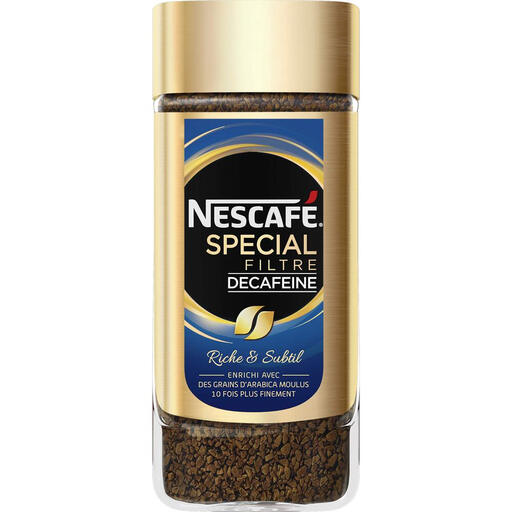 Image unavailable
Worth considering if you’re mainly looking for decaffeinated instant coffee. The pack contains 100 g; check the bean blend and serving size for the product you choose.
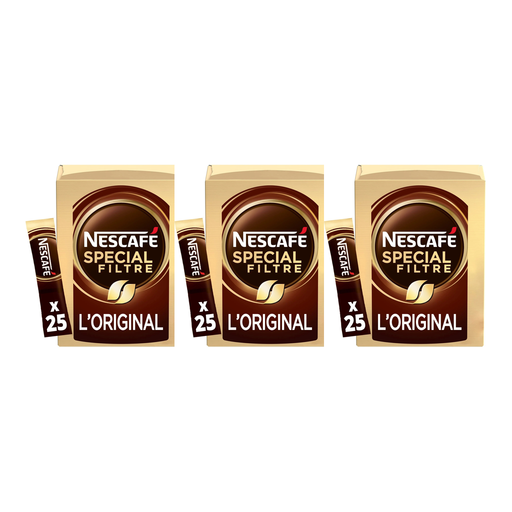 Image unavailable
Individual servings are handy if you want to take your coffee with you or measure out each serving separately. The pack contains three packs of 25 sticks, making 150 g in total; check the bean composition of this stick version.
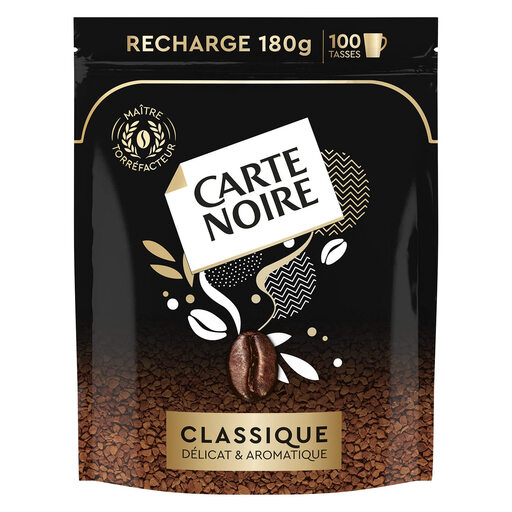 Image unavailable
A refill may suit you if you already have a suitable container and drink instant coffee regularly. Check the composition and serving size to work out how many cups this refill will make.
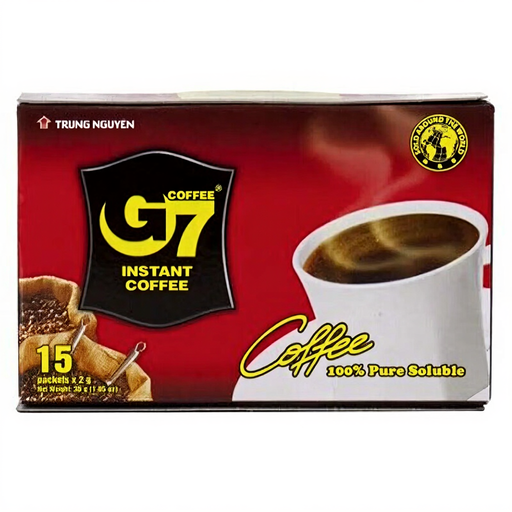 Image unavailable
The 30 g pack is a handy option if you want a small amount of instant coffee. If you’re looking for a particular blend, check the coffee species listed on the label for this product.
Check the net weight, stated number of cups and recommended serving size for each product. Compare instant coffees with similar compositions rather than a plain coffee with a preparation that contains other ingredients.
Choose based on the composition you want and the preparation instructions for the exact product, without assuming that one blend will suit everyone. NESCAFÉ France describes Spécial Filtre L’Original as an Arabica-Robusta blend and Espresso Intenso as 100% Arabica; these descriptions don’t apply to the whole range.
No, “decaffeinated” doesn’t necessarily mean completely caffeine-free. For the relevant coffee extracts in France, the decree of 26 October 2001 published by Légifrance sets a limit of 0.3% anhydrous caffeine in the dry matter derived from coffee.
A jar or refill suits regular use, while sticks let you measure out an individual serving and take it with you. Consider how often you drink coffee and follow the storage instructions for the product you choose.
No, follow the instructions for each product. NESCAFÉ France recommends one teaspoon per 100 ml of hot water for Spécial Filtre L’Original, while the instructions for Espresso Intenso specify 60 ml of hot water.