Guest room and reception area managers
For a guest room or small meeting room, you need a portion that is easy to distribute and clear preparation instructions. Sachets make it easy to count portions without scooping coffee from a shared jar.


For guest rooms and small coffee stations, sachets make it easy to serve individual portions. For a buffet that is replenished regularly, a jar or refill lets you prepare cups as needed, provided you set a standard dose and reseal the coffee properly. To choose your main coffee, compare the blends and intensity guidance without assuming that one profile will suit everyone. You could also offer a separate decaffeinated option if coffee is available at different times of day.
For a guest room or small meeting room, you need a portion that is easy to distribute and clear preparation instructions. Sachets make it easy to count portions without scooping coffee from a shared jar.
If cups are prepared throughout service, you need to be able to restock the coffee station, keep portions consistent and reseal the packaging after use. Jars and refills are well worth comparing.
If a single caffeinated coffee does not cover the options you want to offer, a decaffeinated variety can complement your service. Clearly label each option and keep its ingredient and allergen information accessible.
When serving instant coffee in a hotel, start by choosing the packaging to suit where it will be served. Then consider the profile of your main coffee, how often it needs replenishing and what information you need to present each drink clearly.
| Criterion | What to check | Customers' priorities |
|---|---|---|
| Service and portioning | Number and weight of sachets, or the recommended dose and volume of water per cup. | In a guest room or meeting room, I want to serve a cup without leaving people to guess how much coffee to use. Around 36% of consumers would prioritise portion control and ease of service. |
| Coffee profile | Blend information and tasting notes for the specific product; try it with the cup and water volume used at the hotel. | For the buffet, I want a main coffee whose taste suits the range I plan to offer, rather than relying on the Arabica/Robusta label alone. The taste of the cup would be the main consideration for around 29% of consumers. |
| Packaging and replenishment | Jar or refill weight, chosen dose and storage instructions after opening. | With daily service, I need to know when to replenish the coffee and how to store it between services. Around 21% of consumers would prioritise this need for regular replenishment. |
| Decaffeinated coffee and ingredients | “Decaffeinated” labelling, ingredient list and allergen information for each option. | If coffee is also served later in the day, I want to be able to distinguish the decaffeinated option from the main coffee and milk-based drinks. Clear information about the range would come first for around 14% of consumers. |
A drink’s name alone does not tell you what it contains. Milk-based or flavoured preparations should be clearly distinguished from black instant coffee in the hotel’s offering.
Check the ingredient list for your main coffee. Check the lists for other preparations separately, along with their allergen information.
A pre-portioned sachet and a jar used with a spoon do not give you the same serving reference: the number of cups you get from a jar depends on the dose you choose.
Compare the weight of each portion or follow the recommended dose for the product before planning when to replenish it.
Without a standard dose and volume of water, the coffee may be prepared differently by different people. The Auchan Classico product information also says to seal the packaging tightly and store it in a cool, dry place.
Set a measure for your chosen product and give your team its preparation and storage instructions.
When coffee or another preparation is transferred to a serving container, its ingredients and allergen information may no longer be immediately identifiable.
Keep the information for each product to hand. If you change how it is presented, check the requirements that apply to your intended service; the DGCCRF, for example, distinguishes the information required for prepacked foods.
These ranges offer useful points of comparison for the formats and profiles available in France. Check the specific product before choosing a coffee for hotel service.
The range includes Spécial Filtre L’Original, which NESCAFÉ France describes as an Arabica/Robusta blend, as well as sachet and decaffeinated options.
Carrefour lists Carte Noire Classique among its Arabica/Robusta instant coffees, available in jars and sachets.
The retailer’s own-brand range includes Carrefour Extra in individual portions, as well as instant coffees in jars.
The Auchan range includes instant coffee in jars and sachets, as well as decaffeinated options.
According to the E.Leclerc catalogue, the Marque Repère Plantation range includes freeze-dried instant coffee in sachets and jars.
Jacobs Gold is another instant coffee worth comparing: Amazon France lists a 200 g jar from a third-party seller, described as a “Blend”.
These two products suit different needs: a decaffeinated option to expand your range and a refill of classic instant coffee for a regularly replenished coffee station. Check the information for each product before deciding how to serve it at your hotel.
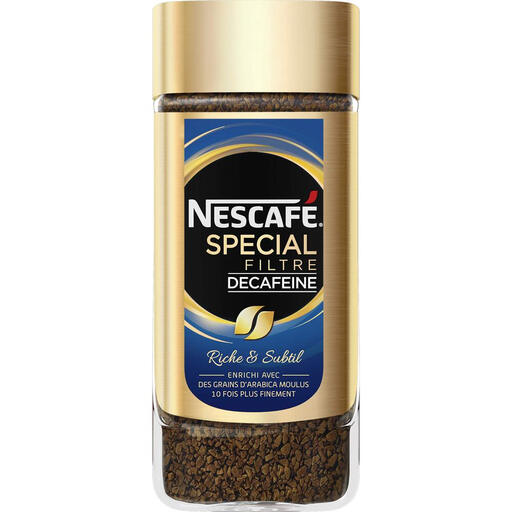 Image unavailable
A decaffeinated option to offer separately from your main coffee. The product information lists a 100 g jar of decaffeinated instant coffee and recommends 1 to 2 teaspoons per 150 ml of hot, non-boiling water. Adjust replenishment to the dose you actually serve.
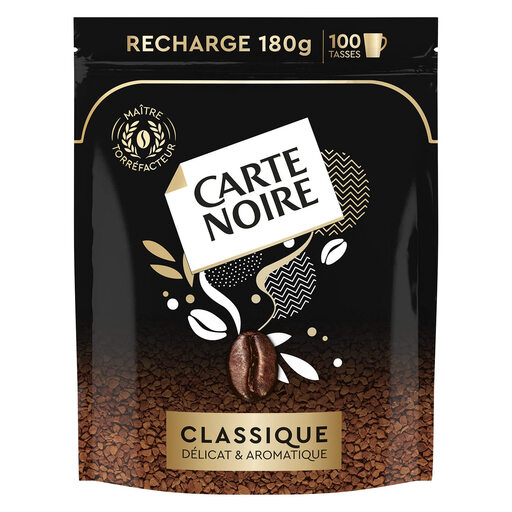 Image unavailable
A refill of classic instant coffee for a buffet or regularly replenished coffee station. It weighs 180 g; before setting your serving recipe, check the ingredients and preparation instructions for this refill. Do not assume it uses the same blend as other Carte Noire packaging.
Choose sachets for individual portions in a guest room or small space. A jar or refill suits regular service if your team can measure out the coffee and reseal the packaging. To plan replenishment, use the product’s recommended dose and the number of cups prepared at your hotel as a guide.
The Arabica/Robusta label tells you that the coffee is a blend, but it cannot guarantee that everyone will enjoy its taste. NESCAFÉ France describes Spécial Filtre L’Original this way, and Carrefour lists this blend for Carte Noire Classique. Compare the products prepared in the cups and with the volumes of water you plan to use at the buffet.
A decaffeinated option can broaden your range if you want to offer an alternative to your main coffee, particularly if the coffee station stays open after breakfast. Clearly label its container and follow the preparation instructions for the product you choose.
No. Use the instructions for each product as your starting point. NESCAFÉ France recommends one teaspoon per 100 ml of hot water just off the boil for Spécial Filtre L’Original, while the Auchan Classico product information recommends one to two teaspoons per 150 ml of hot, non-boiling water.
Keep each coffee and preparation linked to its product information, particularly its ingredients and allergen details. In France, the DGCCRF sets out the information required for prepacked foods. If the hotel removes the packaging or changes how the product is presented, check the rules that apply to that specific type of service.