People in a hurry in the morning
You want to make black coffee straight in your mug, without a coffee machine, before you head out. In that case, the jar’s instructions and serving size matter just as much as its capacity.


If you regularly make instant coffee for breakfast, start by choosing a jar size that suits how often you drink it. Then check the recommended serving size and the coffee profile you’re looking for. A 180–200 g jar may suit a household that drinks coffee frequently, provided you can store it tightly closed in a cool, dry place. If you want to limit your caffeine intake, look for a product that is clearly labelled as decaffeinated.
You want to make black coffee straight in your mug, without a coffee machine, before you head out. In that case, the jar’s instructions and serving size matter just as much as its capacity.
You’re looking for a size that suits the number of cups you make during the week. A large jar only makes sense if you’ll use it up and store it properly.
You want to find a flavour profile you enjoy or choose a decaffeinated option. Check the details of the specific product rather than relying on the brand name alone.
For weekday breakfasts, start with how you make your coffee, then choose a jar size and coffee profile that suit your habits.
| What to consider | What to check | Who is it for? |
|---|---|---|
| Quick preparation | Check the recommended amount of coffee and water for your cup. NESCAFÉ recommends one teaspoon and 100 ml of hot water for Spécial Filtre L’Original. | Before I head out, I want to make coffee straight in my mug without having to work out the right amount every morning. Around 36% of consumers would make this their priority. |
| Jar size | Compare the net weight with how often you drink coffee and the storage instructions. The number of cups stated depends on the serving size used. | If several people in the household drink coffee during the week, I want a jar that suits our routine without being open for too long. Around 29% of consumers would put jar size first. |
| Flavour in the cup | Check the type of coffee and the flavour notes listed for that product. You can also adjust the amount to suit your cup. | For my everyday cup, I’d rather choose a flavour profile I enjoy than focus only on convenience. Around 21% of consumers would prioritise this. |
| Caffeine | Look for the word “decaffeinated” on the specific product and take your other sources of caffeine into account. | I want to cut down on caffeine while still having my morning coffee. This would be a priority for around 14% of consumers. |
These products may be on the same shelf, but they have different names and ingredients. A mix containing milk or sugar isn’t the same as plain black coffee.
Read the product description and ingredients list for the option you choose.
A 180–200 g jar is best suited to regular coffee drinkers. The product details for Carte Noire’s 180 g classic instant coffee say to store it in a cool, dry place.
Choose a size that suits your household’s routine and check the instructions on your jar. Close it after use.
A strength rating describes the coffee profile, not how much caffeine you’ll consume. Anses notes that caffeine can affect sleep.
If you want to limit your caffeine intake, look specifically for a decaffeinated version and consider your other sources of caffeine throughout the day.
The range includes Spécial Filtre L’Original in a 200 g jar, as well as NES in tins and sticks.
The classic instant coffee is available in a 180 g jar, among other formats. Retailers also list a refill pack and sticks.
Carrefour lists its Gold instant coffee in 100 g and 200 g formats.
E.Leclerc lists a 200 g jar of Plantation freeze-dried instant coffee, as well as a decaffeinated version.
Auchan’s range includes several instant coffees, including decaffeinated options and 200 g formats.
These two jars offer different options for breakfast: a 200 g instant coffee and a 100 g decaffeinated product. Choose according to how often you drink coffee and the label you’re looking for.
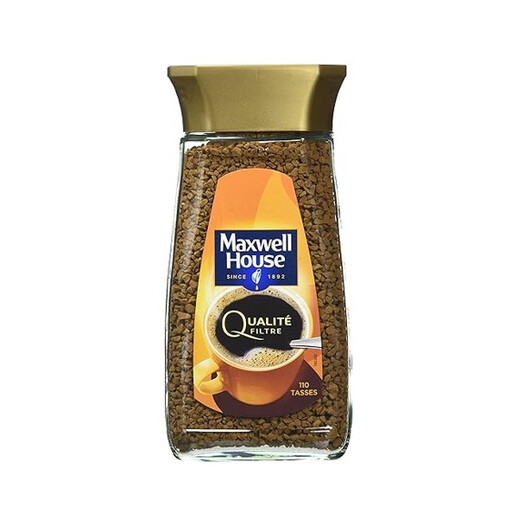 Image unavailable
A 200 g jar to consider if your household regularly drinks instant coffee at breakfast. Check the storage instructions on the packaging.
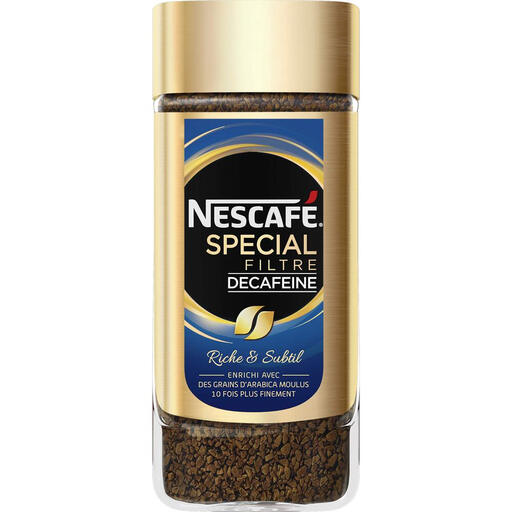 Image unavailable
A 100 g decaffeinated option for anyone who wants this type of instant coffee at breakfast. If the amount of residual caffeine matters to you, check the product label.
Start with the instructions for your product, then adjust the amount to suit the size of your cup. For Spécial Filtre L’Original, NESCAFÉ recommends one teaspoon and 100 ml of hot water.
Close the lid and follow the instructions on the label. Auchan’s listing for Carte Noire’s 180 g classic instant coffee says to store it in a cool, dry place.
Look for instant coffee that is clearly labelled “decaffeinated” and check the label of the product you choose. Anses says caffeine can delay falling asleep and affect the duration and quality of sleep. Remember to take your other sources of caffeine into account too.