
Livraison le jour même ou le lendemain

Qualité garantie

Débloquez vos offres de bienvenue: Livraison GRATUITE | Jusqu'à -80 % | 30 jours d'essai gratuits à JoyPlus
Téléchargez l'application
The action camera market is flooded with promises: 4K, waterproofing, stabilisation... But once you unbox it, disappointment often follows, with performance that falls short. As the Head of Product Recommendations at Joybuy, our mission is to help you read between the lines of the spec sheets to make the right choice. In this guide, we'll break down the criteria that truly matter, using the Insta360 Ace Pro as a case study.
Before getting tempted by the latest deal, it's best to know the common pitfalls that can turn a great buy into a costly regret.
To avoid these traps, here are the technical points on which you must be uncompromising.
Image quality primarily depends on the amount of light the sensor can capture. A large sensor, like the 1/1.3-inch model in the Insta360 Ace Pro, is physically capable of capturing more light. This is a decisive advantage for getting a truly detailed 4K action camera that performs well in low light.
The quality of the lens is just as crucial. A collaboration with a renowned brand, as is the case with the camera with a Leica lens on the Ace Pro, is often a guarantee of sharpness, colour accuracy, and better management of image distortion.
Good stabilisation is simply non-negotiable. The most advanced systems, like FlowState stabilisation, rely on multi-axis gyroscopes to smooth out shakes and deliver stunningly fluid footage, worthy of an external stabiliser (gimbal).
Ergonomics also play a crucial role. For vlogging, a vlogging camera with a flip screen is a game-changer for perfecting your framing. Meanwhile, magnetic mounting systems make swapping accessories nearly instantaneous, a real plus in the field.
Because every user is unique, here are models that check the right boxes for different profiles.
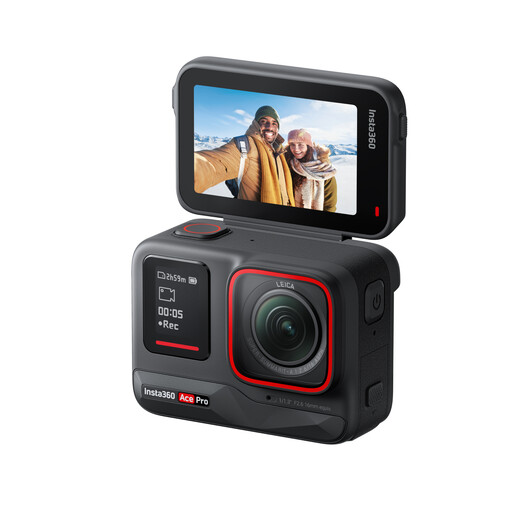
Why it's a match: Ideal for vloggers, videographers, and athletes for whom image quality, day or night, is non-negotiable and who seek maximum flexibility.
Its large 1/1.3-inch sensor and 5nm AI chip tackle the problem of low light and fake 4K head-on. The PureVideo mode is specifically designed to clean up digital noise as soon as light is scarce.
Optics co-developed with Leica for first-class image rendering. Large 2.4-inch flip touchscreen, the ultimate tool for vlogging.
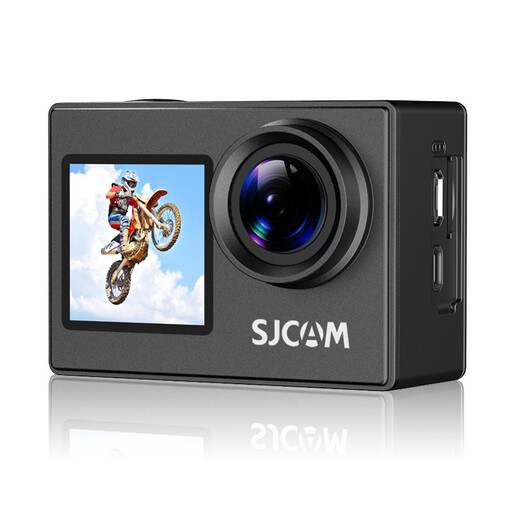
Why it's a match: For those just starting out or looking for a "Swiss Army knife" camera for holidays and water sports without breaking the bank.
It sidesteps the limited waterproofing trap by coming standard with a robust housing certified down to 30 metres. This ensures flawless protection for most aquatic activities.
An unbeatable features-to-price ratio. The dual screen (rear for settings, front for selfies) is a real bonus at this price point.
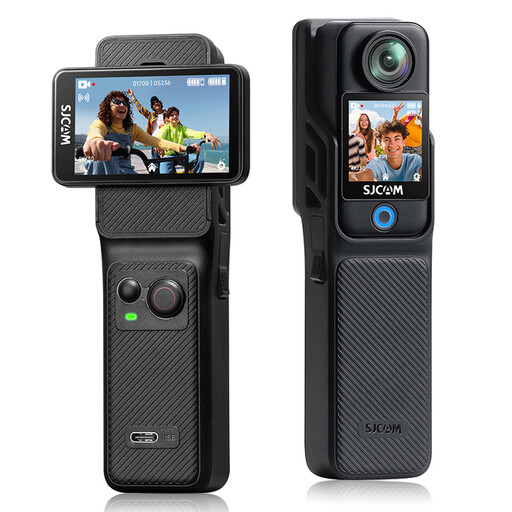
Why it's a match: Designed for creators who shoot long sessions outdoors (hiking, travel, motorbiking) and for whom battery life and stabilisation are the number one criteria.
It tackles an often-overlooked weakness: battery life. Its auxiliary battery, integrated into the grip, promises marathon recording times, avoiding the frustration of running out of power mid-action.
Record-breaking battery life (up to 437 min in 4K according to the manufacturer). 6-axis gyroscopic stabilisation for ultra-smooth videos, even when things get shaky.
Discover our full selection of action cameras tested and approved by our experts, meeting our strict performance and safety requirements.
The Insta360 vs GoPro showdown is a classic. Let's be clear: both brands play in the big leagues when it comes to image quality. The Insta360 Ace Pro sets itself apart with its larger sensor (1/1.3-inch) and its partnership with Leica, a duo that gives it a notable advantage in low light and a distinct optical rendering. For their part, GoPro models are renowned for their flattering colour science and their ultra-comprehensive accessory ecosystem. The choice will depend on your priorities: raw performance in difficult conditions for the Ace Pro, or a proven ecosystem and image processing for GoPro.
Absolutely. The Leica logo on a camera isn't just for show. This partnership influences the lens design and image processing. In practical terms, you can expect better sharpness across the entire image, a reduction in chromatic aberrations (those little purple fringes on contours), and more faithful colour reproduction. For image purists, the difference is very real.
Without a doubt. Its ace in the hole for this use is its large 2.4-inch flip screen. Unlike cameras with just a small front-facing screen or a fixed display, the Ace Pro's screen pivots completely. It allows you to see yourself and control everything in real time: framing, exposure, focus... It's a game-changing convenience for anyone who regularly films themselves.