
Livraison le jour même ou le lendemain

Qualité garantie

Débloquez vos offres de bienvenue: Livraison GRATUITE | Jusqu'à -80 % | 30 jours d'essai gratuits à JoyPlus
Téléchargez l'application
Flies reappear as soon as windows are left open, especially in kitchens, homes with gardens, and properties near shops or water sources. To limit their presence without using spray, an insecticide-free fly trap offers a simple solution to install.
But you need to avoid the false bargains. A strip that's too visible, poorly protected adhesive, or a model unsuited to the room can quickly become a wasted purchase. Here are the criteria to consider before choosing a sticky fly catcher for your home.
An adhesive trap doesn't release insecticide, but its surface remains very sticky. So you must install it out of reach of children and pets. Also avoid placing it above a worktop, near fabric, or on a surface that might be touched.
The phrase "odourless" simply means that no perfume or notable emissions are stated in the product information available. It doesn't mean the trap can be handled without care.
A multi-pack of fly traps might seem economical, but the area to cover matters more than the number of pieces. Baygon's guidelines recommend one strip for approximately 10 m², and several strips for larger spaces.
In a kitchen open to the living room, a single indoor fly trap may therefore be insufficient. Conversely, installing several strips in a small room can compromise the overall discretion.
A fly strip placed in a draught, in direct sunlight, or too far from high-traffic areas will likely be less effective. For the Baygon model, the recommendations state not to expose it directly to sunlight or draughts.
The most practical spots are usually near a window, a door leading outside, or a bin. However, make sure to keep a safe distance from children, pets, and food.
Start by estimating the size of the room in question. For a 10 m² kitchen, one strip matches Baygon's manufacturer guidelines. For a large living area or a home with several affected zones, a pack of 4 fly traps allows you to spread out the installation points.
This method is more sensible than a purchase based solely on the promise of an "effective anti-fly solution". The result also depends on placement, the level of infestation, and the presence of easily accessible food.
Rolled strips must be unrolled carefully, then hung using their hanging system. For the Baygon model, the manufacturer recommends gently warming the tube in your hands before removing the strip. This step can make unrolling the adhesive easier.
An odourless insect trap should remain discreet enough not to get in the way of movement around the room. Measure the available height and choose a spot where no one is likely to brush against it.
The stated duration doesn't always correspond to a fixed period. For Baygon, replacement is recommended every six weeks or when the strip is covered with insects, whichever comes first. A saturated strip should not be left hanging any longer.
After use, wrap it in paper before throwing it away, avoiding any contact with hands or nearby surfaces. Clean any adhesive residue immediately using a method compatible with the material in question.
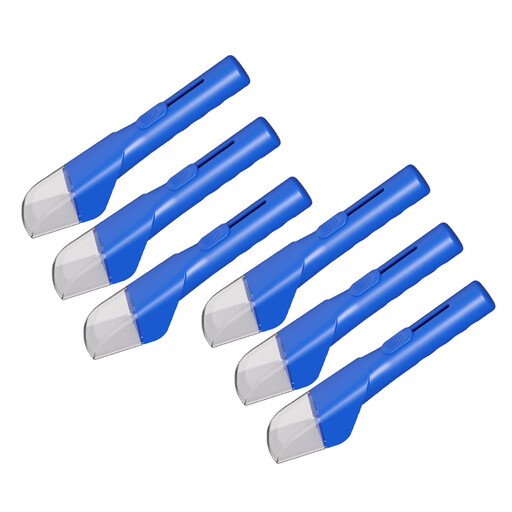
Why this product suits this profile: a multi-pack to start treating several entry points in a flat or small house.
The pack prevents underestimating the number of zones to cover. However, check the fitting and reuse instructions on the product page.
Six adhesive strips are included. The product is described as suitable for both indoor and outdoor use.
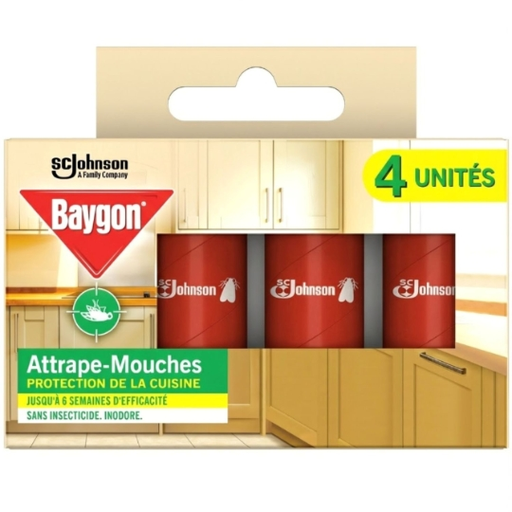
Why this product suits this profile: a product specifically designed for indoor use, insecticide-free and odourless according to the manufacturer's information.
The instructions specify the indicative coverage area, fitting conditions, and replacement timing. This lets you plan the installation before purchase.
Pack of four pieces, indicated for indoor use, replacement advised after six weeks or when the strip is covered.
Why this product suits this profile: the pack of four can suit a house with several exposed rooms, provided you respect the indicative coverage area per strip.
Distributing the strips avoids concentrating the whole setup in one room when flies move between several areas.
Format of four strips, suspension via the lid, and detailed usage instructions from the manufacturer.
Before hanging an insecticide-free fly trap, identify frequent access points to the outside and areas where waste or food is temporarily exposed. Close packaging, empty the bin regularly, and clean up spills quickly: the adhesive trap supports these good habits, but doesn't replace them.
To minimise risks:
The Baygon fly trap featured here is an adhesive strip stated to be insecticide-free. It is neither a diffuser nor an electrical device. Its operation relies on capturing flies with a sticky surface. An important distinction for households that want to avoid aerosols, plug-ins, and added fragrances.
We've put together an updated selection of products so you can compare their features, formats, and usage conditions before placing an order.
For the Baygon model, replacement is recommended after six weeks, or sooner if the strip is covered with insects. The actual duration depends on its location and how often flies pass by.
Yes, provided you hang it away from food, preparation surfaces, and areas accessible to children or pets. Installation near a window is possible if the strip stays out of draughts and direct sunlight.
It can help reduce the presence of flies in a room, but its effectiveness also depends on the environment. For a truly consistent approach, combine it with windows fitted with mosquito nets, good waste management, and prompt cleaning of food sources.