
当日/次日达

品质保障

开启新人专享福利: 全场免邮 | 低至 2 折 | 免费试用 30 天 JoyPlus 会员
下载 Joybuy
A dining table is the centrepiece of a kitchen or dining room. It’s where you eat, work from home, help the children with their homework and sometimes get creative. But disappointment isn’t always down to how a table looks. It often comes from details that are hard to spot in photos.
Before choosing a dining table, check its dimensions, how many people it can comfortably seat, the quality of its materials and how much legroom it offers. Here are the key points to consider when comparing designs.
A table may have a generous length but still offer little legroom if its central base is too bulky or its storage is poorly positioned. For everyday use, allow at least 60 cm of width per person so everyone can eat comfortably.
Measure your room, too, and allow enough space to pull out the chairs. A 160 cm table placed against a wall might look ideal on paper, but can get in the way if the walkway is too narrow.
A dining table with storage can be handy, but some compartments get in the way of your knees or are difficult to reach. Check their position, height and opening mechanism. Open shelves are useful for placemats and trivets, while a closed compartment offers better protection from dust.
Whether it has an industrial, Scandinavian or minimalist style, a table should be stable once assembled. The number of legs, any metal supports and non-slip feet matter more than the look of the tabletop alone. Also check whether the product arrives in multiple parcels and needs assembling.
Standard table height is around 75 to 76 cm. Pair your table with chairs that leave enough space between the seat and the tabletop.
MDF provides a smooth surface and makes it easy to create different shapes. Clean it with a slightly damp cloth, but avoid leaving water on the edges or joints. Even if the finish is described as scratch- or moisture-resistant, you should still use trivets and wipe up spills promptly.
Tables with metal legs have a contemporary or industrial look and can offer a particularly sturdy base. Check for supports, the quality of the fixings and whether the feet are designed to protect your floor. Solid wood legs, meanwhile, add a warmer touch that’s often associated with Scandinavian style.
The stated load capacity is not the same as everyday use: it doesn’t mean you can sit on the tabletop. To reduce the risk of accidents, look for rounded or carefully sanded edges, non-slip feet and clear assembly instructions.
Before ordering, check the seller’s information about the manufacturer, the person responsible in the European Union, the materials and delivery terms. Measurements taken by hand may vary slightly, and colours may look different from one screen to another.
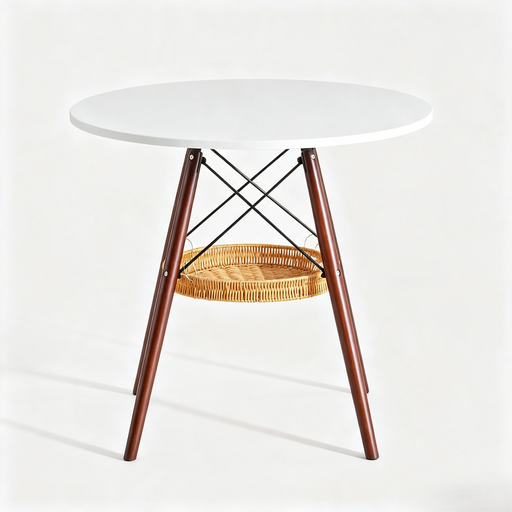
Why it’s a good fit: Its compact size makes it a great choice for a couple, a small flat or a kitchen dining area. The suspended basket keeps a few essentials close to hand without taking up space with another piece of furniture.
With an 80 cm diameter, this table takes up less space. Its rounded edges and non-slip feet address some of the key points to look for in a smaller room.
1.8 cm white MDF tabletop, solid wood legs, metal support and a 40 cm woven basket.
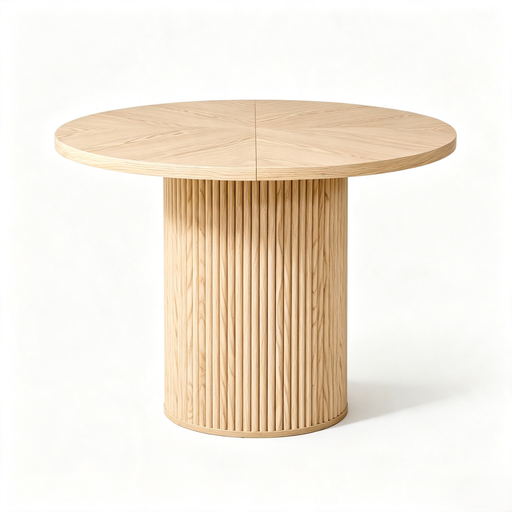
Why it’s a good fit: It combines a generous tabletop with a light wood-effect finish and hidden compartments in the legs, helping you keep your dining room tidy.
The 100 cm diameter and 76 cm height are clearly stated, making it easier to check how the table will work with your chairs and available space.
2.5 cm MDF tabletop, four cylindrical legs and storage compartments with internal metal supports.
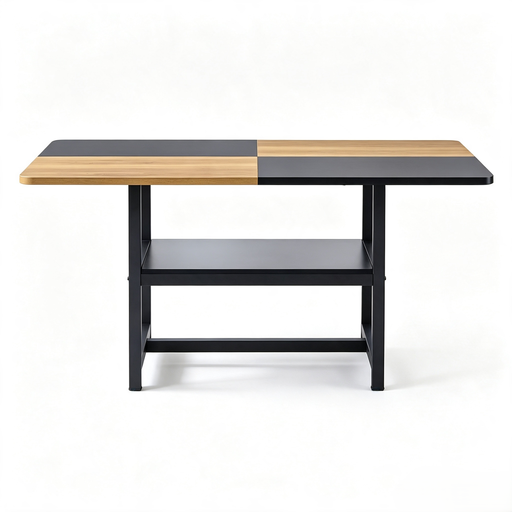
Why it’s a good fit: Its tabletop seats four to six people and works just as well for family meals as it does for working from home or other everyday tasks in a large kitchen.
The built-in 88 × 50 cm storage means there’s no need for another piece of furniture, while the metal frame is designed to stand up to regular use.
2.5 cm tabletop, black metal legs, multifunctional storage and a surface described as water- and scratch-resistant.
We’ve put together a comprehensive, regularly updated selection of products that meet these exacting criteria as well as European safety regulations.
An 80 to 107 cm round table makes it easier to move around and takes up less space than a table with corners. It’s generally suitable for two or four people. If your room is long and narrow, however, a shallow rectangular table may make better use of the space available.
Its lifespan depends on the thickness of the board, the quality of the joints and how well you care for it. Wipe up spills promptly, use protectors under hot dishes and avoid moving the table by pulling it by the tabletop. Pay particular attention to the edges and the areas around the fixings.
A soft, slightly damp cloth is usually all you need to remove dust and food marks. Dry the surface afterwards, avoid abrasive cleaners and tighten the screws after the first few weeks of use. This simple routine helps keep the tabletop looking its best and the base stable.