
Livraison le jour même ou le lendemain

Qualité garantie

Débloquez vos offres de bienvenue: Livraison GRATUITE | Jusqu'à -80 % | 30 jours d'essai gratuits à JoyPlus
Téléchargez l'application
Spending a night under the stars, whether you're camping, bivouacking, or at a festival, is often a memorable experience. But a single bad night's sleep can turn an adventure into an ordeal. The choice of your inflatable camping mattress is therefore anything but trivial. The problem? The market is saturated with marketing promises and technical jargon that too often lead to regrettable purchases.
As the Head of Product Recommendations at Joybuy, I'm here to help you decode spec sheets and identify the features that truly matter. Let's break down the pitfalls to avoid and the essential criteria for finding the perfect companion for your nights, without being fooled by marketing jargon.
Before we even start comparing models, let's identify the common mistakes that lead straight to disappointment.
To make an informed choice, forget the marketing hype and focus on these three objective parameters. They are what determine the real-world performance of your future mattress.
There are three main systems, each with its own pros and cons:
This criterion is non-negotiable for hiking and bivouacking.
The R-Value measures a mattress's ability to resist heat transfer. The higher the value, the better the mattress will insulate you from the cold ground. It's a much more reliable indicator than thickness alone.
Note that a simple foam camping ground mat can add a layer of insulation and, more importantly, protect your inflatable mattress from punctures.
Rather than a laundry list, we've selected models that meet the needs of specific user profiles, applying the criteria we've just discussed.
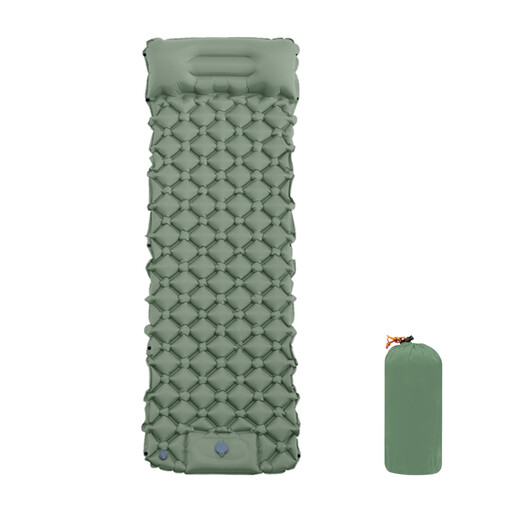
Why this profile ? Designed for those who count every gram. At 690 g and with a compact size (26 x 10 cm), it's the perfect ally for multi-day treks where every square inch in your pack matters.
It directly solves the inflation problem with its integrated foot pump, which fills the mattress in 30 to 60 seconds without leaving you out of breath. Goodbye to unkept promises of " rapid inflation ".
Its excellent thickness-to-weight ratio (15 cm for 690 g) and the ability to connect it to a second mattress to create a double bed.
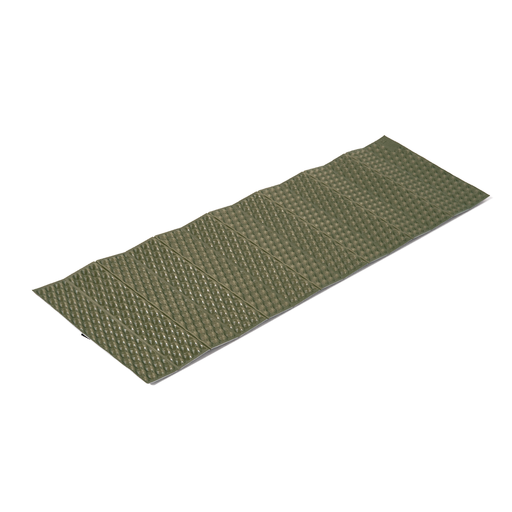
Why this profile ? The ideal option for bivouacking and situations where reliability is paramount. It's puncture-proof, lightweight (750 g), and provides consistent insulation on any terrain.
It completely eliminates the risk of waking up on the hard ground with a deflated mattress. Its R-value of 2.6 is an objective metric that guarantees reliable insulation for 3-season use.
Its durability and simplicity are unbeatable. Just unfold it, and it's ready. The egg crate structure made of XPE foam offers an excellent balance of insulation, cushioning, and toughness.

Why this profile ? Perfect for car camping, festivals, or as a comfortable spare bed at home. Here, comfort and thickness (22 cm) take priority over weight and packed size, which are secondary concerns.
It doesn't pretend to be something it's not: a piece of trekking gear. Its purpose is simple: to provide a thick sleeping surface for stationary use, which prevents the disappointment of an overhyped product.
Its sturdy PVC construction, featuring an internal Coil Beam structure, provides good support. The flocked surface is soft to the touch and prevents your sleeping bag from sliding off.
We have compiled a complete and up-to-date collection of products that meet our strict selection criteria.
Longevity heavily depends on the materials, frequency of use, and care. A well-maintained hiking model made of nylon and TPU can last for several years. A spare mattress made of PVC is more susceptible to punctures and temperature changes. To maximize its lifespan, clean it after each trip, ensure it is completely dry before packing, and store it in a dry place, ideally unrolled or only loosely compressed.
Only partially. When you open the valve, the open-cell foam expands and draws in air, doing most of the inflation. However, to achieve the ideal firmness, you almost always need to finish the job by adding a few breaths. The term "semi-automatic" would be more accurate.
Most quality mattresses come with a repair kit containing patches and glue. To find the leak, inflate the mattress and submerge it in water to look for bubbles. If that's not possible, wipe a sponge with soapy water over the surface. Once the leak is located, thoroughly dry and clean the area. Then, apply the glue, place the patch on top, press down firmly, and let it dry for the time recommended by the manufacturer.