
Livraison le jour même ou le lendemain

Qualité garantie

Débloquez vos offres de bienvenue: Livraison GRATUITE | Jusqu'à -80 % | 30 jours d'essai gratuits à JoyPlus
Téléchargez l'application
Choosing infant formula or growing-up milk for your baby can quickly become a real headache. Between first-age milk, second-age milk, growing-up milk, organic formulas and thickened varieties, packaging is packed with nutritional claims. Yet some very practical criteria deserve to come before the marketing.
Milk designed for babies from birth does not meet the needs of a 10-month-old child. In France, the different names provide useful guidelines:
The age shown on the packaging should always match the child’s age. If your baby has particular sensitivities or specific dietary needs, it is best to discuss the transition with a healthcare professional.
Organic infant formula is produced according to regulated standards, but that does not mean it will automatically suit every child. Similarly, the claim palm-oil-free baby milk tells you about a specific formulation choice, but is not enough to assess the product as a whole.
You should also check the allergens, type of milk, possible presence of fish, soya or lactose, as well as the preparation instructions. The full list shown on the packaging remains the key reference to consult before use.
A tin of baby milk powder can prove economical to use, but it requires preparation for every bottle. Once opened, most of the products featured here should be consumed within a limited period, generally three to four weeks. Cartons of ready-to-drink milk are convenient, but usually need to be kept in the fridge after opening and consumed quickly.
The first thing to check is the recommended age, followed by the role of the milk in your baby’s meals. Second-age milk accompanies weaning, while growing-up milk forms part of the varied diet of a child aged 10 to 36 months.
For a baby fed on infant formula, the quantity and frequency of bottles should follow the manufacturer’s instructions and the advice of the healthcare professional looking after your child. Do not add sugar, cereal or extra powder without appropriate medical or dietary advice.
Compare the ingredients in the order in which they appear and look out for highlighted allergens: milk, soya, fish or possible traces of nuts. Some products contain vitamins, minerals, fatty acids, fibre or cultures. However, these should be viewed as compositional features, not as medical promises.
Parents looking for palm-oil-free milk can examine the vegetable oils used in the formula. Conversely, some organic formulas, such as HiPP Combiotic 3, state that they use organic palm oil from a cultivation method presented as sustainable. Reading the label therefore helps you avoid jumping to conclusions.
For powdered formula, use only the scoop provided and follow the stated water-to-powder ratio. Prepare the bottle just before feeding, check the temperature and discard any leftovers after the feed. A formula that is too concentrated or too diluted can alter the intended nutritional intake.
A bottle warmer can make night-time feeds easier and warm milk gradually. However, it does not remove the need to check the temperature before giving your baby the bottle. The Momcozy model featured below has an automatic shut-off and settings based on the starting temperature and the bottle material; use these functions in accordance with the instructions.
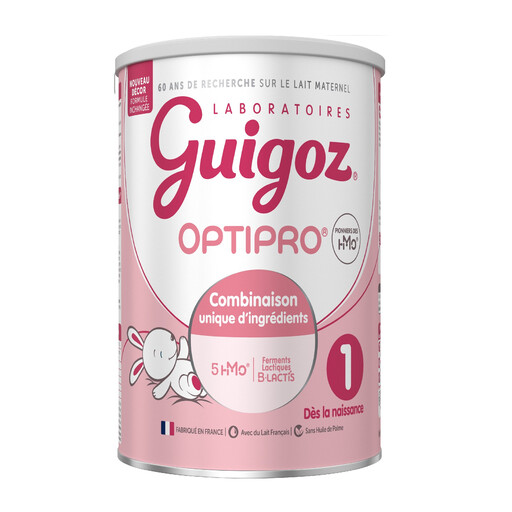
Why this product suits this profile : This 830 g tin is suitable for babies from birth to 6 months and offers a convenient format for everyday shopping.
The recommended age is clearly stated. The formula is described as palm-oil-free and made in France, but its ingredients and allergens should still be checked on the tin.
830 g format, scoop included, vitamins and minerals listed in the ingredients, with recommended use within four weeks of opening.
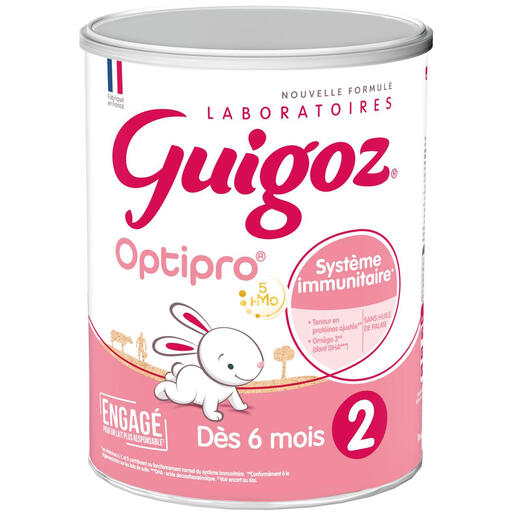
Why this product suits this profile : A second-age milk formula for families who want to examine a detailed composition, including several vitamins, minerals and five HMO stated by the manufacturer.
Do not choose a formula based solely on the number of ingredients: the 6-to-12-month age range, the presence of milk and soya, and the preparation instructions remain the priorities.
830 g tin, milk made in France according to the product information, DHA from microalgae oil and Bifidobacterium lactis.
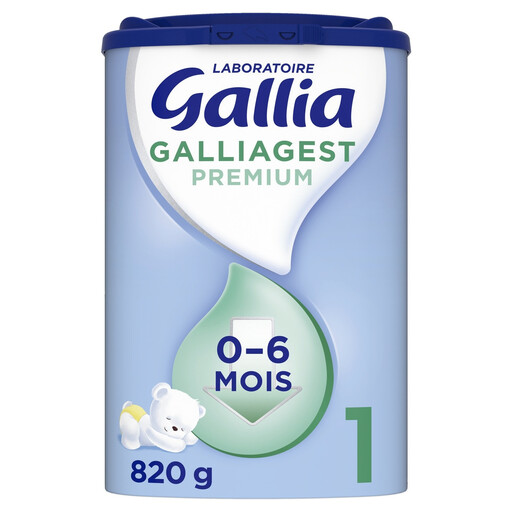
Why this product suits this profile : This thickened formula is suitable from birth to 6 months. It may appeal to parents looking for thickened anti-regurgitation milk, but only after discussing it with a healthcare professional.
A thickened formula is not a universal solution to choose without careful consideration. The product information mentions starch, milk, fish and soya: check these details before buying.
820 g format, resealable tin, preparation instructions specifying one level scoop per 30 ml of water, and limited storage time after opening.
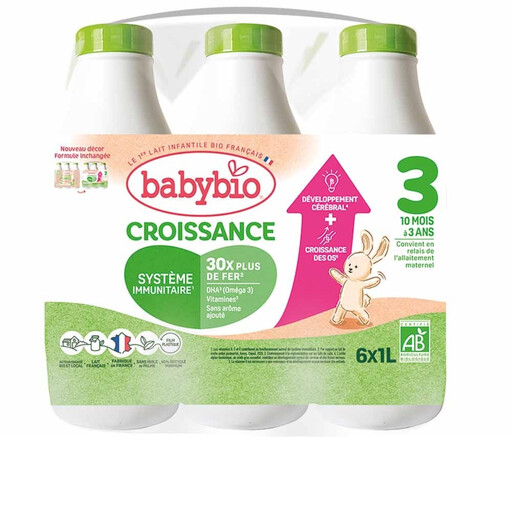
Why this product suits this profile : This growing-up milk, intended for children from 10 months, is ready to use and supplied in six one-litre cartons. This format can make family routines easier to manage.
The liquid format avoids the need to measure powder, but you must maintain the cold chain after opening and consume the carton within 48 hours.
Milk from organic farming, ready to serve, no boiling required, with vitamins and minerals listed in the product information.
We have put together a complete, real-time updated list of products that fully meet these strict selection criteria and European safety regulations.
To compare other products, such as Guigoz infant formula, Gallia Calisma milk, Babybio milk or HiPP Combiotic milk, always use the same approach:
A bottle warmer can prove useful when several feeds are prepared at home or during the night. The Momcozy model offers several functions, including keep-warm, defrosting and steam sterilisation. Never leave the appliance unattended and always test the milk’s temperature before giving it to your baby.
Second-age milk is generally introduced from 6 months, when weaning begins. The exact timing depends on the child and the recommendations you have received. Do not change formula simply to follow an advert or take advantage of a promotion.
The storage period varies by brand: some products state four weeks, while others state three. Close the tin carefully, store it in a dry place and refer to the label. Prepared bottles should be given promptly, and any leftovers discarded.
Growing-up milk is formulated for children aged 10 to 36 months, but it forms part of a varied diet. Needs differ from one child to another: ask a doctor, midwife, pharmacist or dietitian for advice before changing your child’s eating habits.