
Livraison le jour même ou le lendemain

Qualité garantie

Débloquez vos offres de bienvenue: Livraison GRATUITE | Jusqu'à -80 % | 30 jours d'essai gratuits à JoyPlus
Téléchargez l'application
The industrial style trend continues to sweep through our homes, and the industrial shelf has established itself as a cornerstone piece for anyone looking to blend raw aesthetics with functionality. But be warned: behind the rugged appearance of wood and metal lie hidden pitfalls that can quickly turn a promising purchase into a real disappointment. Before taking the plunge, it's crucial to know how to spot the weaknesses that marketing photos never show.
Here are the three most common traps when buying furniture in this style:
To ensure you're investing in an industrial storage unit that will stand the test of time, you need to look beyond the price tag. Here are the three technical criteria to scrutinise to make the right choice.
The sturdiness of a wood and metal shelf depends on the balance of its materials.
Load capacity isn't just a number on a spec sheet; it must be realistic and tailored to your needs. A shelf intended for a few decorative items doesn't have the same requirements as an industrial-style bookcase designed to support the weight of your encyclopaedias.
Check the maximum load per shelf, not just the total load. Good design ensures even weight distribution. The presence of adjustable feet is also a major asset: they compensate for uneven floors and ensure a perfectly stable base, eliminating any risk of wobbling.
The ideal format will depend on your space and intended use.
Rather than a random list, we've matched user profiles with models that tick all the boxes on our quality and safety checklist.
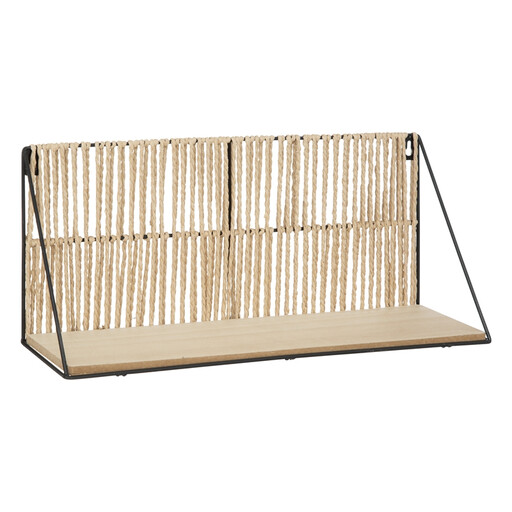
Why we chose it: Perfect for adding an industrial touch without overwhelming the room. Its compact dimensions and original design blending rope and metal make it a decorative object in its own right. We can easily picture it in an entryway, a bathroom, or above a small desk.
This model doesn't pretend to be a bookcase. Its function is clearly decorative, designed for light objects (small plants, frames). It thus avoids the trap of an overestimated load capacity.
The combination of rope and metal gives it an aesthetic that is both natural and industrial. Ultra-lightweight (640 g), it can be easily installed on most walls.
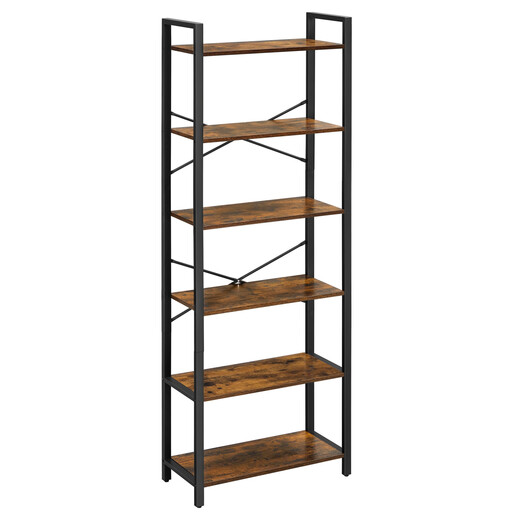
Why we chose it: The perfect solution for those who need maximum vertical storage. With its 6 shelves and a comfortable width of 66 cm, this tall bookcase is designed to hold numerous books and objects while maintaining a small footprint.
It tackles the instability trap head-on. The structure is reinforced with an X-shaped cross brace, the feet are adjustable for perfect stability on the floor, and an anti-tip kit is included.
Its total static load capacity of 60 kg, supported by a robust steel frame and quality particleboard panels, makes it a reliable storage solution built to last.
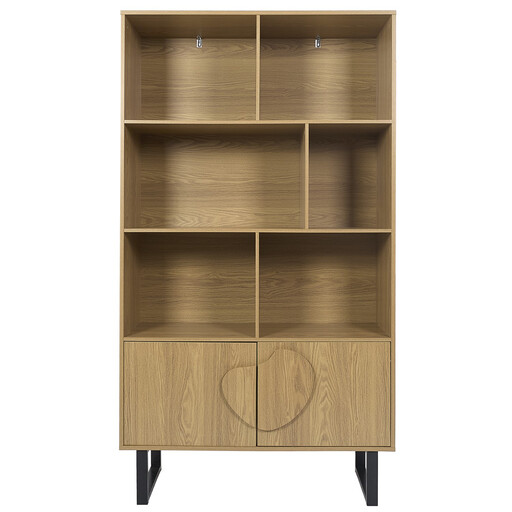
Why we chose it: For those who want the best of both worlds: display and conceal. This living room storage unit combines six open niches for beautiful books and decorative items, and two cupboards to hide the rest.
The fact that it arrives pre-assembled is a true guarantee of finish quality and sturdiness. No more assembly headaches! Its substantial weight (42.2 kg) and wide base give it excellent natural stability.
Zero assembly. This unit is ready to use out of the box and offers a versatile storage solution without the usual hassle. Its generous dimensions make it a statement piece for a living room or large office.
We have compiled a complete and up-to-date selection of products that meet our strict selection criteria and current safety standards.
Solid wood is more authentic and premium, but also more expensive and sensitive to changes in temperature and humidity. MDF (medium-density fibreboard) is a more budget-friendly, very stable, and durable alternative. For an industrial look, MDF with a quality coating (melamine, PVC, or even a real wood veneer) offers the best balance of aesthetics, durability, and price.
Most tall bookcases come with an anti-tip kit. This usually consists of one or two straps or brackets to be screwed into the top of the unit and into the wall. It is imperative to use wall plugs and screws appropriate for your wall type (plasterboard, brick, etc.). Before securing it to the wall, make sure the unit is perfectly level and stable on the floor (using the adjustable feet, if available).
Yes, provided you choose the right model. Rely on the maximum load per shelf specified by the manufacturer. For a collection of paperbacks, a capacity of 5 to 7?kg per shelf is sufficient. For large books, encyclopaedias, or binders, aim for 10 to 15?kg per shelf and a reinforced structure (thicker metal, cross braces). Finally, a rule of thumb: always distribute the weight by placing the heaviest items on the bottom shelves.