
Livraison le jour même ou le lendemain

Qualité garantie

Débloquez vos offres de bienvenue: Livraison GRATUITE | Jusqu'à -80 % | 30 jours d'essai gratuits à JoyPlus
Téléchargez l'application
With its signature blend of raw wood and dark metal, the industrial shelf has become a staple for anyone looking to combine character with functional storage. Whether as a living room bookcase, a smart office unit, or a simple display for your decor, its versatility is undeniable. But be warned: aesthetics can sometimes hide pitfalls that turn a great deal into a disappointment. We'll show you how to avoid them and make the right choice.
The market is flooded with models that look perfect in photos but reveal their weaknesses once you get them home. Before you buy, keep an eye on these three critical points.
To be sure of the quality and practicality of your future shelf, here are the technical points to check.
The charm of a wood and metal shelf lies in the balance between these two components.
Safety is a non-negotiable aspect, especially if children are present or if you plan to store heavy items.
Before any purchase, get out your tape measure and measure the available space. Think about width, height, and also depth. An overly deep industrial-style bookcase can quickly overwhelm a small room, while a designer wall shelf with very thin shelves will only be good for decoration. Some models offer modular configurations or height-adjustable shelves—a welcome flexibility to adapt your storage over time.
To help you make an informed decision, here are a few models we recommend, each meeting a specific need.
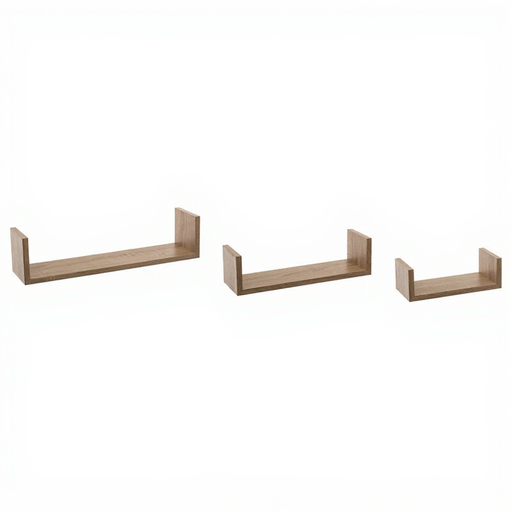
Why we love it: Perfect for dressing up a wall without cluttering the space. This set of three different-sized shelves allows you to create a custom composition to display small objects, plants, or frames in an entryway, bedroom, or living room.
Its invisible mounting system ensures a clean aesthetic and a secure hold for lightweight objects. This avoids the trap of an impractical design for simple decorative use.
Made of MDF with a natural wood-effect finish, they offer an excellent durability-to-aesthetics ratio at an affordable price point.
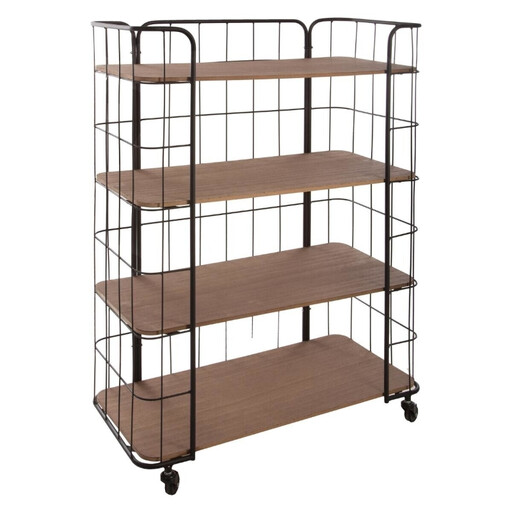
Why we love it: For fans of the vintage shelf style who also love flexibility. Its casters allow it to be moved easily from one room to another, or simply for cleaning. Its 'reclaimed' look is very well done.
Its steel structure and MDF shelves with paulownia veneer avoid the pitfall of low-grade materials. The casters are equipped with brakes to ensure perfect stability.
The combination of a robust metal frame and the mobility offered by the locking casters makes this a piece of furniture that is as practical as it is stylish.
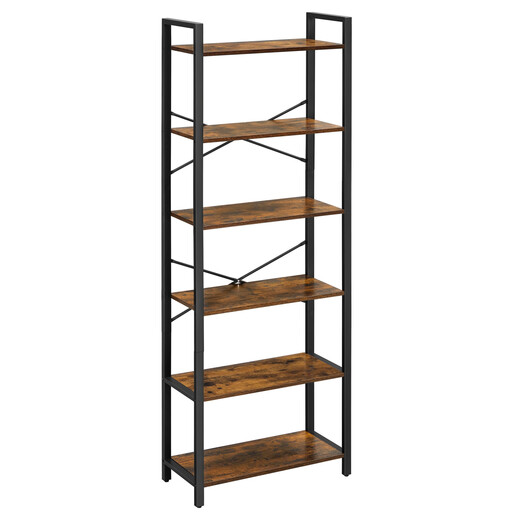
Why we love it: Designed for those who need maximum space. With its 6 tiers and generous height, this bookcase is perfect for an office or living room, capable of holding a large collection of books, comics, and all kinds of objects.
This model directly counters the pitfall of instability with its steel frame reinforced by an X-brace, its adjustable feet, and an included anti-tip kit.
Its high total load capacity (up to 60 kg) and numerous safety features make it a reliable storage solution that's built to last.
Explore our full, up-to-date selection of products that meet our quality criteria and safety standards.
For tall bookcases, always use the provided anti-tip kit. This is usually a strap or bracket that you screw into the furniture and the wall. Be sure to use wall anchors and screws appropriate for your wall type (drywall, brick, concrete, etc.). For wall-mounted shelves, respect the maximum load capacity and choose suitable fasteners. If in doubt, don't hesitate to ask for advice at a hardware store.
Although the two styles sometimes overlap, the industrial style emphasizes raw materials (black metal, dark wood, a "factory" vibe) and functionality. The vintage style, on the other hand, draws inspiration from a past era (the '50s, '60s, '70s) and may play with more rounded shapes, specific colours, or materials like rattan or Formica. So, an industrial shelf can have a vintage look, but the two terms are not synonymous.
Maintenance is very simple. For both the metal and the MDF or veneer shelves, a soft, slightly damp cloth is all you need. Absolutely avoid abrasive products or scouring pads that could scratch the surfaces. Immediately wipe up any spills to avoid damaging the wood or veneer. It's also a good idea to check that the screws are tight a few months after assembly.