
Livraison le jour même ou le lendemain

Qualité garantie

Débloquez vos offres de bienvenue: Livraison GRATUITE | Jusqu'à -80 % | 30 jours d'essai gratuits à JoyPlus
Téléchargez l'application
The industrial round coffee table has become a staple in modern living rooms. Its blend of raw materials and soft lines is a winning combination. The flip side? This popularity has flooded the market with models of widely varying quality. To ensure your dream purchase doesn't turn into a disappointment, here are the common pitfalls to be aware of before you buy.
Here are the 3 most frequent mistakes when buying a coffee table in this style:
To make the right choice, focus on a few key points that make all the difference. These are the true guarantees of your future coffee table's longevity and practicality.
The industrial style is, first and foremost, about authentic materials. A true wood and metal coffee table must be robust.
A coffee table should adapt to your space and your habits.
Rather than an endless list, we've matched specific models to user profiles. The goal? To help you better envision the right fit for your home.
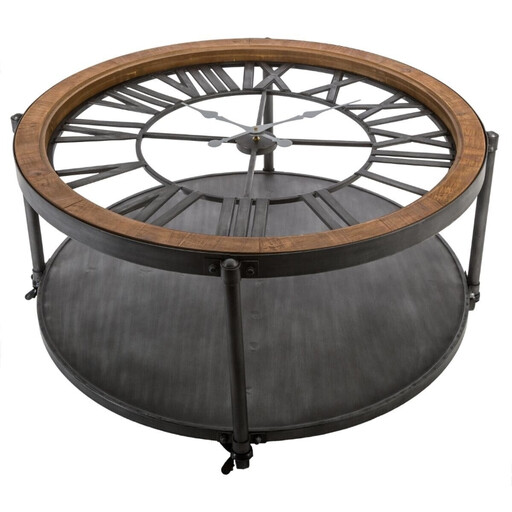
Why this model is a winner: Ideal for those seeking a statement piece that stands out. Its giant clock-face top becomes the focal point of the living room, while remaining practical with its large surface and mobility.
Its steel structure and tempered glass top ensure good robustness, a far cry from fragile imitations. The 4 casters, 2 of which have brakes, provide both mobility and perfect stability.
A unique 2-in-1 design (table and clock) that combines industrial aesthetics with a touch of originality. Its maximum load capacity of 100 kg is a testament to its solidity.
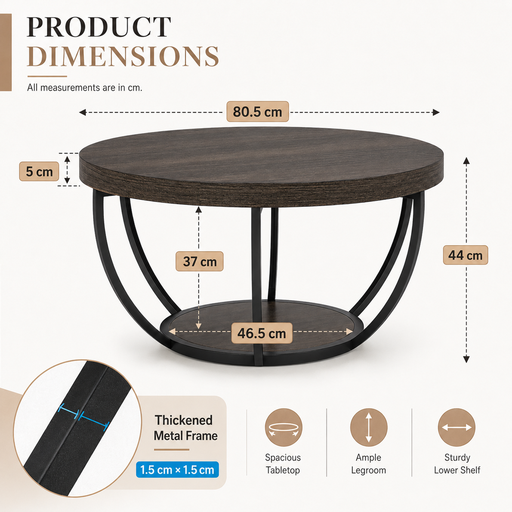
Why this model is a winner: Perfect for those who prioritise a tidy living room. Its double-shelf design offers generous storage space to keep the main surface neat and organised, without compromising on style.
It directly addresses the "sacrificed storage" pitfall with its functional two-tier design. The stable metal base and thick engineered wood top prevent any risk of instability.
Ample storage space on two levels and a versatile 80 cm diameter. Its timeless design with a 6-arch steel structure integrates easily into many decors.
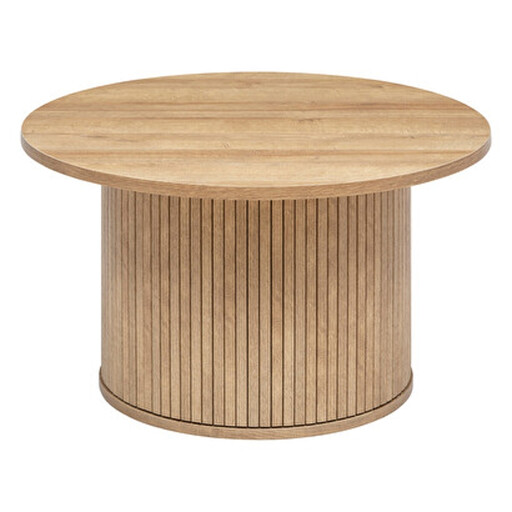
Why this model is a winner: For those who love a clean, modern aesthetic, similar in spirit to a **small Scandinavian coffee table**. Its cylindrical base and simple lines bring a touch of softness and sophistication to a contemporary interior.
Its wide cylindrical base provides excellent stability, eliminating any risk of tipping. The meticulous design, with its vertical slats on the base, clearly sets it apart from entry-level finishes.
An elegant, contemporary design that adds warmth. Its compact size (70 cm) is ideal for medium-sized living rooms or for creating a cosy corner.
We have compiled a complete selection of products that meet our quality criteria and current safety standards.
For the wood or veneer top, use a soft, slightly damp cloth. Avoid abrasive cleaning products. For the metal structure, a simple dry cloth is sufficient for dusting. For stains, a damp cloth with a little neutral soap will do the trick. Always remember to dry the surfaces thoroughly after cleaning.
The golden rule is to choose a coffee table that is the same height as, or slightly lower than, your sofa's seat. This is generally between 40 and 50 cm. This height allows you to easily reach a glass or a remote control without having to get into an awkward position.
Yes, and it's often an excellent option. The absence of sharp corners makes it easier to move around the furniture, which is a major advantage in a limited space. Visually, its curves soften the room and can give the impression of a less cluttered space than a square or rectangular table of equivalent size.