
Livraison le jour même ou le lendemain

Qualité garantie

Débloquez vos offres de bienvenue: Livraison GRATUITE | Jusqu'à -80 % | 30 jours d'essai gratuits à JoyPlus
Téléchargez l'application
An industrial bookcase is far more than a simple storage unit: it's a statement piece that defines an interior, whether it's a living room, office, or bedroom. The combination of raw wood and black metal captivates with its understated yet bold aesthetic. But with an overwhelming number of options on the market, it's easy to fall into common traps. Before you make your decision, let's review the mistakes to avoid to ensure you make an informed and lasting choice.
The industrial style is trending, and many manufacturers offer similar-looking models. However, beneath the surface, quality can vary dramatically. Here are the key things to watch out for that separate a good investment from a guaranteed disappointment.
industrial style shelf might look stunning in photos but prove to be a real headache in practice. Niches that are too small for your large-format books, insufficient depth, or, conversely, a unit so bulky it overwhelms a small room are all common design flaws.To make the right choice, focus on a few objective technical specifications. They will guarantee a piece of furniture that is stylish, safe, and perfectly suited to your needs.
The heart of a wood and metal bookcase lies in the quality of its components.
Safety is not optional. Two elements are essential to check:
shelving unit has a perfectly stable footing.Before choosing, measure your space and think about what you plan to store.
living room storage unit, check the height and depth of the niches to ensure your paperbacks, comics, or decorative items will fit.Every home and every need is unique. Here are a few options that cater to different user profiles, taking into account the quality and safety criteria we've just discussed.
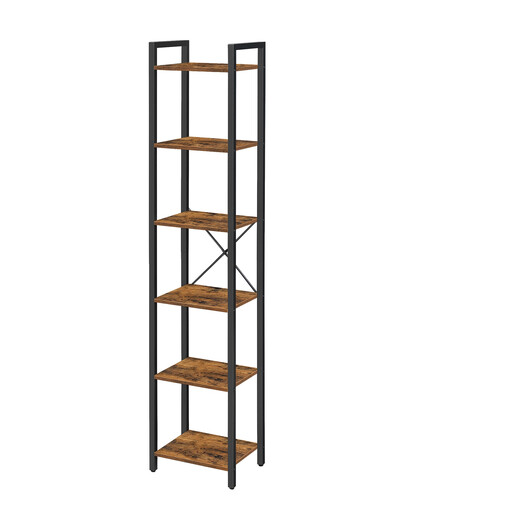
Why we chose it: Perfect for studios or apartments where every square centimetre counts, this tall, narrow bookcase leverages vertical space without encroaching on your living area. It fits easily into an alcove, hallway, or next to a desk.
It counters the risk of instability with its X-frame cross-brace, adjustable feet for uneven floors, and an included anti-tip kit.
Offers a large vertical storage capacity (6 tiers) with a minimal footprint (40 x 30 cm).
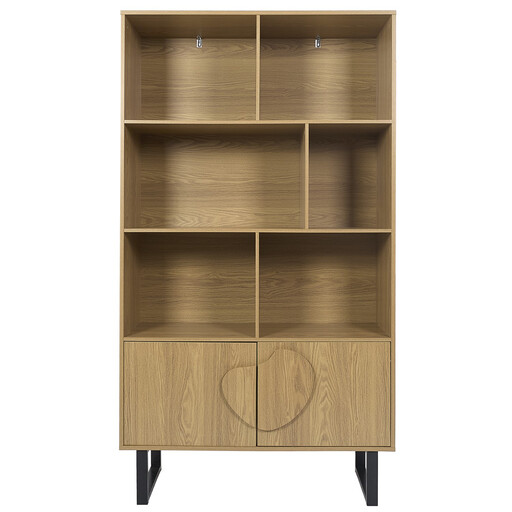
Why we chose it: For those who need a lot of space and like to alternate between displaying and concealing items. This unit combines six open niches for beautiful books and objects, and two doors to hide files or everyday clutter.
Delivered pre-assembled, it eliminates any risk of instability from improper assembly. Its MDF and metal construction is designed to be sturdy right out of the box.
Zero assembly required and highly versatile storage thanks to the mix of open and closed compartments.
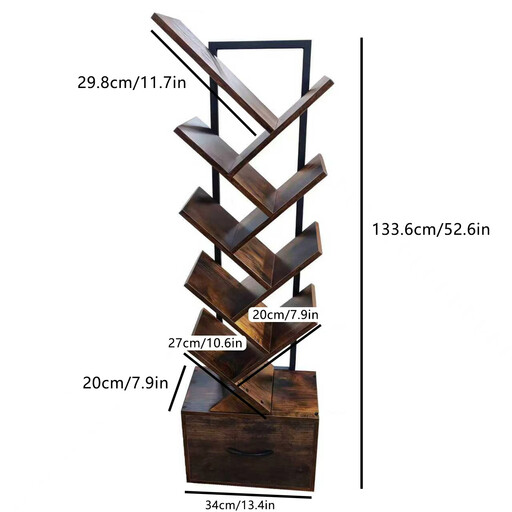
Why we chose it: For those who see a `designer bookcase` as a functional sculpture. Its asymmetrical structure and graphic lines make it an immediate visual anchor, going far beyond a simple `bookshelf`.
Its wide base provides excellent natural stability, bypassing the issue of tall, narrow units that can sometimes lack a solid footing.
A sculptural design that turns a simple storage unit into a centrepiece for your decor.
Explore our full selection of models that meet our quality and safety criteria.
Most quality models come with an anti-tip kit. This usually consists of small brackets or straps that you screw into the top of the unit (often into pre-drilled holes) on one end, and into the wall on the other, using wall anchors appropriate for your wall type (plasterboard, brick, etc.). Installation is simple and highly recommended.
Particleboard is made from pressed and glued wood chips. MDF (Medium-Density Fibreboard) is composed of very fine wood fibres, making it denser, smoother, and, most importantly, more resistant to sagging. For a bookshelf intended to support significant weight, MDF is a more durable choice.
Yes, provided you choose the right one. Check the maximum load capacity per shelf, information that reputable manufacturers always provide. A solid steel frame and thick shelves (15 mm or more) are good indicators. For a large collection of heavy books, distribute the weight evenly and place the heaviest items on the bottom shelves.