
Livraison le jour même ou le lendemain

Qualité garantie

Débloquez vos offres de bienvenue: Livraison GRATUITE | Jusqu'à -80 % | 30 jours d'essai gratuits à JoyPlus
Téléchargez l'application
Stir-frying, deep-frying, simmering, steaming: the wok is the quintessential multi-purpose pan. But with the widespread adoption of induction hobs, finding the perfect model has become a real headache. Too many buyers end up disappointed with a wok that heats poorly, warps, or has a coating that peels off after just a few uses. To avoid these issues and make a long-lasting investment, it's crucial to know the pitfalls to avoid.
This guide breaks down the essential criteria to help you identify the induction wok that will truly suit your kitchen.
Marketing can be deceptive, highlighting appealing features that often hide critical design flaws. Here are the three most common mistakes that lead straight to disappointment.
To make a clear choice, two fundamental criteria should guide your decision. They will determine your wok's performance and longevity.
The choice of material directly impacts heat-up speed, heat distribution, and maintenance.
The size of your wok should match your household size and cooking habits.
Rather than an endless list, here is a selection of models that cater to specific user profiles, all evaluated based on our performance and durability criteria.
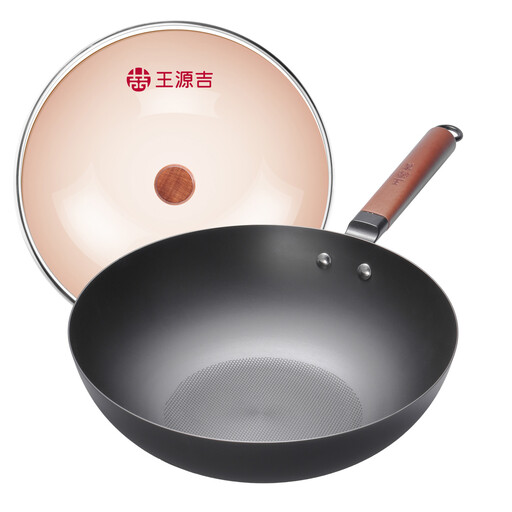
Our take: For those seeking the authenticity and performance of a traditional wok adapted for modern hobs. It's perfect for searing food and developing complex flavours, provided you're not put off by its maintenance ritual.
There's no fragile chemical coating here: its durability depends entirely on the seasoning you build up over time. Its flat bottom ensures perfect contact with the induction hob.
Lightning-fast heat-up for a perfect sear. Nitriding-treated surface for better rust resistance. Lightweight (1.1 kg), it's easy to handle for tossing ingredients.

Our take: An excellent compromise that combines the robustness of stainless steel with the convenience of a clever non-stick coating. Ideal for those who want a high-performance wok without the maintenance of carbon steel.
It solves the problem of fragile coatings thanks to its honeycomb interior texture. This raised pattern protects the ceramic coating from scratches, even when using metal spatulas.
Three-ply (stainless/aluminium/stainless) structure for fast and even heating. Food-grade ceramic coating. Comes with a tempered glass lid for versatile cooking.
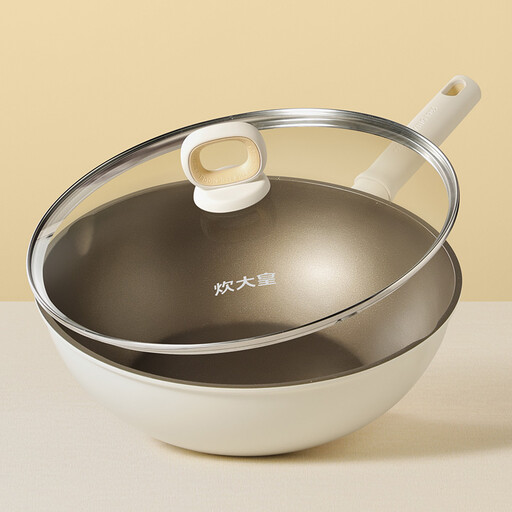
Our take: A large, practical wok that focuses entirely on simplicity and food safety. Its wide diameter is perfect for preparing complete meals for the whole family, effortlessly and without anything sticking.
It addresses health concerns with a guaranteed PFOA-free coating. It doesn't make unrealistic promises but offers a reliable and healthy non-stick solution for daily use.
Titanium-reinforced coating for better wear resistance. Large 32 cm capacity ideal for families. Compatible with all hobs, including induction, and comes with its glass lid.
Explore our full selection of woks that meet our quality criteria and current safety standards.
1. How do I season a carbon steel wok for the first time? Seasoning is a key step. Start by washing the wok with hot, soapy water to remove the factory protective oil, then dry it completely over the heat. Next, apply a thin layer of high-smoke-point vegetable oil (like sunflower or grapeseed) over the entire inner surface. Heat the wok on high until the oil smokes, then let it cool. Wipe away any excess. Repeat this process two or three times to create an initial non-stick patina.
2. Is a flat-bottomed wok as effective for stir-frying? Yes, and on an induction hob, it's even more effective. While it doesn't allow for the same rocking motion as a round-bottomed wok on a flame, its flat base maximises the contact area. The result is an extremely fast and powerful heat-up, which is the secret to successful stir-frying. The high, curved sides still allow you to manage different cooking stages by pushing food up the sides.
3. Can you use metal utensils in a non-stick wok? This is a very bad idea with a standard coating (like PTFE). You risk scratching the surface, reducing its lifespan, and compromising its safety. It's best to stick to wood, bamboo, or silicone utensils. Some recent models, like the featured MAXCOOK wok with its honeycomb structure, are designed to better withstand metal utensils, but caution is still advised.