
Livraison le jour même ou le lendemain

Qualité garantie

Débloquez vos offres de bienvenue: Livraison GRATUITE | Jusqu'à -80 % | 30 jours d'essai gratuits à JoyPlus
Téléchargez l'application
As a product expert at Joybuy, my mission is to guide you through the jungle of cookware. Choosing an induction wok can quickly become a headache: which material is best? Do you need a non-stick coating? How can you ensure its durability?
This guide is here to provide you with simple, effective insights. We'll break down the essential criteria for making the right choice before presenting our favorite models. Whether you're an Asian cooking purist or simply looking for a versatile tool for your everyday meals, you'll find your perfect match here.
Before comparing models, let's review the key points that make all the difference for an induction-compatible wok.
The material is crucial: it determines how quickly the wok heats up, how it distributes heat, and how easy it is to maintain.
The question of coating is central, especially if you're looking for a PFOA-free wok or one without other controversial compounds.
Ensure the wok is labeled as suitable for all hobs or has the specific induction symbol (a coil). The base must be flat and magnetic to work on this type of cooktop. Size is also a factor: a 32 cm wok is generally suitable for a family of 3 to 5, while a 30 cm model is a good fit for a couple or a small family. Finally, a wok with a lid (especially a glass one) offers greater versatility, allowing you to simmer, steam, or simply keep dishes warm.
Here are three models that caught our eye, each with its own strengths for induction cooktops.
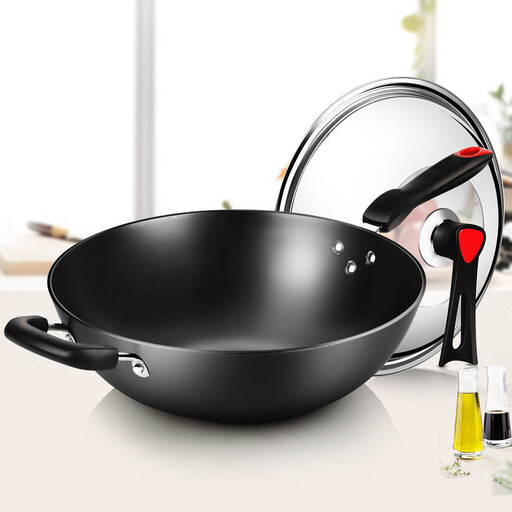
Why it stands out: This model embodies the traditional approach to wok cooking. Made from selected virgin iron, it's designed for those seeking the famous "wok hei"—that characteristic smoky flavor of a perfect stir-fry. Its ability to develop a natural non-stick patina makes it a long-term investment.
Key Features:
Who is it for? For enthusiasts of authentic cooking who see seasoning as a rewarding ritual and want a tool that gets better with time.
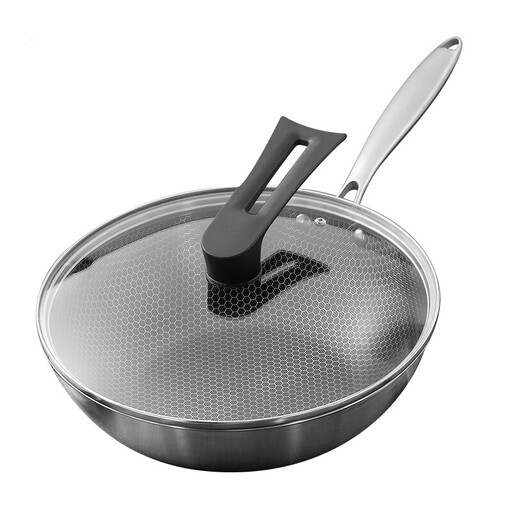
Why it stands out: This induction wok pan combines the robustness of stainless steel with the convenience of a modern non-stick surface, without any chemical coating. Its honeycomb structure protects the cooking surface, allowing you to use metal spatulas without fear of damage.
Key Features:
Who is it for? For those seeking a high-performance, low-maintenance, and durable wok without the hassle of seasoning.
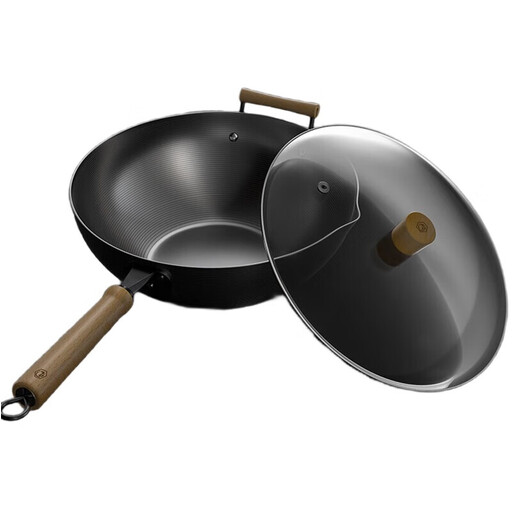
Why it stands out: This 32 cm wok is crafted from high-purity (99.65%) refined iron imported from Japan. It's designed to be lightweight while offering excellent thermal conduction, thanks to its thick base and thin walls. It has no coating; instead, its surface has undergone a special treatment to resist corrosion.
Key Features:
Who is it for? For families and cooks who prepare larger quantities and prioritize natural materials and healthy cooking.
This selection highlights versatile, high-performance woks, but a well-equipped kitchen doesn't stop there. Specialty pans, proper spatulas, lids... every accessory plays a key role.
Discover Our Range of Cookware
1. How do you season a carbon steel wok? Seasoning is simpler than it sounds. First, wash the new wok to remove its protective oil. Dry it completely over a flame. Then, apply a very thin layer of vegetable oil (like flaxseed or sunflower) over the entire inner surface. Heat the wok on high until the oil smokes and polymerizes, creating an initial black, glossy layer. Repeat this process 2-3 times for optimal results.
2. Can you use metal utensils in a non-stick wok? It all depends on the wok! In a non-stick wok with a traditional coating (like PTFE or ceramic), metal utensils should be avoided. However, for a well-seasoned carbon steel or cast iron wok, or for a stainless steel wok with a honeycomb structure like the Ochama model shown, metal utensils are perfectly fine.
3. What's the difference between an induction wok pan and a traditional wok? The difference lies in the base. A traditional wok has a round bottom, designed for a specific gas burner that heats the entire surface. An induction wok pan, on the other hand, has a wide, flat bottom. This is essential to ensure stable contact and efficient heat transfer on an induction or ceramic glass cooktop.