What should you check before choosing?
Built-in induction hob
Consider it: if you cook regularly, your cookware is magnetic and the hob is suitable for your home. For 409 cycles a year, ADEME gives a figure of 115 kWh/year for the best new induction hobs.
Bear in mind: you’ll need to replace any incompatible cookware or stop using it on this hob.
Built-in ceramic hob
Consider it: if keeping non-magnetic cookware matters more to you than choosing induction.
Bear in mind: ADEME’s benchmark for a ceramic hob is 200 kWh/year over 409 cycles, compared with 115 kWh/year for the best new induction hobs. These figures don’t predict the consumption of the models you’re comparing.
Traditional electric hob
Consider it: mainly for occasional use, as Tefal suggests in its overview of this technology.
Bear in mind: this option is less suited to prioritising lower electricity use. UFC-Que Choisir says the difference compared with induction is less pronounced during longer cooking times.
Single-zone portable induction hob
Consider it: for a small space or occasional cooking without built-in installation.
Bear in mind: one cooking zone can’t heat several dishes at once, and you’ll still need induction-compatible cookware.
Once you’ve chosen a type of hob, check its dimensions, cooking zones and electrical specifications against your kitchen and the meals you usually make.
| What to consider |
What to check |
How it meets my needs |
| Consumption |
Compare the technology and, for models measured using the same method, the stated value in Wh/kg. Maximum power in watts doesn’t show annual consumption. |
I cook often and want to compare the electricity required, without assuming that ADEME’s category benchmark applies to every appliance or recipe. |
| Cookware |
For induction, check that the base contains magnetic metal, as Bosch advises. Also check the size and shape of your pans against the cooking zones. |
I want to keep using my usual pans. If some aren’t suitable for induction, I’ll factor in the cost of replacing them. |
| Cooking zones |
Count how many things you need to cook at once, then compare the number and size of the zones. Check that an expandable zone suits a pan you actually use. |
I sometimes prepare several dishes at once, so a portable single-zone hob would mean cooking them one after another. |
| Installation |
For a built-in hob, compare the appliance dimensions and cut-out size with your worktop. Check the power supply and installation instructions in the manual for your chosen model. |
I need a hob that fits the available cut-out and can be connected to my existing installation. |
A few brands to consider
These examples show different formats and features to compare; a feature of one model won’t necessarily apply to every product from that brand.
Bosch
A model to consider when looking at a built-in, three-zone induction hob.
- Bosch describes the PUC611AA5E as a three-zone hob measuring 592 × 522 mm.
- Bosch says its induction hobs require cookware containing magnetic metal.
Electrolux
A built-in ceramic hob to assess against the space available in your worktop.
- Electrolux lists four cooking zones and a maximum total electrical power of 7 100 W for the EHF6547FOK.
- This model measures 590 × 520 mm and requires a 560 × 490 mm cut-out. Check these dimensions rather than relying on its nominal width.
Tefal
A portable induction hob designed for cooking with one pan at a time.
- Tefal lists one cooking zone, 2 100 W of power and a height of 45 mm for the Everyday Slim IH2108E1.
- Its single cooking zone limits how many things you can cook at once.
Whirlpool
A useful guide to thinking about the space available and how many cooking zones you need.
- Whirlpool suggests 50 to 60 cm formats as an option for smaller households or simple meals.
- This general guidance doesn’t replace checking the cut-out dimensions and electrical specifications of the model you choose.
Hobs on Joybuy
This selection includes induction hobs and a ceramic hob. First, choose the technology that suits your cookware, then check the specifications of the model you’re interested in.
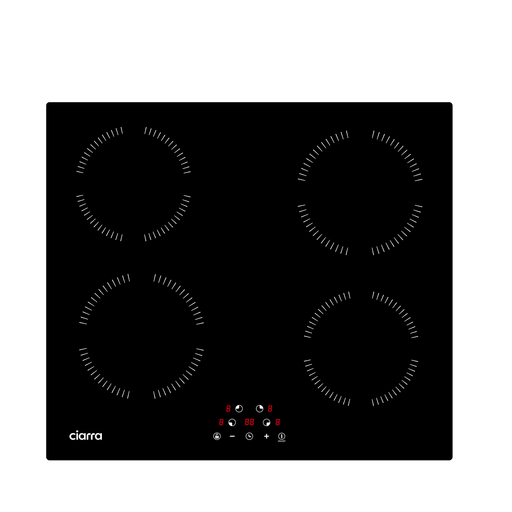 Image unavailable
CIARRA CABBIH4-A, 4-zone induction hob
Worth considering if you prepare several parts of a meal at once using induction-compatible cookware.
The product name lists four cooking zones and nine power levels. Check the cut-out dimensions, power supply and stated consumption in the model documentation.
View on Joybuy
 Image unavailable
TOPWISH, 60 cm 4-zone induction hob
Its four cooking zones suit cooking several things at once, as long as you use induction-compatible pans.
The product name mentions a Boost function, a timer and a residual heat indicator. Check the cut-out and connection requirements before choosing this model.
View on Joybuy
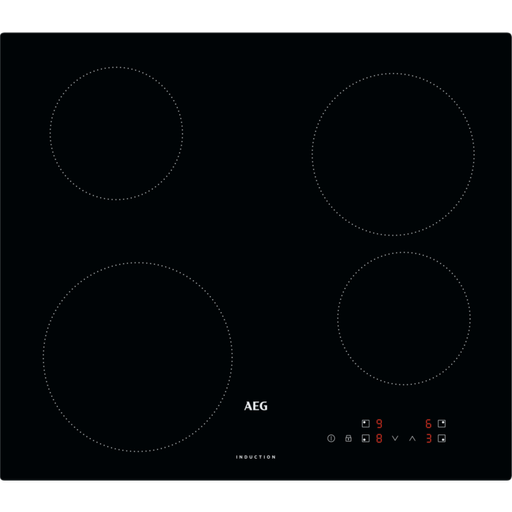 Image unavailable
AEG IBS64200CB, 59 cm induction hob
If you’re looking for an induction hob for regular cooking, first check your cookware and the space available.
The product name specifies a semi-flush installation and mentions a two-phase Perilex connection. Before buying, ask someone to confirm that this connection is compatible with your installation.
View on Joybuy
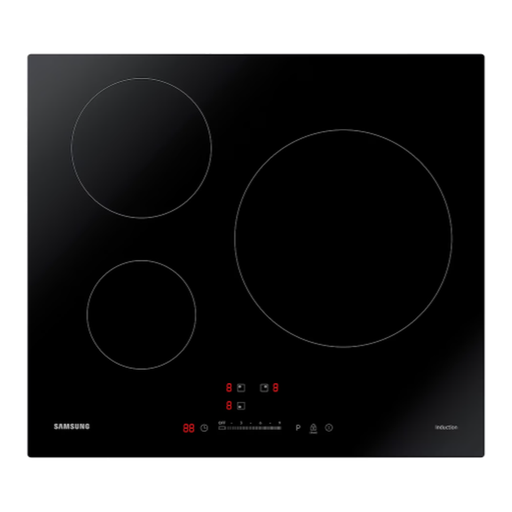 Image unavailable
Samsung NZ63M3707AK, 3-zone induction hob
Consider whether its three cooking zones suit the number of pans you use to prepare a meal.
The product name lists a power rating of 7 200 W; this maximum doesn’t show daily consumption. Also check cookware compatibility, the cut-out and the required power supply.
View on Joybuy
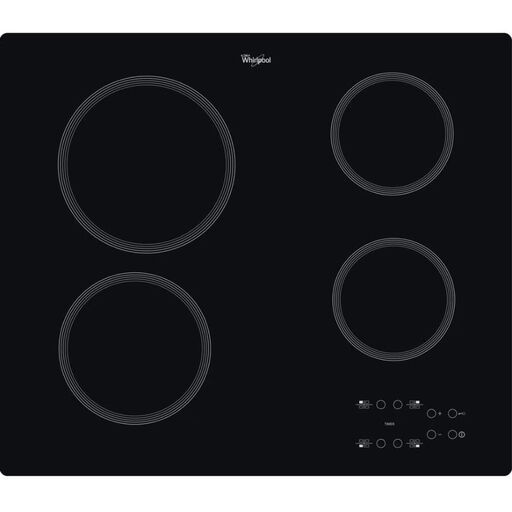 Image unavailable
Whirlpool AKT 801-NE, 4-zone ceramic hob
Worth considering if you want to keep using non-magnetic cookware and use several cooking zones.
The product name lists four cooking zones. To compare its electricity use with other hobs, look for consumption figures specific to this model in its documentation rather than applying a category benchmark.
View on Joybuy
Frequently asked questions
Does induction always use less electricity than a ceramic hob?
No, this difference can’t be guaranteed for every meal or model. For 409 cycles a year, ADEME gives a figure of 115 kWh/year for the best new induction hobs, compared with 200 kWh/year for a reference ceramic hob. Compare the stated figures for models measured using the same method, and take your own habits into account.
How can I check whether my pans are suitable for induction?
Their base needs to contain magnetic metal, as Bosch explains. Look for the induction symbol or hold a magnet against the base: if it sticks, that’s a good first sign. If you’re unsure, check the guidance from the pan and hob manufacturers.
Do hobs have an energy label?
No. The European Commission says that hobs sold in the European Union must meet ecodesign requirements, but aren’t required to carry an energy label. To compare models, check their documentation and stated consumption in Wh/kg, where available.
Does the power rating in watts tell me how much electricity I’ll use each day?
No. The maximum power rating shows how much power the hob may draw in certain conditions, not how much electricity you’ll use each day. Cooking time, settings and the number of cooking zones you use also matter. A stated value in Wh/kg can help you compare models measured using the same method.
What should I do with my old hob in France?
When replacing an appliance, ADEME says you can return the old one to the retailer or delivery driver, or take it to a collection point for electrical and electronic equipment. The Ministry for the Ecological Transition also describes a ‘one-for-one’ take-back scheme when you buy a product of the same type. Ask the retailer how to arrange collection of your hob.


