Households looking to keep their cookware
Before replacing your hob, check which pans and pots will work on an induction model. If several important pieces aren’t compatible, it’s also worth considering a ceramic or mixed hob.


If the pans and pots you use every day have a compatible base and fit the cooking zones, you can keep using them with an induction hob. If you also want to keep non-magnetic cookware, a ceramic hob means you won’t need to sort through it; a mixed induction and gas hob is another option if your gas installation and worktop cut-out are suitable. In every case, check the cut-out, power supply and instructions for the model you’re considering.
Before replacing your hob, check which pans and pots will work on an induction model. If several important pieces aren’t compatible, it’s also worth considering a ceramic or mixed hob.
A large casserole dish or long roasting tin can make the size of the cooking zones just as important as their number. Compare your cookware dimensions with the zones available on each model.
A mixed hob lets you reserve the gas burners for cookware that isn’t compatible with induction. You’ll also need to check the cut-out and gas installation requirements.
Start with the cookware you actually use, then compare each option with your cooking habits and the kitchen where the hob will be installed.
Worth considering: if your everyday cookware has a compatible base and the hob’s zones are the right size for it.
The trade-off: incompatible items will need to be used with another type of hob or replaced.
Worth considering: if keeping cookware made from different materials matters more than choosing induction; Bosch says ceramic hobs work with all types of cookware.
The trade-off: be mindful of residual heat after cooking, and compare energy use on a like-for-like basis.
Worth considering: if you want to use compatible cookware on the induction zones and keep the rest for the gas burners.
The trade-off: Cegibat and GRDF point out that the gas hob’s positioning, ventilation, taps and pipework all need to be taken into account.
| Priority | What to check | Your needs |
|---|---|---|
| Cookware compatibility | For induction, test the base with a magnet; Electrolux says it should stick. Also check the cookware maker’s guidance and the hob’s accepted pan diameters. | I want to know which pans and pots I can keep using before choosing induction. If only a few items aren’t compatible, I could replace just those. |
| Cookware materials to keep | Bosch says ceramic hobs work with all types of cookware. With a mixed hob, remember that gas burners and induction zones are different: the latter still require cookware with a compatible base. | I often use non-magnetic cookware and want to keep using it without having to reserve it for another kitchen. |
| Cooking zones and dimensions | Compare the number and diameter of the zones, and check for any expandable or combinable zone to suit the dishes you use. Consult the limits for the specific model you’re considering. | I need to be able to fit a large casserole dish or several pans on the hob at the same time. |
| Electricity consumption | Based on 409 cycles a year, ADEME gives figures of 115 kWh a year for induction and 200 kWh a year for ceramic hobs. These indicative figures don’t predict the consumption of a specific model or cooking zone. | If I cook often, I want to take electricity use into account without assuming these indicative figures will reflect my kitchen. |
| Cut-out and power supply | Compare the cut-out and clearance requirements in the instructions with your worktop. For an electric hob in France, Promotelec recommends a 32 A circuit in the context it describes; have your existing installation checked before fitting the hob. | I’m replacing a built-in hob: its visible width doesn’t tell me whether it will fit the cut-out or whether my electrical installation is suitable. |
| Gas installation | For a mixed hob, check the gas supply, positioning, ventilation, tap and pipework. Cegibat and GRDF cover these points in their guidance on installing gas cooking appliances. | I want to keep cooking with gas for some of my cookware, but only if this option can be fitted in my kitchen. |
The material alone doesn’t tell you whether the base is compatible. A pan might also be the wrong size for the cooking zone you want to use.
Test the items you use most often with a magnet, then check their compatibility guidance and the hob’s instructions.
This check can help you avoid having to change your cooking habits after installation.
For 409 cycles a year, ADEME gives indicative figures of 115 kWh a year for induction and 200 kWh a year for ceramic hobs. Your own consumption will depend on how you use the hob and the appliance itself.
Compare the difference on the same usage basis, but don’t treat it as a prediction for the hob you’ll buy.
Overall dimensions and cut-out dimensions aren’t interchangeable. For example, the Electrolux EHV6232FOK specifications list the appliance as 590 × 520 mm and the cut-out as 560 × 490 mm.
Measure the cut-out, worktop thickness and available space beneath the hob, then compare them with the fitting diagram for the exact model.
If the dimensions don’t match, you may need to adapt the worktop.
The induction zones require compatible cookware, while the gas burners bring additional positioning and ventilation requirements, as well as checks on taps and pipework highlighted by Cegibat and GRDF.
Have the gas installation requirements and cut-out checked before choosing a mixed hob. Also compare this option with an induction hob and replacing a few pieces of cookware.
These examples of ranges and models can help you identify features to compare; they don’t represent every hob from each brand.
Bosch offers induction and ceramic hobs, giving you options to compare for cookware compatibility and cooking zone layout.
Electrolux ceramic and mixed hobs show two different ways to keep using cookware that isn’t compatible with induction.
Smeg offers hobs that combine gas and induction, so you can use different cookware with each type of cooking zone.
These two models illustrate the choice between keeping cookware made from different materials with a ceramic hob and switching to induction after checking the bases of your pans. They don’t represent the mixed induction and gas option.
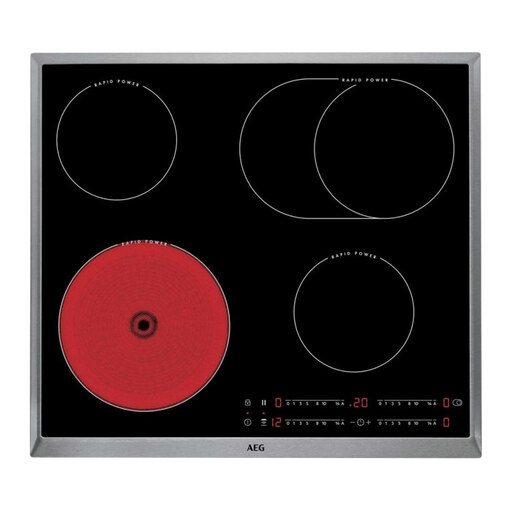 Image unavailable
Consider this ceramic hob if you’d like to keep using cookware made from different materials rather than switching to induction. Check the cut-out dimensions and electrical requirements in the instructions against your kitchen.
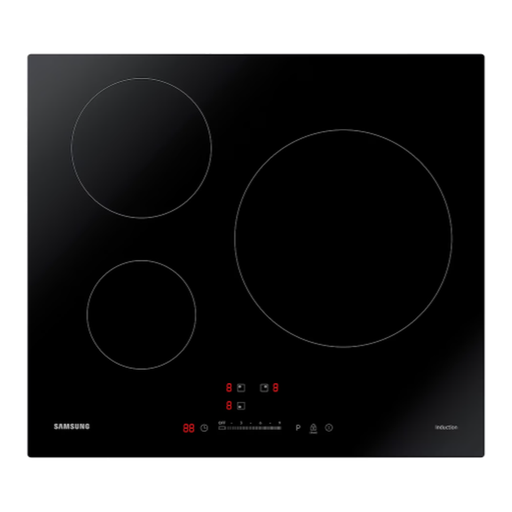 Image unavailable
Consider this induction hob if the pans and pots you want to use have compatible bases. Compare their diameters with the zones listed in the instructions, then check the required cut-out and power supply before installation.
Place a magnet against the base of each pan: according to Electrolux, it should stick for the pan to work on an induction zone. Then check the cookware maker’s guidance and the pan diameters accepted in the hob’s instructions.
Yes: Bosch says its ceramic hobs work with all types of cookware. However, check the condition of the bases and the usage instructions for the model you choose.
It lets you reserve the gas burners for this cookware, but those items still won’t work on its induction zones. Before choosing a mixed hob, also check the cut-out and gas installation requirements, including ventilation, taps and pipework mentioned by Cegibat and GRDF.
Before installation, check that your existing circuit is compatible with the new hob’s instructions. Promotelec recommends a 32 A circuit for an electric hob in the context it describes; if you live in an existing property, have the installation assessed in light of the work planned.
Not necessarily: compare the cut-out dimensions for the exact model with the actual cut-out, as well as the required clearances. For example, the Electrolux EHV6232FOK specifications distinguish between the appliance dimensions of 590 × 520 mm and its cut-out dimensions of 560 × 490 mm.