Choose induction if your cookware’s bases and diameters are compatible with the zones on the model you’re considering, and its electrical connection suits your home. If keeping non-magnetic pans is your priority, a ceramic hob is a better fit. However, its surface stays hot after you switch it off, and it heats less precisely than induction.
Who is this choice for?
Anyone who wants to keep their cookware
If your cookware includes aluminium, copper or mixed-material pans, check their bases before switching to induction. A magnet sticking to the base is a useful first test; the hob’s manual also sets out the permitted diameters.
Anyone looking for responsive cooking
If quick heating and easy temperature adjustments matter in your everyday cooking, compare the technologies and controls on different models. For a large frying pan or griddle, check the shape of the cooking zones too.
Households replacing a built-in hob
The visible width alone isn’t enough to choose a replacement: measure the worktop cut-out and check that the new model’s power requirements and connection instructions suit your installation.
What sets these hobs apart?
Induction
Best if: your cookware has a magnetic base and you’re looking for faster, more responsive heating.
Bear in mind: incompatible cookware will need replacing, and the connection must be suitable for the model you choose.
Ceramic
Best if: you want to keep using cookware without a magnetic base.
Bear in mind: heating is less precise than with induction, and the glass stays hot after the hob is switched off.
| Criterion |
What to check |
Who it matters to |
| Keeping your cookware |
Test the base of each pan with a magnet before choosing induction, then compare its diameter with the limits in the manual. |
I want to keep using my non-magnetic pans rather than replace my cookware; around 36% of consumers put keeping their cookware first. |
| Responsiveness and cooking zones |
Compare the size of the zones and, for a large pan, check whether there’s a combined zone. UFC-Que Choisir also assesses low-power cooking and heat distribution as part of its test procedure. |
I want suitable settings and zones for simmering and occasionally using a large pan; responsiveness and layout come first for around 29% of consumers. |
| Fitting and connection |
Measure the cut-out, then check the model’s power requirements and connection instructions against your existing circuit. Have it inspected if necessary. |
My new hob needs to fit the worktop and work with the existing installation; this is the priority for around 21% of consumers. |
| Everyday use |
Compare energy consumption under like-for-like conditions, as well as the controls, cleaning requirements and residual heat indicators on the specific model. |
I cook regularly and want to take energy use and surface maintenance into account; around 14% of consumers make everyday use their main criterion. |
Mistakes to avoid
-
Confusing the glass surface with the heating technology
Two hobs that look similar can work differently: induction requires a ferromagnetic base, unlike the radiant or halogen elements on a ceramic hob.
Make a note of the cookware you own and test the bases with a magnet before choosing.
With induction, incompatible pans will need to be replaced if you want to keep cooking with them.
-
Choosing based only on the number of cooking zones
Four zones don’t guarantee that a large pan, rectangular griddle or small saucepan will suit the layout. A Bridge function or flexible zone is only available on certain models.
Note the shape and diameter of the cookware bases you use, then compare them with the zones and limits listed in the manual.
-
Assuming the existing connection will be suitable
The cut-out may fit, while the circuit specifications may not meet the requirements for the new hob. Legrand’s technical guidance for hobs specifies a dedicated circuit, but that doesn’t confirm the setup in any particular home.
Compare the model’s manual and connection power requirements with your existing installation. If in doubt, ask a qualified professional to check it.
Updating the circuit may require separate work in addition to replacing the hob.
-
Choosing based on energy consumption alone
UFC-Que Choisir describes induction as less energy-intensive than ceramic, but that difference doesn’t resolve whether your cookware or installation is compatible.
Start by checking both, then compare energy consumption for your needs and across similar models.
Brands to consider
Bosch
In France, Bosch offers induction and ceramic hobs, making it easy to compare both technologies within the same range.
- Its documentation explains that electric hobs work with a wider range of cookware, while induction requires a suitable base.
- Check the cut-out dimensions, cooking zones and connection instructions for each individual model.
Whirlpool
Whirlpool offers ceramic hobs as well as induction models with a FlexiCook zone.
- Whirlpool’s published specifications let you check the zones and connection power requirements separately for each model.
- A combined zone isn’t available across the entire range, so check the manual and dimensions of the model you choose.
Electrolux
Electrolux offers guidance on cookware suitable for induction, as well as models with a Bridge function.
- Electrolux says that a magnet sticking to the base of a pan can help you check whether it’s compatible with induction.
- The Bridge function and permitted cookware diameters depend on the specific hob.
Ceramic hobs available on Joybuy
These two built-in ceramic hobs are worth considering if you want to keep using a variety of cookware. Before replacing your hob, check the dimensions, cookware requirements and connection instructions in each model’s manual.
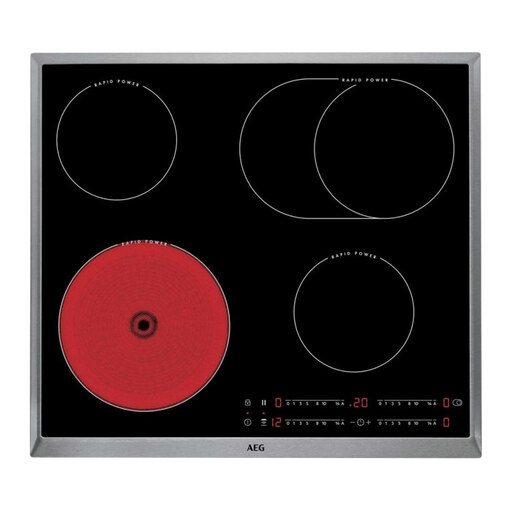 Image unavailable
HK654850XB Series 3000 Rapid Power, 60 cm ceramic hob
An option to consider if you’re replacing a built-in hob and want to keep using non-magnetic cookware.
Listed width: 60 cm. Check the required cut-out, the cooking zone dimensions and the model’s connection instructions in the manual.
View on Joybuy
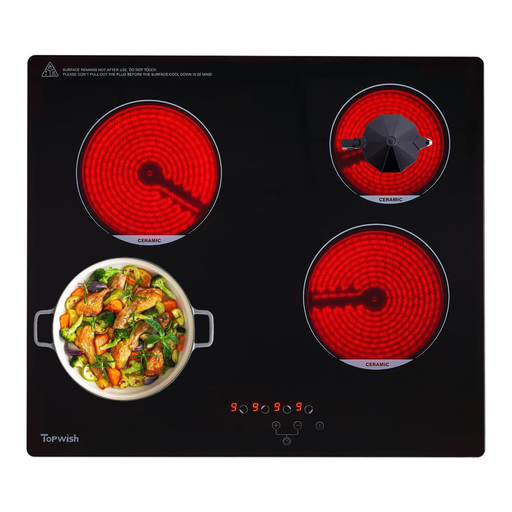 Image unavailable
TOPWISH, 4-zone built-in ceramic hob, 60 cm
A ceramic option to consider if your cookware includes non-magnetic pans.
The product name lists four zones, touch controls, a child lock and a residual heat indicator. Check the total power in the manual before assessing the connection, then make sure the zones are suitable for your cookware.
View on Joybuy
Frequently asked questions
How can I tell if my pans will work on an induction hob?
Place a magnet against the base of each pan. If it sticks, the pan should generally be suitable for induction. Electrolux and Whirlpool recommend this check; also make sure the base is flat and check the permitted diameters in the hob’s manual.
Will a ceramic hob let me keep more of my cookware?
Yes. If your cookware includes pans without a magnetic base, a ceramic hob is compatible with a wider range than induction, as Bosch explains. Still, check that the bases are stable and the right size, and follow the instructions for the model you choose.
Can I fit an induction hob where my old hob is now?
Don’t rely on the visible dimensions alone: compare the cut-out, power requirements and connection instructions with your existing installation. Legrand’s guidance on dedicated circuits isn’t an assessment of your home, so have the installation checked if necessary.
Will I need to replace anything else besides the hob?
It depends on your cookware and installation. Switching to induction may mean replacing pans without a compatible base, while the circuit or cut-out may need adapting after you’ve checked the new model’s manual.


