If you cook often, consider induction first, provided your pans are compatible and the model’s dimensions and electrical requirements suit your home. A ceramic hob is worth considering if you want to keep pans that aren’t suitable for induction. For 409 cooking cycles a year, ADEME gives a comparison figure of 115 kWh per year for the most energy-efficient new induction models, compared with 200 kWh per year for an average ceramic hob. These figures don’t predict how much the model you choose will use.
Who is this choice for?
People who cook regularly
If you prepare several meals a week, how quickly a hob heats up and how much energy it uses over time may influence your choice. Compare the different technologies, but don’t assume ADEME’s indicative figures apply to a specific model.
People who want to keep their pans
If you’re replacing a hob, check your cookware before opting for induction: UFC-Que Choisir points out that it requires pans with a compatible base.
People replacing a built-in hob
If you don’t want to make changes to your home, compare the cut-out dimensions and electrical requirements of each model with those of your kitchen. The same advertised width doesn’t guarantee a suitable fit.
What should you look for?
A hob sold as “electric” may be ceramic. First identify how it heats, then check your cookware and your home’s requirements separately.
| Priority | What to check | Who it’s for |
|---|
| Home and installation |
Compare the cut-out dimensions with the model’s manual; have a qualified professional confirm that its electrical requirements are suitable for your existing installation. |
If I’m replacing a built-in hob without changing my kitchen, I want to know whether the new model will fit. Around 42% of consumers prioritise whether an appliance is compatible with their home. |
| Frequent cooking and energy use |
Identify the technology and available settings; check model-specific energy information where available. |
When I cook often, how quickly a hob heats up and how much energy it uses over time both influence my choice. Around 33% of consumers share this priority. |
| Cookware and cooking zones |
Check whether your pans are suitable for induction, then look at the number, shape and size of the model’s cooking zones. |
If I want to keep my pans or use large dishes, I need cooking zones that suit the cookware I use. Around 25% of consumers put this need at the heart of their choice. |
To put the energy figures into context, ADEME compares 115 kWh per year for the most energy-efficient new induction models with 200 kWh per year for an average ceramic hob, based on 409 cooking cycles a year. These figures aren’t guaranteed energy consumption levels for the hobs featured here.
Mistakes to avoid
-
Assuming all pans work on induction
An induction hob needs compatible cookware, as UFC-Que Choisir points out. A pan that isn’t compatible won’t heat as expected.
Check the base of the pans you use most often with a magnet, and look for the induction symbol or the manufacturer’s guidance.
You’ll need to replace incompatible pans if you want to keep using them for the same dishes.
-
Assuming indicative energy figures apply to every model
ADEME’s annual comparison covers appliance categories under defined conditions. It isn’t based on measured energy use for the hob you’ll buy.
Use the comparison to weigh up the different technologies, then check the information for the specific model you’re considering.
-
Relying on the advertised width alone
Two hobs with the same advertised width may have different cut-out or power supply requirements.
Before buying, compare your worktop measurements and your home’s electrical requirements with the installation manual for the exact model.
-
Assuming flexible zones and a boost function are standard
These features vary by model: Bosch, Electrolux and Miele product details show that configurations differ between models.
Compare the layout of the cooking zones with the pans and large dishes you actually use, then check the features of the model you’ve chosen.
Brands to consider, depending on the model
Bosch
Bosch offers induction and ceramic hobs, with features that vary by model.
- The PIE631HB1E product details describe a 60 cm induction hob with four cooking zones and PowerBoost.
- The PKM61RAA8F is a 60 cm ceramic hob with three cooking zones. Don’t assume it has the same features as another model.
Electrolux
Electrolux product details make it possible to compare specific induction and ceramic hob configurations.
- According to Electrolux, the EIS62356IZ induction hob has three cooking zones, a flexible zone and the Bridge function.
- Electrolux’s product details list four cooking zones for the CRR6432CK ceramic hob; its features aren’t representative of the whole range.
Miele
Miele offers, among other models, a wide induction hob with a PowerFlex zone.
- According to Miele, the KM 7474 FL is 800 mm wide and has four zones, including one PowerFlex zone.
- Before choosing this size, check its installation dimensions and electrical requirements for your kitchen.
Hobs available on Joybuy
These models include one induction hob and two built-in ceramic hobs. Compare their dimensions and power supply requirements before choosing one for a kitchen you use frequently.
 Image unavailable
TOPWISH, built-in induction hob, 4 zones, 60 cm
Worth considering if you cook with several induction-compatible pans. The product name lists a Boost function, a timer and a residual heat indicator. Before confirming that this model is suitable for your home, check its manual for the cut-out dimensions and connection requirements.
View on Joybuy
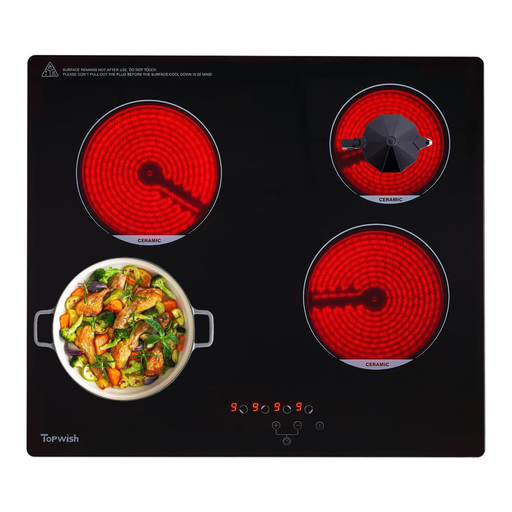 Image unavailable
TOPWISH, built-in ceramic hob, 4 zones, 60 cm
An option to compare if you’re looking for a ceramic hob with several cooking zones. The product name mentions touch controls and a residual heat indicator. The power and cooking zone details differ between the information provided for this model. Check the manual to confirm them, along with the cut-out dimensions and electrical requirements, before buying.
View on Joybuy
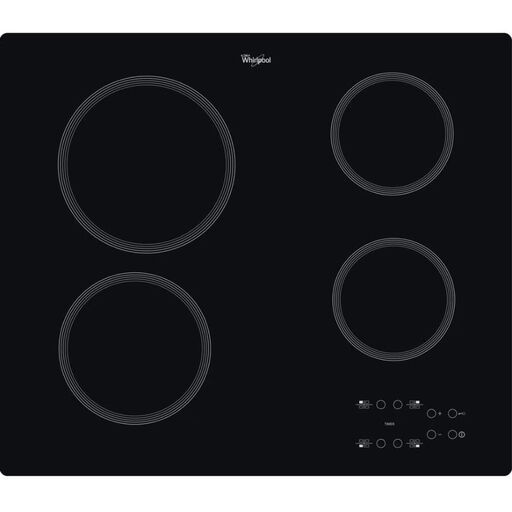 Image unavailable
Whirlpool AKT 801-NE, ceramic hob, 4 zones, black
Worth considering if you’re looking for four ceramic cooking zones to prepare several dishes at once. Before replacing a built-in hob, check the cut-out dimensions and have a qualified professional confirm that the model’s electrical requirements are compatible with your installation.
View on Joybuy
Frequently asked questions
How can I check whether my pans are suitable for induction?
Check that their bases are compatible: UFC-Que Choisir points out that induction requires suitable cookware. A magnet sticking to the base is a handy test, but also check for the induction symbol or consult the pan’s instructions.
Will a new 60 cm hob definitely replace my old one?
No. The advertised width alone isn’t enough. Compare the cut-out dimensions, depth, clearance needed beneath the worktop and electrical requirements with the manual for your chosen model. For example, Electrolux’s product details for the CRR6432CK ceramic hob specify a cut-out width of 560 mm.
What should I check about the electrical supply before buying?
Check the power rating and supply configurations listed for the model, then, if needed, have a qualified professional confirm that they’re suitable for your existing installation. For a new installation or a complete renovation, Promotelec specifies a dedicated 32 A circuit for a cooker or electric hob. This alone isn’t enough to assess an existing installation.
Does the CE marking guarantee a hob’s performance?
No. The DGCCRF explains that the CE marking indicates the manufacturer’s commitment to meeting the applicable regulatory requirements; it isn’t a certification mark. So compare the features and manual of the hob you’re considering separately.


