
Livraison le jour même ou le lendemain

Qualité garantie

Débloquez vos offres de bienvenue: Livraison GRATUITE | Jusqu'à -80 % | 30 jours d'essai gratuits à JoyPlus
Téléchargez l'application
The stockpot is a kitchen staple, the go-to for soups, stews, and large family meals. With the widespread adoption of induction hobs, choosing the right model has become a daunting task. A simple "induction compatible" logo is no longer enough to guarantee efficient and healthy cooking.
As a Product Recommendation Manager at Joybuy, my mission is to help you navigate this complex landscape. Together, we'll break down the common pitfalls and essential criteria to ensure your next induction stockpot is a successful investment, not a disappointment.
Cookware marketing can be misleading. Here are three common mistakes that can cost you dearly in time and money.
To make the right decision, focus on these three technical aspects. They determine your cookware's performance, durability, and safety.
The choice of material directly impacts cooking style and maintenance.
A stockpot for all hobs including induction must have a ferromagnetic bottom. To check this, a simple magnet will do: if it sticks firmly to the outer base of the pot, compatibility is guaranteed. The thickness of this base is just as important. An "encapsulated" or "sandwich" bottom (made of several layers of metal) ensures rapid heating and perfectly even heat distribution, which prevents hot spots.
Capacity is a key criterion. A 24 cm stockpot with a 4 to 5-litre capacity is generally suitable for a family of four. For larger families or fans of batch cooking, a diameter of 28 cm or more will be more appropriate.
Also, consider the details that make daily life easier:
Rather than searching for a one-size-fits-all model, it's wiser to find the one that matches your habits. Here are a few recommended options, each meeting a specific need.
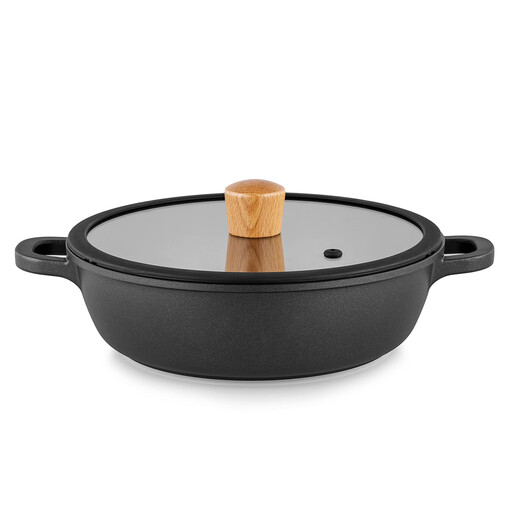
Why this profile? Its large size (28 cm) is perfect for family meals, and its versatility (stewing, sautéing, frying) makes it a true Swiss Army knife in the kitchen. Ideal for those who want to do it all with a single piece of cookware.
It bypasses the pitfall of questionable coatings by using a Swiss ILAG non-stick coating that is PFOA-free, with its performance clearly specified by the manufacturer.
Its die-cast aluminium construction ensures excellent heat distribution, while its coating makes cleanup significantly easier—a valuable time-saver for everyday use.
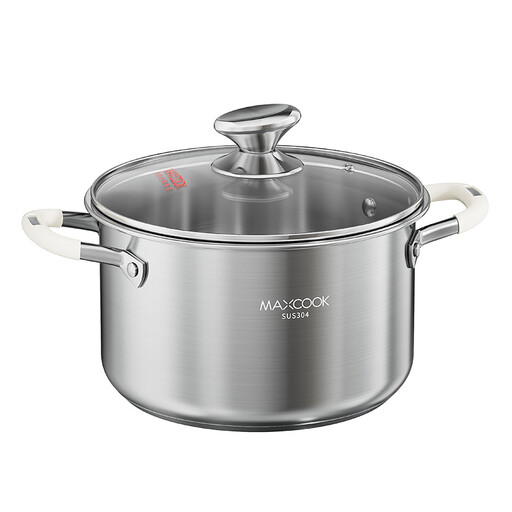
Why this profile? For purists who favour raw, healthy materials designed to last a lifetime. 304 stainless steel is a reliable choice for simmering, boiling, and preparing stocks without ever altering the taste of the food.
Simple and effective: with no coating, it eliminates the problem of wear and tear from the outset. Its robust stainless steel construction guarantees durable performance on induction hobs, with no risk of degradation.
Its exceptional durability and resistance to high temperatures make it a long-term investment. The silicone handles insulate from heat for safer handling.
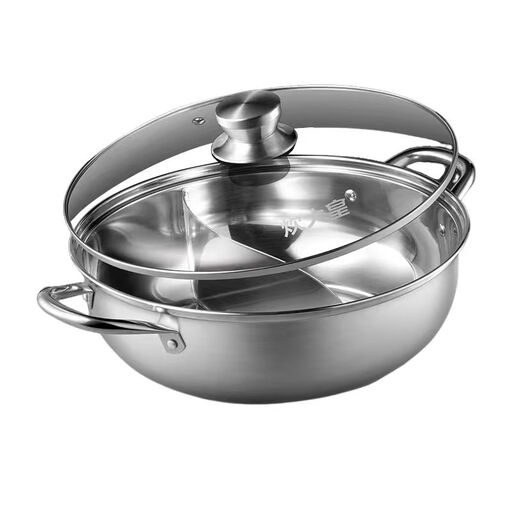
Why this profile? Perfect for Chinese hot pot, group meals, or catering to different tastes at the same time. The divider allows you to cook two separate broths or dishes simultaneously.
It meets a specific need with a smart design. Its 304 stainless steel construction ensures healthy cooking and good performance on induction, avoiding the pitfalls of poorly designed gadgets.
The ability to cook two flavours at once. Its large 30 cm capacity is perfect for hosting and sharing a social meal around a hot pot.
We have selected a full range of stockpots for you that meet our strictest quality and safety criteria.
The easiest trick is to use a magnet. Place it against the outer bottom of the cookware. If the magnet sticks firmly, the stockpot is induction-compatible. If it doesn't stick, or only sticks weakly, it won't work or will perform very poorly.
A coating certified PFOA-free and PFAS-free is an important indicator of quality and safety. It means that these substances, known to be persistent, were not used in its manufacturing. However, the durability of any coating depends on its care: avoid metal utensils, abrasive sponges, and overheating it while empty to preserve its properties for as long as possible.
For everyday use (soups, pasta, saucy dishes), a stockpot with a capacity of 4 to 6 litres is a good starting point. This generally corresponds to a diameter of 24 cm or 26 cm. This size offers enough versatility for most family preparations without being too bulky.