
Livraison le jour même ou le lendemain

Qualité garantie

Débloquez vos offres de bienvenue: Livraison GRATUITE | Jusqu'à -80 % | 30 jours d'essai gratuits à JoyPlus
Téléchargez l'application
A pan labelled "suitable for all hob types" isn't necessarily compatible with your induction hob. And the phrase "premium stainless steel" tells you nothing about the grade used, the thickness of the base, or how easy it is to clean. For a family, a student, or someone who cooks every day, these details can make the difference between a genuinely practical purchase and a utensil that ends up at the back of a cupboard.
Here are the main pitfalls to avoid before choosing a stainless steel stockpot, a saucepan with lid, or a versatile cookware set.
Stainless steel isn't necessarily magnetic. To work on an induction hob, a pan must have a magnetic base, usually made up of several layers. The magnet test can give you an initial clue, but the product description should also clearly state induction compatibility.
A well-designed composite base also helps distribute heat more evenly, whether you're cooking on an induction hob, gas, or electric.
A diameter of 22 or 30 cm doesn't tell you the actual usable volume. The height, the shape of the sides, and the capacity in litres matter just as much. A tall saucepan of 18 cm can prove more practical for heating milk, cooking pasta, or preparing baby meals than a wider but shallower model.
For a large-capacity stockpot, also consider the empty weight, stability on the hob, and how easy it is to handle when full.
Some models are dishwasher-safe, while others recommend hand washing to preserve their finish, handles, or lid. Utensils with toughened glass, silicone, or a ceramic coating may also have specific care instructions.
Polished stainless steel is generally cleaned with a soft sponge and mild washing-up liquid. Abrasive pads risk scratching or dulling the surface.
304 stainless steel is commonly used for utensils intended for food contact. The products featured here focus on surfaces without non-stick coating, making them particularly suitable for soups, pasta, broths, stews, and liquid-based preparations.
316L stainless steel also equips certain stockpots and hot pots. However, check its presence in the technical specifications of the model you choose: features can vary from one reference to another, and even between different components of the same product.
This information does not replace the compliance and usage instructions provided by the manufacturer.
To choose a saucepan compatible with an induction hob, look in particular for the following terms:
A perfectly flat base improves contact with the hob. Also avoid heating an empty pan, especially on a high setting: this will help reduce the risk of warping and discolouration.
A saucepan intended for soups and pasta doesn't necessarily meet the same needs as a stainless steel oil pot. Versatility is appealing, but it shouldn't make you overlook the accessories that are actually included.
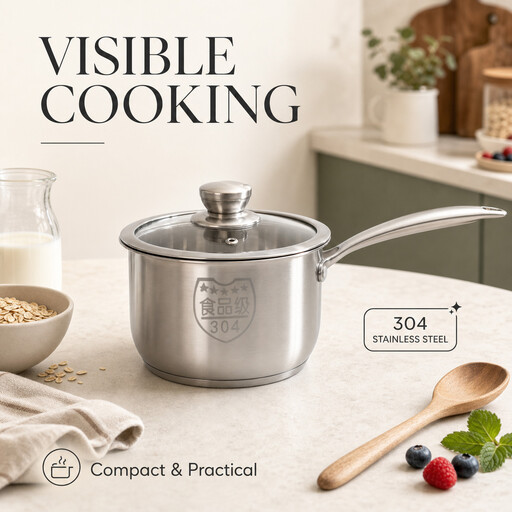
Why this model suits this profile: with its 18 cm diameter, this saucepan is ideal for single portions, reheating, milk, pasta, and small baby meals. The glass lid lets you keep an eye on the cooking.
The description mentions a multi-layer magnetic base compatible with induction, gas, and ceramic hobs – far from a vague "suitable for all hob types" promise.
304 steel, pouring rim, toughened glass lid, and polished interior. Hand washing is recommended.
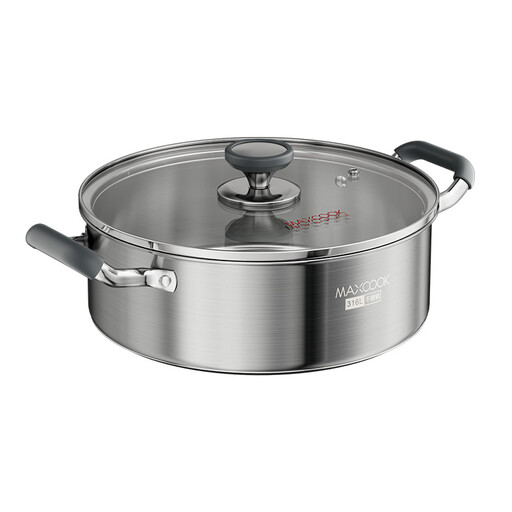
Why this model suits this profile: its generous volume is ideal for family meals, large quantities of soup, and hot pot evenings. The straight sides make better use of the available space.
The 6.5 l capacity is clearly stated, so you can easily compare it with other models rather than relying on the diameter alone.
316L stainless steel stated, composite base, and compatibility with induction, gas, electric, ceramic, and halogen hobs. Hand washing recommended.
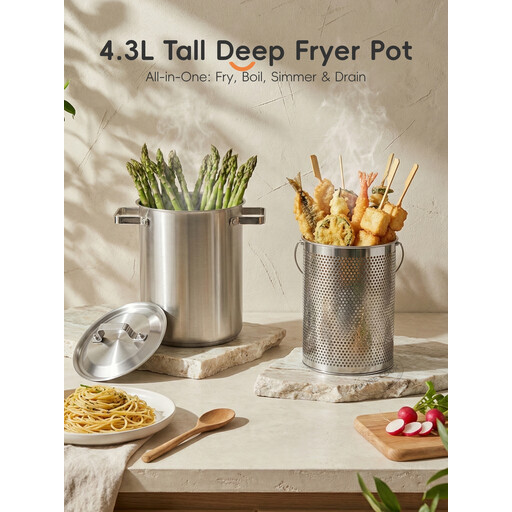
Why this model suits this profile: it's designed for those who switch between frying, pasta cooking, blanching, soup, and hot pot in the same kitchen.
The basket is included and the capacity is specified. No need to buy an extra accessory straight away.
304 steel without coating, triply magnetic base, and compatibility with induction, gas, and ceramic hobs. The basket and oil must be handled with care.
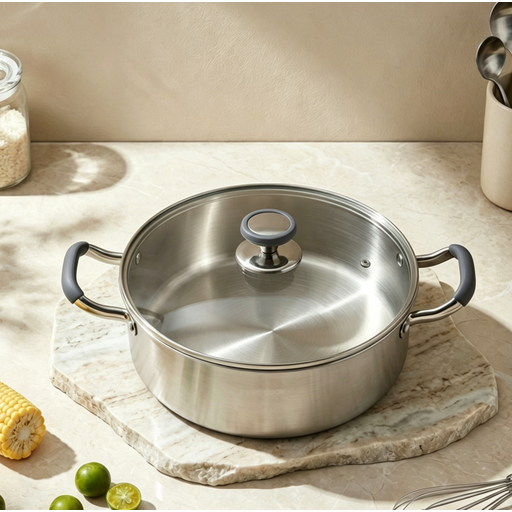
Why this model suits this profile: its silicone handles and transparent lid make it easy to serve soups, broths, and stews when the table is full.
The diameter, material, lid, and compatibility with multiple hob types are all stated in the description.
304 steel, multi-layer magnetic base, toughened glass lid, and stated dishwasher-safe cleaning.
We've put together a comprehensive, real-time updated selection of products that meet these demanding criteria and European safety standards.
To keep a stainless steel saucepan or stockpot in good condition:
A dishwasher-safe saucepan can go in the dishwasher if the manufacturer allows it. However, hand washing remains gentler on handles, finishes, and accessories.
No, not necessarily. Check for a magnetic base and explicit induction compatibility. A flat, sufficiently wide base generally improves contact with the hob.
For three to five people, a capacity of 3 to 4.5 litres suits many soups, pasta dishes, and stews. For a large gathering or hot pot, a model of 6 litres or more will often be preferable, provided you can lift and move it without difficulty.
A pan without coating, like some of the 304 steel models featured here, can be used to prepare compotes, purées, porridge, or vegetables. Always follow the manufacturer's care instructions, as well as standard food hygiene and storage guidelines.